Add the tinted Calendula Rose Lip Balm to your cart with a qualifying $35+ purchase. The discount applies automatically; the gift is not added automatically.


How to Moisturize a Dry Sensitive Scalp Without Irritation

Last Updated: November 8, 2026
Quick Summary
To moisturize a dry sensitive scalp, wash less often with a fragrance-free gentle shampoo, then press a few drops of light oil into damp skin and patch test every new product first. Apply in thin layers to the scalp only, and remove buildup with a gentle weekly wash.
- Wash two or three times a week with lukewarm water and a fragrance-free shampoo for sensitive skin.
- Patch test new products behind the ear or inner wrist for 24 to 48 hours before scalp use.
- Use roughly a pea-sized amount of oil for the whole scalp, pressed in with fingertips.
- Apply oil at night and keep it off mid-lengths and ends to avoid greasy hair.
- See a dermatologist if the scalp is painful, bleeding, or not improving after a few weeks.
Scalp dry and tender? Start here.Gentle, plant-based oils made to comfort a dry, sensitive scalp.
Shop Scalp Soothing Oil
Table of Contents
- Why a Dry Sensitive Scalp Needs a Different Approach
- How to Moisturize a Dry Sensitive Scalp at Home in 6 Steps
- The Best Moisturizer for Dry Scalp: What to Look For
- How to Moisturize Scalp Without Making Hair Greasy
- How to Moisturize Scalp Without Washing Hair
- Dryness or Something Else? Telling Dry Scalp From Dandruff and Dermatitis
- Ingredients to Avoid on a Reactive Scalp
- When to See a Dermatologist About a Dry Scalp
- Frequently Asked Questions
Why a Dry Sensitive Scalp Needs a Different Approach
A dry sensitive scalp needs a different approach because the usual fixes for dryness often make sensitivity worse.
The skin on the scalp is thin and holds fewer oil glands than the face. When that barrier weakens, moisture escapes fast.
Below are six steps, plus how to pick products, avoid greasy hair, and tell simple dryness apart from conditions that need a doctor.
How to Moisturize a Dry Sensitive Scalp at Home in 6 Steps
Moisturizing a dry sensitive scalp at home takes six steps: wash less with a gentle shampoo, apply moisture to damp skin, patch test every new product, choose the right product type, apply it in thin layers, and remove buildup. Each step is short. Together they rebuild the scalp's moisture barrier without irritation. The sequence matters as much as the products, because applying oil to a stripped or buildup-covered scalp undoes the work.
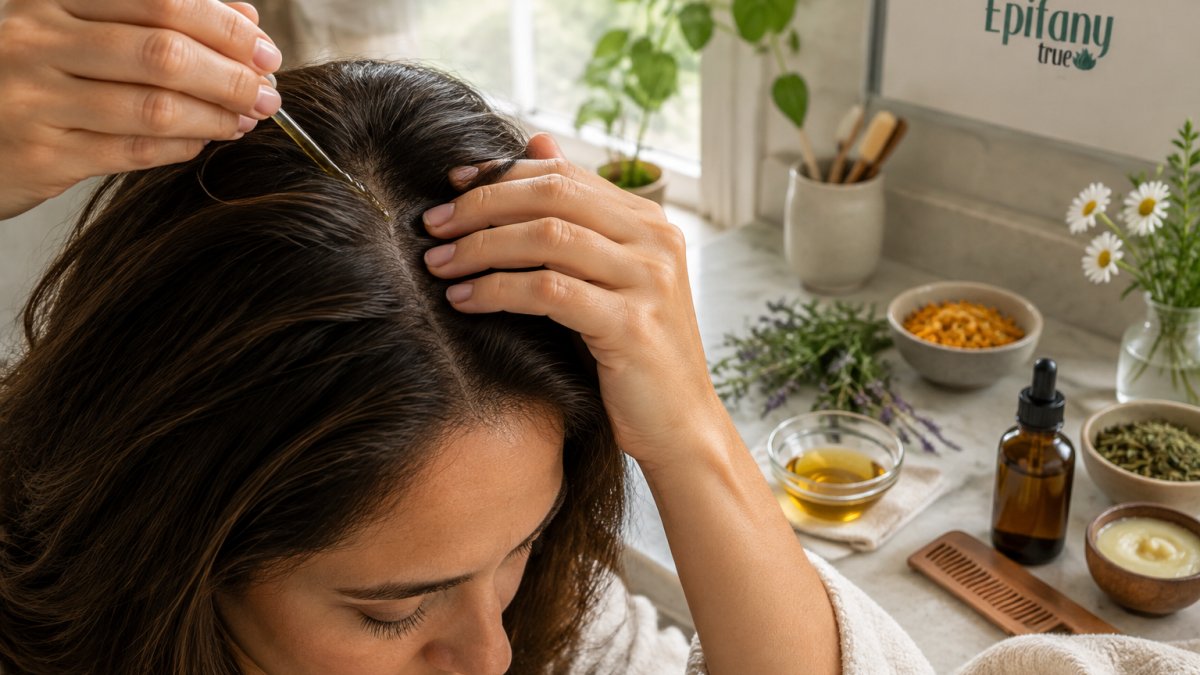
Step 1: Wash Less Often With a Gentle Shampoo
Cut back to washing two or three times a week. Use lukewarm water, not hot, and keep the shower short. Choose a fragrance-free shampoo made for sensitive skin, work it into the scalp with fingertips rather than nails, and rinse until the water runs clear. Hot water and daily washing strip the natural oils that hold moisture in. If you exercise or use styling products daily, a water-only rinse between shampoos can bridge the gap.
Step 2: Apply Moisture While the Scalp Is Still Damp
Pat the scalp partly dry with a soft towel, then apply a light oil or serum within a few minutes. Damp skin absorbs moisturizer better and lets a small amount spread further. Wait until the scalp is fully dry and the product sits on top instead, which is what leads to greasy roots and residue.
Step 3: Patch Test Every New Product First
Put a small amount behind the ear or on the inner wrist. Wait 24 to 48 hours. If there is no redness, itching, or stinging, it is likely safe to use on the scalp. This one habit prevents most reactions on reactive skin. Repeat the test whenever you open a new bottle, since formulas and your skin can both change.
Step 4: Choose the Right Product Type
A moisturizer, serum, oil, and conditioner each do a different job. Oils seal in moisture. Serums are lighter and spread thin. Conditioners coat hair, not scalp skin. Match the product to the goal: a light oil for tight, dry skin, a serum for fine hair that still feels dry, and a conditioner kept off the scalp entirely. The next section breaks down how to choose between them.
Step 5: Apply in Thin Layers
Start with a few drops, roughly the size of a pea for the whole scalp. Part the hair in sections and press the product into the scalp with fingertips, not nails, focusing on the part lines and hairline where dryness shows first. Add more only if the skin still feels tight after a few minutes. Too much product is the main cause of greasy roots and buildup.
Step 6: Remove Buildup Weekly
Oils and leave-ins collect on the scalp over time. A gentle wash once a week clears residue, and a soft silicone scalp brush used during shampooing can lift flakes without scratching.
Watch out: if a step stings, burns, or makes redness worse rather than better, stop and rinse it out. Sensitivity that escalates with each application is a sign to simplify the routine, not add more product.
The Best Moisturizer for Dry Scalp: What to Look For
The best moisturizer for a dry sensitive scalp is one that is fragrance-free, low in essential oils, and built on gentle plant oils that support the skin barrier instead of coating it. Look for short ingredient lists, terms like "soothing" or "for sensitive skin," and plant oils high in linoleic acid, which tends to feel lighter and absorb faster on reactive skin.
A good scalp moisturizer should do three things:
- Replenish moisture with oils like jojoba, sunflower, or squalane that sit close to the skin's own lipids
- Calm irritation with soothing botanicals such as chamomile, calendula, or oat
- Support the barrier so moisture stays in longer instead of evaporating within hours
Match the Product Type to the Job
Moisturizers, serums, oils, and conditioners are not interchangeable. Choosing the wrong type is one of the most common reasons a sensitive scalp stays irritated or ends up greasy.
| Product type | Best for | Watch-outs on sensitive skin |
|---|---|---|
| Lightweight oil | Dry, tight scalp between washes | Heavy oils can clog roots and trap buildup |
| Serum | Oily-prone or fine hair that still feels dry | Some serums rely on alcohol for fast drying |
| Cream or balm | Very dry, flaky patches | Thick formulas can be hard to rinse out |
| Rinse-out conditioner | Coating hair, not scalp skin | Leave-in contact on the scalp can irritate |
For most sensitive scalps, a light oil applied to damp skin is the simplest starting point. A serum suits anyone who wants moisture without weight. A conditioner belongs on the hair, not pressed into the scalp.
Read the Ingredient List Like a Label Check
Scan for the first five ingredients, since those make up most of the formula. Favor sunflower, jojoba, and squalane near the top. Treat fragrance, perfume, and strong essential oils such as peppermint or eucalyptus as reasons to patch test first, even when the label says natural. "Fragrance-free" is the safer claim; "unscented" can still contain masking fragrance.
The 100% Pure & Natural Scalp Soothing Oil 4oz is built around organic sunflower, jojoba, and coconut oils with chamomile. It is made to comfort a tender, dry scalp, not to grow hair.

Watch out: a product can feel soothing on the first use and still cause a delayed reaction, so keep the patch test habit even after a formula seems to work.
How to Moisturize Scalp Without Making Hair Greasy
To moisturize the scalp without greasy hair, apply the product to the scalp only, use a few drops, and keep it off the mid-lengths and ends. Oils belong on skin, not strands.
Three habits keep hair clean:
- Apply at night so the product absorbs before styling
- Use a dropper or fingertips to target the scalp, not the hair
- Rinse or wash the next morning if roots look heavy
Light oils like jojoba absorb faster than thick ones. If hair still looks greasy after a small amount, switch to a lighter serum or use the oil less often.
How to Moisturize Scalp Without Washing Hair
To moisturize the scalp without washing, use a small amount of light oil or serum on dry or slightly damp skin, then blot any excess with a soft towel. This works well between wash days.
A simple routine for no-wash days:
- Part the hair in a few sections
- Place two or three drops on fingertips
- Press, do not rub, into dry areas
- Blot excess with a clean towel
- Leave it, or rinse with water only if needed
For scalps that react easily, water-only rinses can help remove surface residue without shampoo. Keep the product amount small. A little goes further than most people expect.
Dryness or Something Else? Telling Dry Scalp From Dandruff and Dermatitis
Dry scalp usually means fine, white flakes and tightness. Dandruff tends to produce larger, yellowish flakes with oiliness. Seborrheic dermatitis brings redness and greasy scales, often near the hairline (Seborrheic Dermatitis Revisited).
A quick comparison:
| Sign | Dry Scalp | Dandruff | Seborrheic Dermatitis | Contact Irritation |
|---|---|---|---|---|
| Flake type | Fine, white | Yellowish, oily | Greasy, larger | Variable |
| Redness | Rare | Sometimes | Common | Common |
| Timing | Steady | Steady | Flares | After product use |
| Itch level | Mild | Moderate | Moderate to strong | Sharp, immediate |
If flaking comes with redness, greasy scales, or pain, it may not be simple dryness. For mild itch, natural anti-itch treatments can offer relief while you figure out the cause.
Ingredients to Avoid on a Reactive Scalp
A reactive scalp does best without fragrance, drying alcohols, and strong essential oils. These are the most common triggers of stinging and redness. Read labels closely, since "natural" does not always mean gentle.
Ingredients to watch for:
- Synthetic fragrance and perfume at the top of the list
- Drying alcohols such as denatured alcohol
- Strong essential oils like peppermint or eucalyptus in high amounts
For readers who want a closer look at which plant oils suit reactive skin, this guide to gentle botanical oils for sensitive skin explains the safer choices.
When to See a Dermatologist About a Dry Scalp
See a dermatologist if the scalp is painful, bleeding, or not improving after a few weeks of gentle care. Also seek help if hair loss is spreading, or if flaking comes with redness and greasy scales.
Red flags to watch for:
- Pain, sores, or bleeding on the scalp
- Thick scales or patches that do not clear
- Rapid or patchy hair loss
A doctor can check whether the issue is dryness or something like seborrheic dermatitis or psoriasis. If the scalp barrier itself is weakened, this guide to repairing a damaged skin barrier covers gentle steps to support it at home.
A dry, sensitive scalp responds best to patience and simple products. Explore the Sensitive Scalp Care collection to build a routine that comforts a tender scalp without irritation.
Frequently Asked Questions
What can I put on my dry, sensitive scalp?
Start with a short ingredient list. A plant-based oil blend with jojoba, sunflower, or chamomile is a reasonable first choice because these ingredients are chosen for calming and moisture support. Epifany True's Scalp Soothing Oil combines organic sunflower, jojoba, extra virgin coconut, and chamomile essential oils and is made for tender, dry scalps, including during hair loss. Apply a few drops to a damp scalp, massage gently, and patch test on your inner arm for 24 hours before the first full application.
How can I moisturize my scalp without making my hair greasy?
Use less product than you think you need and apply it to skin, not strands. Part the hair in sections, place a few drops directly on the scalp, and massage with fingertips. Keep oil off the mid-lengths and ends, and choose a lightweight option such as jojoba oil, which the Epifany True listing notes absorbs without an oily residue. If you apply at night, a shower in the morning removes excess. Two to three drops per section is usually enough for a dry sensitive scalp.
Can I moisturize my scalp without washing my hair?
Yes. A small amount of leave-in oil or serum can be applied to the scalp between wash days without wetting the hair. Part the hair, dab oil on the dry scalp, and massage gently. Keep the amount small so it does not travel down the strands, and avoid layering it over styling products, which can cause buildup. If your scalp feels itchy or coated afterward, you used too much. A gentle cleanse every few days still matters for removing buildup on a dry sensitive scalp.
When should I see a dermatologist about a dry scalp?
Book an appointment if flaking, itching, or redness persists after two to three weeks of gentle care, if you notice greasy yellow scales, thick silvery plaques, or patches of hair loss, or if the scalp is painful or weeping. These signs can point to seborrheic dermatitis, psoriasis, or contact irritation rather than simple dryness, and each needs a different treatment. A dermatologist can also check whether a product in your routine is the cause.

Previous article

A Gentle Scalp Oil Routine for Dry Scalp Relief
Next article

7 Botanical Scalp Oil Rules for Dry Scalp Relief


