Add the tinted Calendula Rose Lip Balm to your cart with a qualifying $35+ purchase. The discount applies automatically; the gift is not added automatically.


Amla Oil for Hair Strength: Benefits and How to Use It

Last Updated: November 26, 2026
Quick Summary
Using amla oil for hair strength mainly means less breakage during combing, softer-feeling strands, and a more comfortable scalp. It coats the hair shaft and lowers friction between strands, so hair detangles more easily and snaps less. It is not a proven hair-regrowth treatment.
- Apply oil before combing and work from ends upward with a wide-tooth comb on damp hair.
- Leave a scalp massage application on for 20 to 30 minutes before washing.
- Once or twice a week is enough for most hair types; more frequent use adds buildup.
- Patch test a drop behind the ear or on the inner wrist and wait 24 hours.
- Normal shedding is roughly 50 to 100 hairs a day, so track whether that amount climbs.
Want softer, stronger-feeling hair?Epifany True's amla and argan oil blend conditions dry hair and soothes the scalp.
Shop Amla Hair Oil
Table of Contents
- What Are the Benefits of Using Amla Oil for Hair Strength?
- How to Use Amla Oil for Hair Growth and Strength
- How Often Should You Use Amla Oil on Your Hair?
- Amla Oil Side Effects on Hair and Scalp
- What the Research Says About Amla and Hair Strength
- Best Amla Oil for Hair Growth: What to Look For
- Building a Strength-Focused Routine by Hair Type
- Choosing Your Amla Hair Treatment Oil
- Frequently Asked Questions
What Are the Benefits of Using Amla Oil for Hair Strength?
The main benefits of using amla oil for hair strength are less breakage during combing, softer-feeling strands, and a more comfortable scalp. Amla oil is a traditional Indian gooseberry-based hair oil used in Ayurvedic-inspired hair care. Epifany True's Amla Hair Treatment Oil is built on this botanical heritage, blending amla with argan, jojoba, sunflower, and Jamaican black castor oils.
Here is the honest starting point: amla oil helps hair feel stronger and reduces the friction that snaps strands. A review of hair oil research notes that oils can increase slip between strands, which helps detangle hair and smooth the cuticle, but that is not evidence amla oil itself prevents hair loss or regrows hair (Hair Oils: Indigenous Knowledge Revisited).
Strength and growth are two different outcomes, and most guides blur them.
Less Breakage and More Slip
Breakage usually happens during detangling. Wet hair stretches, a comb catches, and a strand snaps. Oil changes that by coating the hair shaft and lowering friction between strands.
What this means in practice:
- Apply oil before combing, not after
- Work from ends upward, never root down
- Use a wide-tooth comb on damp hair
Fine or frizzy hair shows the difference fastest. Coarse hair needs more oil and more time.
Scalp Nourishment and Comfort
A dry, tight scalp makes hair care unpleasant. The massage itself can make the scalp feel more comfortable.
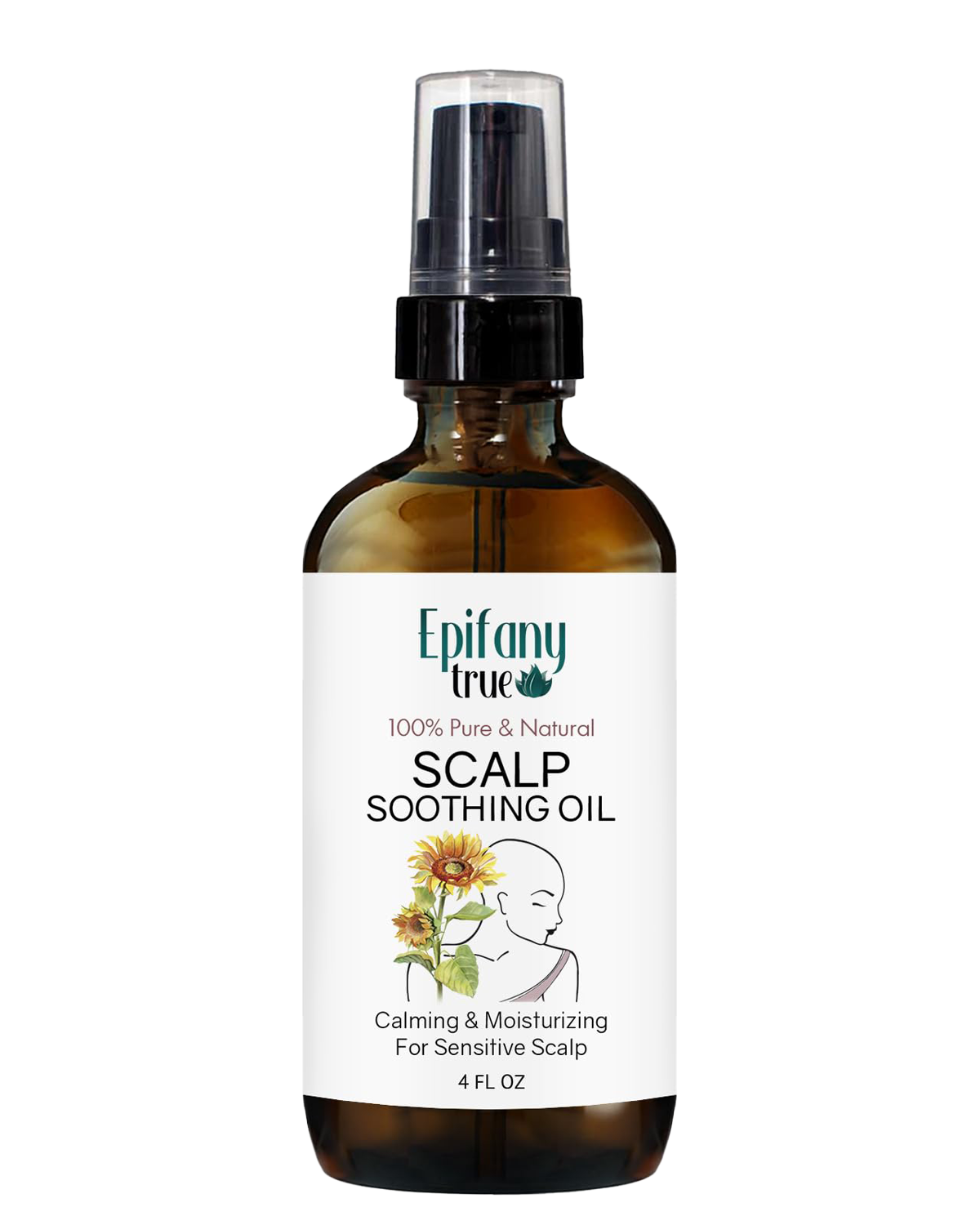
Epifany True's Scalp Soothing Oil is designed to soothe a sensitive, tender scalp. It is not a hair growth oil. If the skin along your hairline and temples is also easily irritated, the Sensitive Face Care collection follows the same gentle approach.
How to Use Amla Oil for Hair Growth and Strength
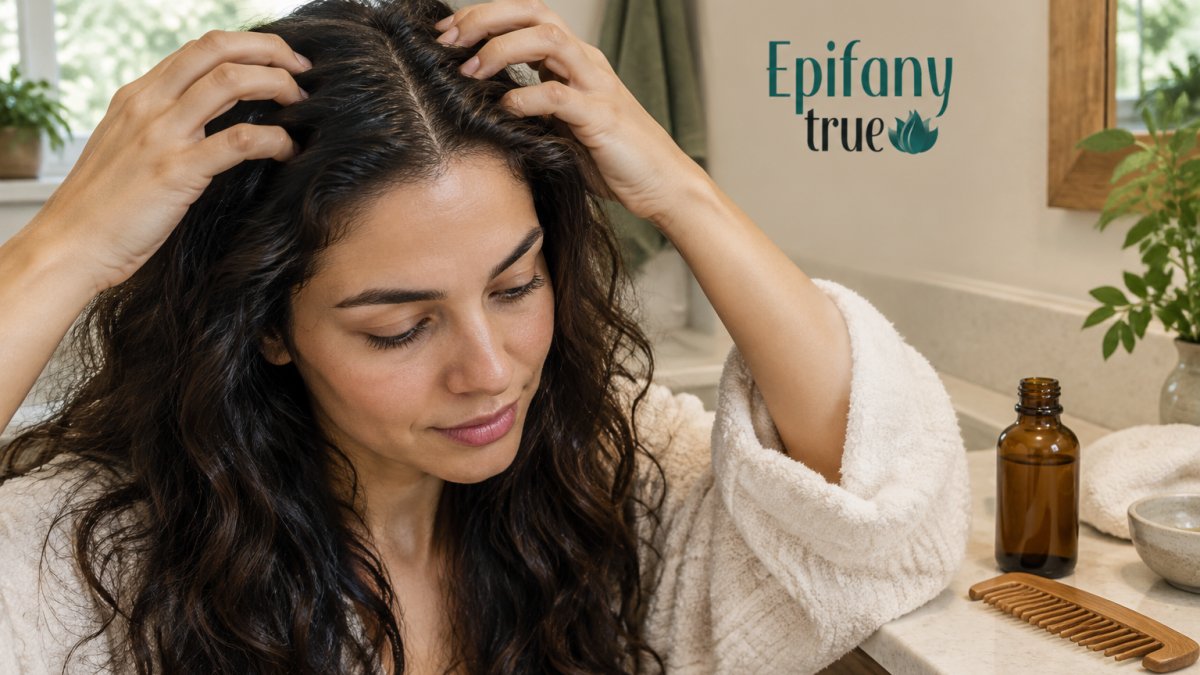
Use amla oil two ways: as a scalp massage oil on wash day, or as a warm pre-wash treatment when hair feels rough.
The woman is American.
Scalp Massage Method
Time: 10 minutes
- Pour a small amount into your palm. A quarter-size pool covers a whole scalp.
- Part hair in sections with your fingers.
- Press fingertips into the scalp and move in small circles.
- Work from the hairline to the crown, then the back.
- Leave it on for 20 to 30 minutes before washing.
Expected result: a softer-feeling scalp and roots. Too much oil is hard to wash out and can leave hair limp.
Hot Oil and Pre-Wash Treatment
Warm the oil by setting the bottle in a cup of warm tap water for a few minutes. Never microwave it. Apply from mid-shaft to ends, wrap hair in a warm towel, and shampoo after 30 minutes. This suits dry, thick, or curly hair best.
How Often Should You Use Amla Oil on Your Hair?
Once or twice a week is enough for most hair types. More frequent use adds buildup without adding benefit.
Adjust by hair type:
- Fine or thin hair: once a week, light application, shampoo twice
- Medium hair: once or twice a week
- Thick, curly, or coily hair: twice a week, heavier application
If you oil more than twice a week, pair it with a lighter routine on the other days. Epifany True's guide to a gentle scalp oil routine covers what to do between treatments.
How often you oil depends on your hair type, so match the frequency to your strands.
| Hair type | Frequency | Note |
|---|---|---|
| Fine or thin hair | Once a week | Light application, shampoo twice |
| Medium hair | Once or twice a week | Most forgiving hair type for oil |
| Thick, curly, or coily hair | Twice a week | Heavier application |
| Dry or itchy scalp | Twice a week | Use a gentle formula |
Amla Oil Side Effects on Hair and Scalp
Most people tolerate amla oil well. The common problems are irritation, buildup, and stained fabric, not serious reactions.
Watch for these:
- Skin irritation: redness, itching, or stinging after application
- Buildup: dull, weighed-down hair from applying too much or washing too little
- Clogged pores: breakouts along the hairline from heavy oils left on for days
Always patch test first. Put a drop behind your ear or on your inner wrist, wait 24 hours, and check for a reaction. If your scalp is already sore or tender, read Epifany True's guidance on natural remedies for tender scalp pain before adding any new oil.
What the Research Says About Amla and Hair Strength
The evidence for amla oil is limited. Separate the outcomes: some follow from how oils generally behave on hair, and some remain unproven.
What the evidence actually supports
- Easier detangling and less combing friction. This is the best-supported claim. A review of hair oil research describes how oils coat the shaft and increase slip between strands, which reduces the mechanical force needed to detangle and smooth the cuticle (Hair Oils: Indigenous Knowledge Revisited). Less friction during combing means fewer snapped strands, but that is a mechanical effect of lubrication, not proof that amla strengthens the hair shaft itself.
- Softer, smoother-feeling hair. Cuticle smoothing from carrier oils is well documented and easy to observe at home. It is a cosmetic and tactile result, not a structural change to the hair.
- Scalp comfort. Fatty acids and antioxidants in amla and its carrier oils condition the scalp surface. The massage itself improves circulation and loosens flakes. This is plausible and low-risk, but it is not the same as treating a scalp condition.
What is plausible but indirect
- Reduced breakage over time. Less friction during detangling may reduce breakage, but trials measuring breakage with amla oil specifically are lacking.
- Improved appearance and shine. Real and repeatable, but cosmetic.
What remains unproven
- Regrowing lost hair. No strong human evidence shows that topical amla oil regrows hair in people with pattern hair loss or other medical causes.
- Treating a medical hair-loss condition. Amla oil is not a treatment for androgenetic alopecia, alopecia areata, thyroid-related shedding, or iron-deficiency hair loss. Those need a diagnosis.
Why 'stronger' is easy to overclaim
Hair feels stronger when it is smoother, less tangled, and less prone to snapping during combing. All three can improve with any well-formulated oil, amla-based or not.
A medical review notes that strong clinical evidence for topical amla oil regrowing hair is lacking (Anatomy Haircare on amla oil evidence). If shedding is sudden, patchy, or paired with scalp pain, see a dermatologist.
How to measure whether it is working for you
Because the research cannot tell you what will happen on your head, track your own results. These are practical signals of hair-shaft condition and breakage, not clinical measures of follicle growth:
- Breakage during detangling. Count the short broken strands on the comb or in the sink after detangling, before and after four weeks of use. A drop is a meaningful signal.
- Shedding pattern. Normal shedding is roughly 50 to 100 hairs a day. Track whether the amount on your pillow and in the shower stays stable rather than climbing.
- Hair-shaft condition. Look for fewer mid-shaft splits and a smoother feel along the length.
Watch out: if breakage or shedding is increasing rather than falling after a month, stop and reassess, the cause may be something oil cannot fix, such as over-processing, tight styling, or a medical issue.
Best Amla Oil for Hair Growth: What to Look For
A good amla hair oil lists amla near the top of the ingredients and avoids heavy mineral oil fillers. Read the label before you buy.
Check for:
- Amla or Indian gooseberry listed as a primary ingredient
- Carrier oils like argan, jojoba, or sunflower for spread and absorption
- No added fragrance oils if your scalp is sensitive
Formulation matters more than the word "amla" on the front. A blend with amla at the bottom of the list is mostly carrier oil. Epifany True's Amla Hair Treatment Oil combines organic amla seed oil with Moroccan argan, jojoba, sunflower, and Jamaican black castor oils, finished with a soft jasmine scent.
Building a Strength-Focused Routine by Hair Type
Match the routine to your hair and scalp. The same oil behaves very differently on fine and coily hair; the goal is enough slip to reduce breakage without so much buildup that hair looks limp or the scalp reacts. Choosing a lighter oil or pairing it with other natural ingredients for healthy hair can help tailor the routine to your hair’s texture and scalp tolerance.
Fine or thin hair
Fine hair has less surface area to carry oil, so a little goes a long way. Apply a few drops to the ends only, once a week, and shampoo twice to clear residue. Skip the scalp if your roots already look greasy by day two. The win here is reduced friction during detangling, not added weight.
Medium hair
A scalp massage plus a light pass through the ends once or twice a week works well. Leave it on for 20 to 30 minutes before washing. This is the most forgiving hair type for oil treatments.
Thick, coarse, or dry hair
Coarse hair absorbs more oil and tolerates longer treatments. Use a full pre-wash treatment twice a week, from mid-shaft to ends, wrapped in a warm towel, shampooing after 30 minutes.
Curly or coily hair
Oil works as a sealant and a detangling aid. Apply before styling or as a light sealant on damp hair, twice a week. Detangle with fingers or a wide-tooth comb while the oil is in. Watch out: heavy application on low-porosity curls can sit on top of the hair rather than absorb, so start light and add more only if needed.
Sensitive or tender scalp
Patch test first, then choose a calming formula rather than a strong one. Epifany True's Scalp Soothing Oil is designed for tender or sensitive scalps and is not a hair-growth oil. Use it on wash day and keep the amla treatment to the ends until the scalp settles.
Dry or itchy scalp
Twice a week with a gentle formula, massaged in for 10 minutes and washed out after 20 to 30 minutes. If itching persists beyond a few weeks, treat it as a scalp-health question rather than a hair-care one.
How to read a label before you buy
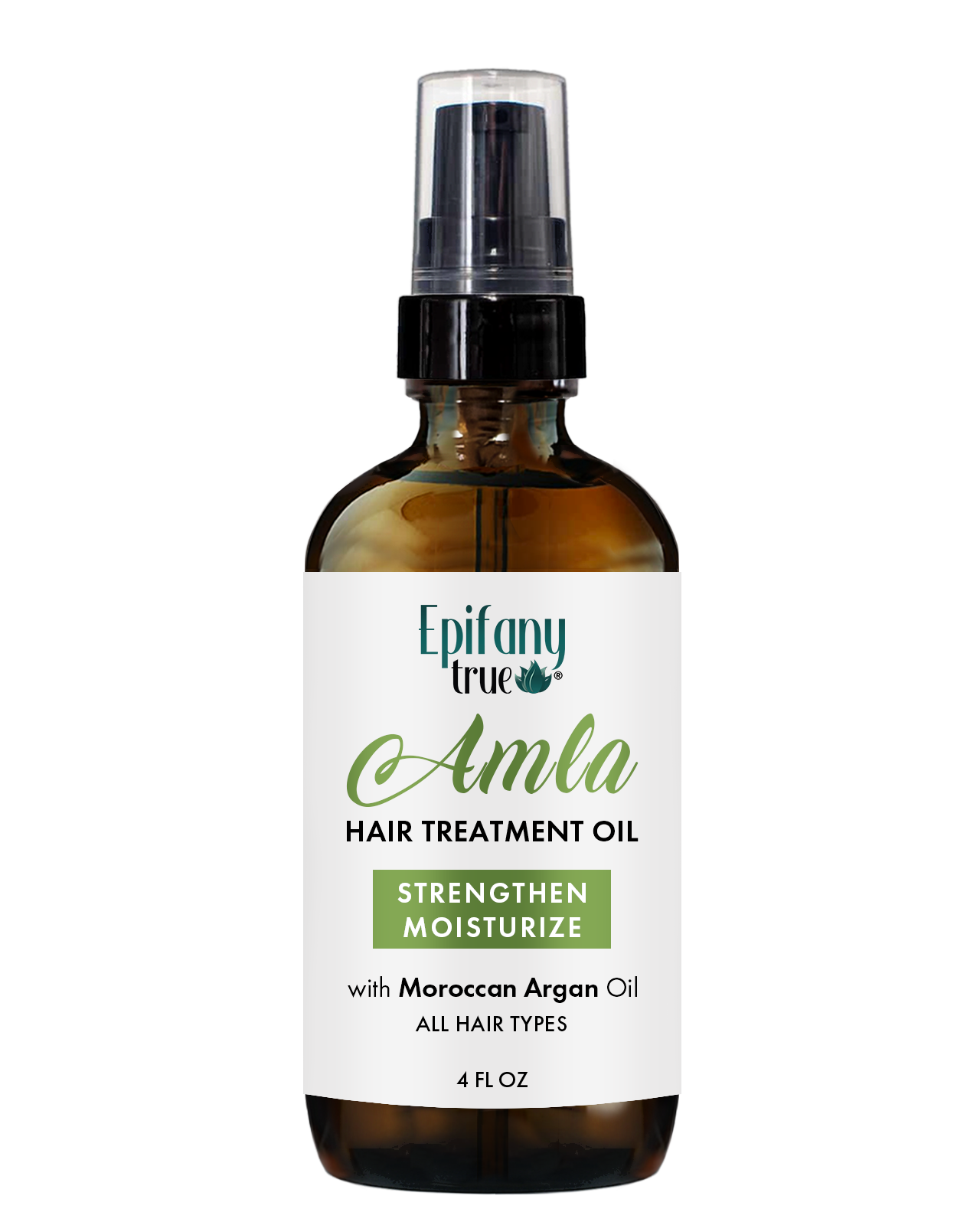
Epifany True's Amla Hair Treatment Oil with Moroccan Argan Oil combines amla seed oil with argan, jojoba, sunflower, and Jamaican black castor oils, finished with a jasmine scent. If you are scent-sensitive, patch test before a full application.
When hair loss needs a doctor, not an oil
Amla oil is cosmetic hair care. See a dermatologist or physician if you notice sudden or patchy shedding, a widening part, scalp pain or redness that does not settle, or shedding paired with fatigue, weight change, or other systemic symptoms. If hair loss is part of the picture, Epifany True's guide on how to apply a soothing scalp oil for hair loss walks through a gentler application method while you get answers.
Choosing Your Amla Hair Treatment Oil
Choose a treatment oil that pairs amla with lightweight carriers, so it conditions without weighing hair down.
Epifany True's Amla Hair Treatment Oil with Moroccan Argan Oil is built for this: organic amla seed oil with argan, jojoba, sunflower, and Jamaican black castor oils.
For scalps that need calm more than conditioning, the Scalp Soothing Oil is the gentler pick.
Strong-feeling hair comes from small habits repeated weekly, not from one dramatic treatment.
Frequently Asked Questions
Does amla oil increase hair growth?
The evidence for topical amla oil regrowing hair is limited. Hair oils can add slip between strands, but that is not proof of new growth. Treat stronger-feeling, more manageable hair as a realistic outcome, not regrowth.
What are the disadvantages of amla hair oil?
The main drawbacks are scalp irritation from added fragrance or essential oils, heaviness on fine hair, and buildup if you apply too much or leave it in too long. Patch testing before the first full application is a sensible precaution, and washing the oil out thoroughly helps avoid residue.
Does amla oil make hair thicker or stronger?
Amla oil may make hair feel smoother and more manageable. It does not change the number of hair follicles or the diameter of each strand.
Can amla oil cause hair loss?
Amla oil is not a known cause of hair loss, but a reaction to an ingredient in a blend can irritate the scalp and lead to shedding. If you notice redness, itching, or increased shedding after starting a new oil, stop using it. Sudden or patchy hair loss, or loss with scalp pain, needs assessment by a doctor rather than another hair oil.


