Add the tinted Calendula Rose Lip Balm to your cart with a qualifying $35+ purchase. The discount applies automatically; the gift is not added automatically.


Apricot Kernel Oil Benefits for Skin: A Practical Guide

Last Updated: November 24, 2026
Quick Summary
Apricot kernel oil benefits for skin are moisture retention, softening of rough texture, and a lighter feel than many heavier plant oils. It is an emollient carrier oil containing oleic and linoleic fatty acids that spreads easily and leaves a soft finish. Use it for comfort and suppleness, not as a cure.
- Apply apricot kernel oil to skin that is still slightly damp after a shower to support moisture retention.
- Start with a quarter-sized amount for each limb and adjust based on how quickly your skin absorbs it.
- Introduce one new product at a time and give it a week before layering another oil or serum.
- People with tree nut or stone fruit allergies should patch test apricot kernel oil first.
- Apricot kernel oil is not a sunscreen and offers no meaningful UV protection.
Which body oil suits dry, sensitive skin?Epifany True makes gentle, plant-based body oils for dry and sensitive skin.
Shop Body Oil
Table of Contents
- What Are the Apricot Kernel Oil Benefits for Skin?
- Fatty Acid Profile: Oleic and Linoleic Acids in Apricot Oil
- How to Use Body Oil After Shower for Lasting Hydration
- Skincare for Compromised Skin Barriers: Where Apricot Kernel Oil Fits
- Benefits of Camellia Seed Oil for Skin and Why It Pairs With Apricot
- Allergy, Acne and Sun Protection: The Limits of Apricot Kernel Oil
- Choosing and Storing Apricot Kernel Oil
- Adding Apricot & Camellia Satin Body Oil to Your Routine
- Frequently Asked Questions
What Are the Apricot Kernel Oil Benefits for Skin?
The main apricot kernel oil benefits for skin are moisture retention, softening of rough texture, and a lighter feel than many heavier plant oils. Apricot kernel oil is a botanical oil expressed from the kernels of the apricot fruit, and it is used in skincare as an emollient carrier oil containing oleic and linoleic fatty acids.
That combination matters for anyone whose skin runs dry, tight, or easily irritated. At Epifany True, the approach to this oil is simple: use it for comfort and suppleness, not as a cure. Honest expectations serve shoppers better than dramatic promises.
Below, this guide breaks down the fatty acid profile, how to apply body oil after a shower, where the oil fits for compromised skin barriers, how it pairs with camellia seed oil, and the safety limits around allergies, acne, and sun exposure.
Fatty Acid Profile: Oleic and Linoleic Acids in Apricot Oil
Apricot kernel oil's behavior on skin comes down to its fatty acid profile, which is dominated by oleic and linoleic acids. A review of apricot kernel characterization and oil extraction notes that bitter kernels are the ones typically used for oil extraction, while sweet kernels are eaten as dried fruit. That distinction matters when shopping, because culinary and cosmetic apricot products are not interchangeable.
Published compositions vary by cultivar, origin, and extraction method, but a common pattern is that oleic acid makes up roughly the largest share, with linoleic acid the second largest and smaller amounts of palmitic and stearic acids. The exact percentages shift from batch to batch, so treat any single number as a range rather than a guarantee. What stays consistent is the overall character: a monounsaturated-rich oil that is lighter than many seed butters and heavier than fast-absorbing esters.
Oleic Acid and Moisture Retention
Oleic acid is a monounsaturated fat that helps slow water loss from the skin's surface by supporting the lipid layer that traps moisture. In practice, this is why apricot kernel oil feels cushioning without the heaviness of richer oils. It spreads easily, absorbs at a moderate pace, and leaves a soft finish rather than a greasy film. Because oleic acid is not the dominant fatty acid in every batch, the oil tends to feel less occlusive than olive or avocado oil, which is why it suits people who find heavier oils too rich.
Linoleic Acid and Skin Comfort
Linoleic acid supports the skin's outer layer and is generally well tolerated by skin that reacts to heavier formulas. A common mistake is assuming all plant oils behave alike. They do not. Apricot kernel oil sits on the lighter end, which makes it a practical choice for dry skin that still breaks out or stings easily. The linoleic share also helps explain why the oil feels less waxy than cocoa butter or shea butter: it is liquid at room temperature and stays fluid on the skin.
What the Fatty Acid Profile Does Not Tell You
The composition explains texture and moisture retention, not treatment. Apricot kernel oil is an emollient, and emollients soften and smooth the surface of the skin; they do not exfoliate, resurface, or replace prescription actives. Claims about acne, wrinkles, skin tone, or sun protection go beyond what the fatty acid profile supports. Most practitioners find that the oil works best as a supporting layer in a routine that already includes cleansing, moisturizing, and broad-spectrum sunscreen, rather than as a standalone solution.
How to Use Body Oil After Shower for Lasting Hydration
Applying body oil to skin that is still slightly damp after a shower is a common routine.
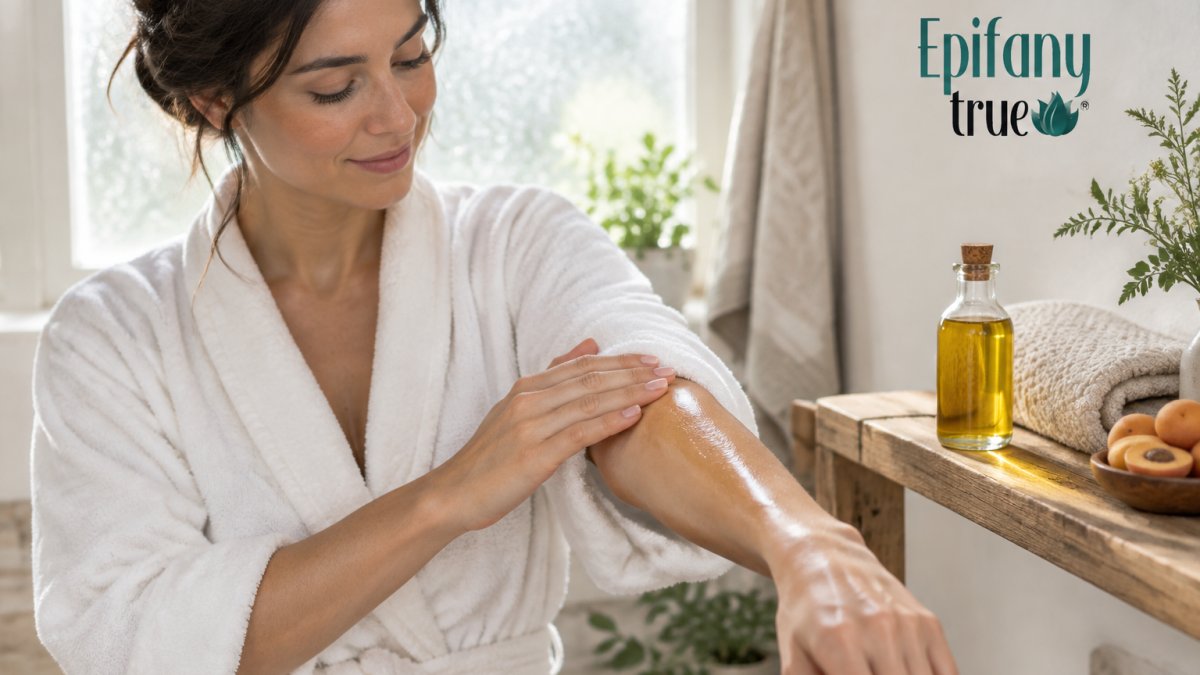
A simple routine works best:
- Pat skin dry with a towel, leaving it slightly damp.
- Warm a small amount of oil between your palms.
- Press and smooth it over arms, legs, and any rough patches.
- Let it absorb for a minute before dressing.
- Reapply to elbows, knees, and heels as needed.
For anyone wondering how to use body oil after shower without ending up slippery, the answer is restraint. A little goes further than most people expect, especially with a lightweight blend.
Amount, Frequency, and Application Order
A practical starting point is a quarter-sized amount for each limb and a smaller amount for the torso, adjusting up or down based on how quickly the skin absorbs it. Most people do well with once-daily use after showering; very dry skin may benefit from a second application on rough patches at night. Apply the oil after cleansing and before any heavier cream or balm, so the lighter oil sits closer to the skin and the heavier product seals it in. If you use a body lotion, apply the oil first on damp skin, then the lotion over it; reversing the order tends to leave the oil sitting on top and transferring to clothing.
Combining With Moisturizers and Actives
Watch out: layering several new oils and serums at once makes it impossible to tell what helped and what irritated, so introduce one product at a time and give it a week.
Routine Compatibility by Skin Type
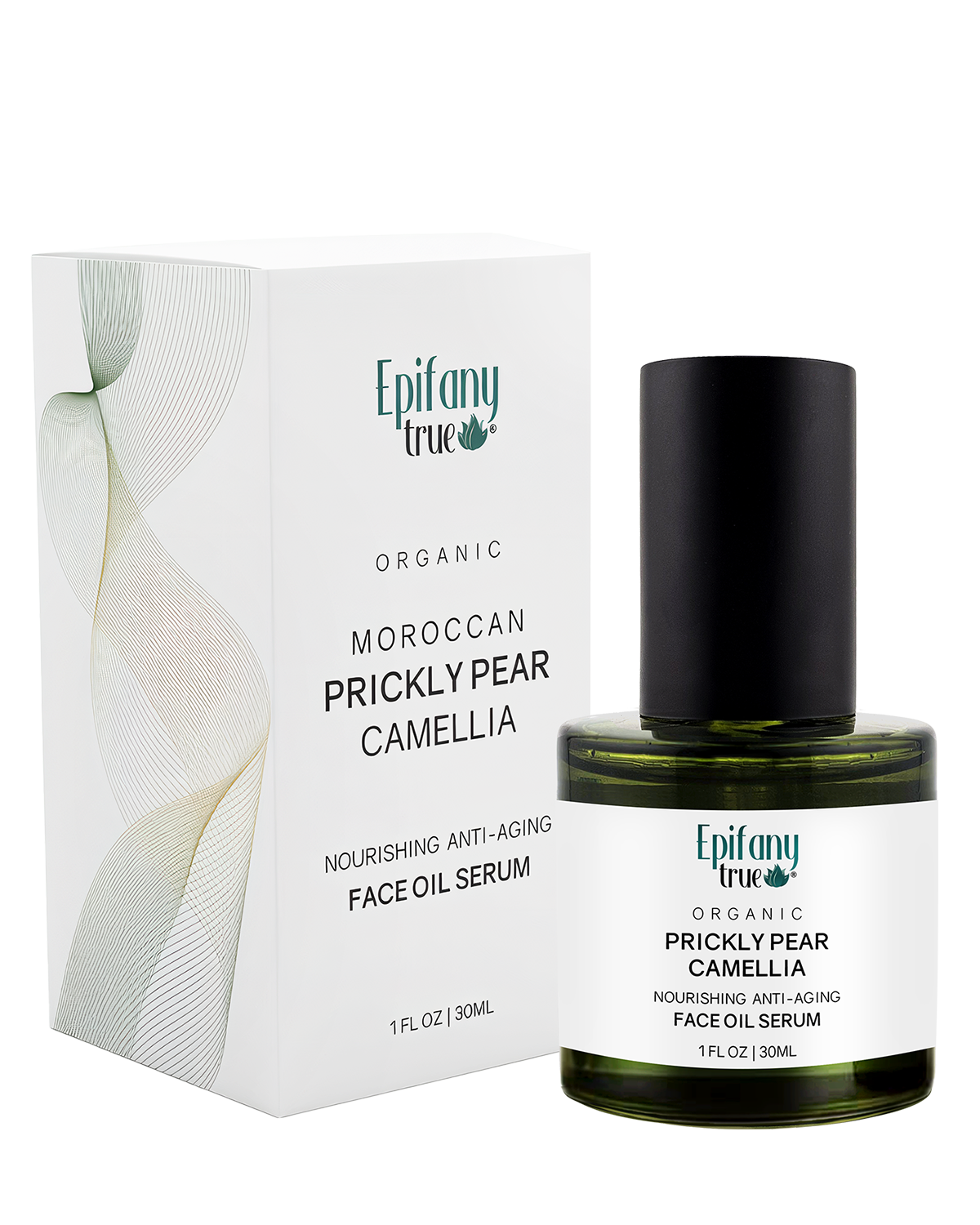
For the face, a dedicated facial formula is a better fit than a body oil, and a Prickly Pear & Camellia face serum is formulated for facial skin rather than the body.
Skincare for Compromised Skin Barriers: Where Apricot Kernel Oil Fits
Skincare for compromised skin barriers calls for fewer steps, gentler ingredients, and consistent moisture, and apricot kernel oil fits as a supporting emollient rather than a treatment. When the skin's outer layer is stressed, the goal is comfort and protection, not exfoliation or active ingredients.
Readers working through a full recovery plan can follow a step-by-step guide to repairing a damaged skin barrier, and those weighing ingredient options may find a comparison of ceramides and hyaluronic acid for barrier repair useful before adding anything new.
Watch out: layering several new oils and serums at once makes it impossible to tell what helped and what irritated. Introduce one product at a time and give it a week.
Benefits of Camellia Seed Oil for Skin and Why It Pairs With Apricot
The benefits of camellia seed oil for skin center on antioxidant content and a silky, fast-absorbing texture that complements apricot kernel oil rather than duplicating it. The Apricot & Camellia Satin Body Oil blends apricot with camellia seed oil.
For a deeper look at the camellia side of the equation, this article on whether camellia oil benefits for the face are real covers what the ingredient does and does not deliver.
Allergy, Acne and Sun Protection: The Limits of Apricot Kernel Oil
Three limits deserve a straight answer before anyone buys: nut sensitivity, comedogenicity, and sun protection. Apricot kernel oil is not a medicine, and claims about it should stay within what the evidence supports.
Nut Sensitivity and Patch Testing
People with tree nut or stone fruit allergies should patch test first, and speak with a clinician about persistent reactions.
Comedogenicity and Acne-Prone Skin
Apricot kernel oil is generally considered lower on the comedogenic scale than heavy oils, but "lower" is not "none." Acne-prone skin should test it on a small area before using it broadly. If pores clog, switch to a lighter application or use the oil only on the body.
Sun Protection Clarification
Apricot kernel oil is not a sunscreen and offers no meaningful UV protection. A 2025 rat-model study examined anti-inflammatory and moisturizing effects, but it does not establish human clinical outcomes for sun protection or dermatitis treatment (International Journal of Morphology study on apricot kernel oil). Anyone spending time outdoors needs a dedicated broad-spectrum sunscreen.
Choosing and Storing Apricot Kernel Oil
Check the ingredient list of any apricot kernel oil before buying.
Shoppers comparing a body oil with a facial oil should note that the two serve different purposes, and a Prickly Pear & Camellia face serum is formulated for the face rather than the body.
| Decision point | Choose apricot kernel oil when | Choose a facial serum when |
|---|---|---|
| Area of use | Arms, legs, back, rough patches | Face and neck |
| Texture preference | Light, gliding, quick-absorbing | Concentrated, silky, layered |
| Routine stage | After shower, before dressing | After cleansing, before balm |
| Main goal | All-over moisture and softness | Targeted facial care |
Adding Apricot & Camellia Satin Body Oil to Your Routine
The simplest way to put all of this into practice is a ready-made blend that pairs apricot kernel oil with camellia seed oil. Epifany True's Apricot & Camellia Satin Body Oil combines apricot and camellia oils with red raspberry seed oil. It is designed as an after-bath oil, lightly scented with sandalwood for daily self-care.
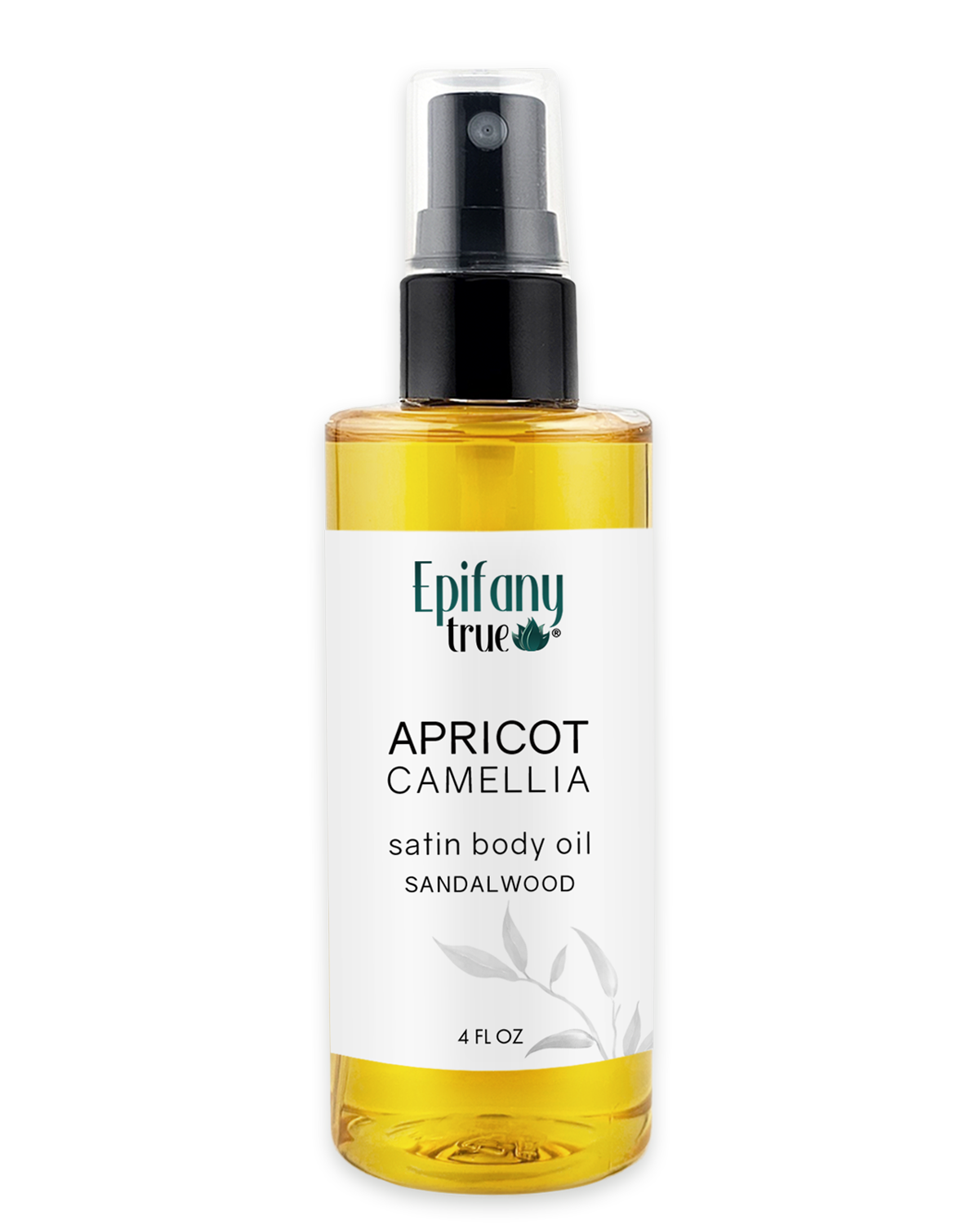
Keep it distinct from facial products: this is a body oil, while the Prickly Pear & Camellia Face Oil Serum is built for the face. Used together, each does its own job.
Dry, reactive skin does not need a cabinet full of products, just a short routine built on gentle, plant-based care. Epifany True formulates for sensitive and compromised skin with calming botanicals, plant-based ingredients, and products designed to support the skin's natural recovery process while soothing dryness and irritation. Start with the Apricot & Camellia Satin Body Oil after your next shower and give your skin a softer, more comfortable feel.
Frequently Asked Questions
Can you use apricot kernel oil on your face?
Yes, apricot kernel oil can be used on the face, though it suits some skin better than others. For sensitive or reactive facial skin, start with a patch test on the jawline and use a few drops at night. If you prefer a formulated facial oil, Epifany True's [Prickly Pear & Camellia Face Oil Serum](page:5) is a facial product rather than a body oil.
Is apricot kernel oil suitable for sensitive or compromised skin?
Apricot kernel oil is generally considered gentle, but sensitive or compromised skin needs caution. For skin stressed by treatment or a damaged barrier, patch test first and keep the routine simple. Epifany True's [Apricot & Camellia Satin Body Oil](page:1) is a body oil for use after bathing.
Does apricot kernel oil clog pores?
For body use, the [Apricot & Camellia Satin Body Oil](page:1) blends apricot kernel oil with camellia and red raspberry seed oils.
Is there a difference between apricot oil and apricot kernel oil?
Yes. Apricot kernel oil is pressed from the kernel inside the apricot pit, while apricot oil can refer to oil extracted from the fruit itself, which is far less common in skincare. Sweet kernels are generally eaten as dried fruit while bitter kernels are used for oil extraction. When shopping, look for the label apricot kernel oil or Prunus armeniaca kernel oil to confirm what you are buying.

Previous article

Amla Oil for Hair Strength: Benefits and How to Use It
Next article

How to Choose Natural Massage Oil for Infants Safely


