
How to Repair a Damaged Skin Barrier: 7 Gentle Steps for Sensitive Skin

Table of Contents
- Signs of a Damaged Skin Barrier You Should Not Ignore
- What Causes Barrier Damage: Common Triggers and Habits
- Step 1: Simplify Your Routine and Stop the Irritation
- Best Ingredients for Skin Barrier Repair
- Step 2: Restore Hydration and Support the Microbiome
- Hydration First, Then Seal
- Give Irritating Actives a Rest
- Step 3: Protect Your Barrier with Sunscreen and Lifestyle Changes
- How Long to Heal a Skin Barrier: What to Expect
- Frequently Asked Questions
Last Updated: September 16, 2026
Signs of a Damaged Skin Barrier You Should Not Ignore
When skin suddenly feels tight, dry, flaky or unusually sensitive, the skin barrier may be under stress. The skin barrier is the outermost protective layer of the skin, and one of its main jobs is helping the skin hold onto moisture while shielding it from outside irritants.
For many people, the best first step is surprisingly simple: do less, treat the skin gently and give it time to recover.
Physical Symptoms: Stinging, Tightness, and Flaking
Stinging is the clearest early warning: if a product that once felt fine now burns on contact, the barrier has thinned and nerve endings are more exposed. Tightness follows, often within minutes of washing. Flaking and rough patches come next, especially around the nose, cheeks, and mouth, because skin can no longer hold water.
Visible Changes: Redness, Inflammation, and Acne Flare-Ups
Redness and inflammation are the visible half of the story. A damaged barrier triggers a low-grade inflammatory response: persistent redness, warmth, and sensitivity to touch. Acne flare-ups are a common surprise, since bacteria and irritants penetrate more easily and previously clear skin starts breaking out.
What Causes Barrier Damage: Common Triggers and Habits
Most barrier damage is self-inflicted, which means most of it is reversible. The barrier works as a brick-and-mortar structure: skin cells are the bricks, and a lipid matrix of ceramides, cholesterol, and free fatty acids is the mortar. That mortar is slightly acidic, keeping skin's enzymes and microbiome functioning normally. Anything that strips the mortar, disrupts the acid mantle, or overwhelms repair capacity causes damage.
Over-Exfoliation and Active Overload
A common mistake is treating every skin concern with a stronger product. Retinoids, alpha- and beta-hydroxy acids, and physical scrubs accelerate cell turnover, and each carries a cost to the stratum corneum. Stacking them, or using them faster than skin can recover, strips the lipids holding the barrier together and thins the corneum itself.
What Can Stress the Skin Barrier?
Weather is one trigger, but not the only one. Indoor heating and air conditioning, long hot showers, over-cleansing and repeated friction can all make dry, sensitive skin feel worse. Sometimes the issue is not one “bad” product, but a combination of stressors happening at the same time.
- Hard water. Mineral-heavy water can leave residue on skin and may make cleansing feel less gentle. If your skin feels tight even after a mild cleanser, hard water may be contributing.
- Indoor air. Low humidity can increase dryness, especially overnight. A humidifier may help support skin comfort in dry indoor spaces.
- Friction. Rough towels, frequent rubbing, tight masks and repeated touching can all worsen already-sensitive skin.
- Overwashing. Cleansing too often can leave the skin feeling stripped instead of refreshed.
Step 1: Simplify Your Routine and Stop the Irritation
The fastest way to repair damaged skin is to stop damaging it. Before adding any new product, remove everything that could be aggravating the barrier. Most people see noticeable improvement within one to two weeks of doing only this.
What to Avoid: Retinoids, Fragrance, and Harsh Actives
Set aside retinoids, exfoliating acids, vitamin C serums, and anything fragranced until the barrier recovers. Fragrance irritates even people who have never reacted before, and it hides in products labeled "natural." Check labels for alcohol denat, essential oil blends, and physical scrubs.
Gentle Cleansing with Lukewarm Water
Wash with lukewarm water, never hot, and use a fragrance-free, non-comedogenic cleanser. Hot water strips lipids faster than anything else. Cleanse once or twice a day at most, and skip the morning cleanse if skin feels tight afterward.
Best Ingredients for Skin Barrier Repair
The best ingredients for skin barrier repair fall into two groups: lipids that rebuild the barrier itself, and humectants that pull water into the skin. You need both. A skin barrier repair cream built around ceramides handles the first job; hyaluronic acid handles the second.
Ceramides, Fatty Acids, and Cholesterol
Ceramides are the waxy lipids making up a large share of the barrier's structure, with fatty acids and cholesterol completing the trio. Skin needs all three in roughly the right ratio, which is why formulas combining them work better than single-ingredient products.
Hyaluronic Acid and Moisture Retention
Hyaluronic acid is a humectant that draws water into the upper layers of skin, improving moisture retention and easing tightness almost immediately. Apply it to damp skin, then seal with an occlusive moisturizer or facial oil so the water does not evaporate.
Step 2: Restore Hydration and Support the Microbiome
Hydration and the skin microbiome recover together. The microbiome is the community of bacteria, fungi, and other microorganisms on your skin's surface. A healthy barrier keeps that community diverse and balanced, and in return the microbiome helps maintain the slightly acidic pH that keeps barrier enzymes working. When the barrier is damaged, pH drifts upward, diversity drops, and organisms like Staphylococcus aureus can overgrow, part of why compromised skin looks red, itchy, and reactive.
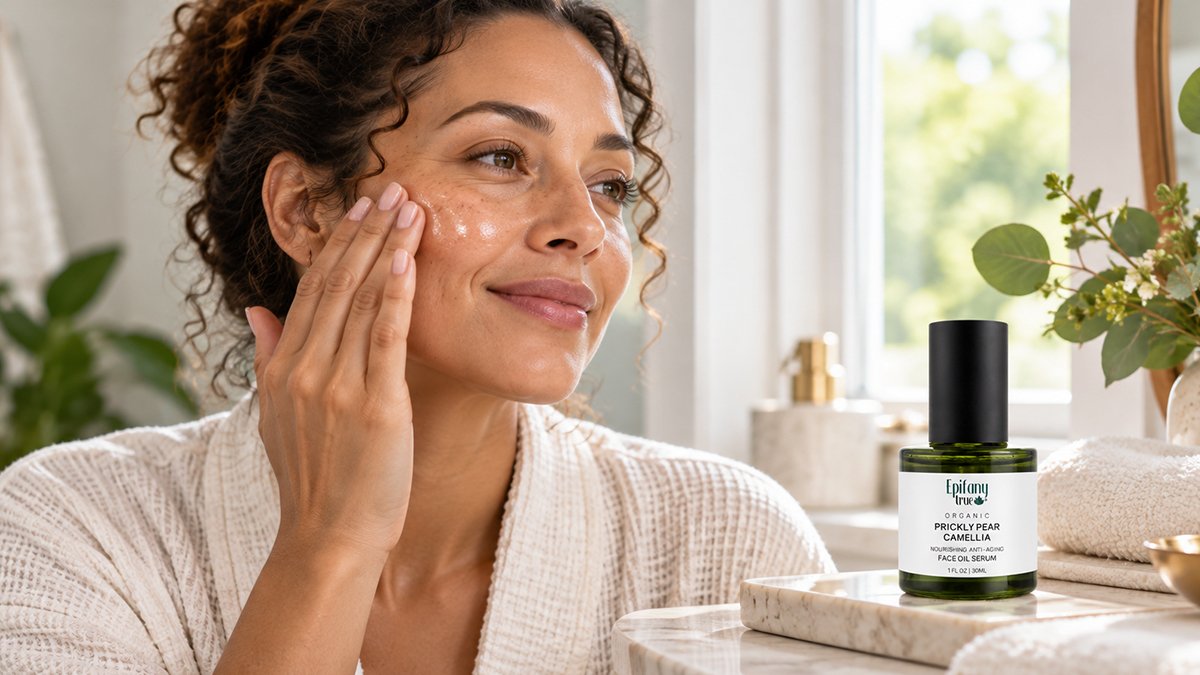
Woman gently applying a hydrating plant-based serum to her cheek to repair damaged skin in a bathroom setting
Hydration First, Then Seal
Hydration and moisture are not exactly the same thing. Hydration refers to water in the skin, while moisture refers to the oils and emollients that help keep that water from escaping. Dry, stressed skin often needs both.
Ingredients that may support this step include:
- Glycerin, a humectant that helps draw water into the skin
- Hyaluronic acid, often used to support hydration
- Ceramides and fatty acids, commonly used in moisturizers for barrier support
- Simple botanical oils, which can help soften dry skin and reduce moisture loss
Give Irritating Actives a Rest
- Retinoids and exfoliating acids. If your skin is already stinging, tight or flaky, these may be too much for the moment.
- Harsh cleansers and scrubs. Cleansing should not leave skin feeling stripped.
- Fragrance or strongly active formulas. If your skin is reactive, simpler is often better while it recovers.
- Over-cleansing. Once or twice a day is usually enough, depending on your skin and routine.
- For sensitive skin, a simple, well-tolerated moisturizer or face oil is often more helpful than a complicated routine filled with too many actives.
Step 3: Protect Your Barrier with Sunscreen and Lifestyle Changes
Protection is what keeps a repaired barrier repaired. Sun exposure degrades barrier lipids, so daily sunscreen is not optional during recovery. Choose a mineral formula if chemical filters sting, and reapply when you are outside for extended periods.
The Stress-Skin Connection and Dietary Support
Stress and skin health are linked through the body's inflammatory response: during high-stress periods, skin heals more slowly and reacts more easily. Sleep, gentle movement, and time away from screens support recovery in ways no topical can replicate.
Post-Procedure Recovery Protocols
Skin recovering from a medical or cosmetic procedure needs a stricter version of the same routine: skip all actives for at least two weeks, cleanse with lukewarm water only, and keep the area moisturized at all times. Fragrance-free, hypoallergenic products are essential, since post-procedure skin is far more reactive.
How Long to Heal a Skin Barrier: What to Expect
There is no single timeline for recovery. Mild irritation may begin improving fairly quickly once the source of stress is removed, while more significant dryness or treatment-related sensitivity may take longer. Think in terms of steady improvement rather than a perfect deadline.
| Recovery Stage | Typical Timeline | What You May Notice |
|---|---|---|
| Initial calming | 3–7 days | Less stinging and reduced tightness |
| Visible improvement | 2–4 weeks | Reduced redness and less flaking |
| Stronger barrier support | 6–12 weeks | Skin feels more comfortable and less reactive |
| Reintroducing actives | After recovery | One product at a time, slowly |
Frequently Asked Questions
How long does it take for the skin barrier to repair?
What ingredients should I avoid when my skin barrier is damaged?
Can plant-based skincare help heal a damaged skin barrier?
What destroys the skin barrier?
Previous article


