
How to Treat Reactive Facial Skin: A Gentle Recovery Plan

Table of Contents
- What Reactive Facial Skin Is (and How It Differs From Ordinary Dryness)
- Symptoms and Common Triggers: Redness, Stinging, Itching, and Burning
- Sudden Reaction or Persistent Problem? A Simple Decision Tree
- A Reactive Skin Care Routine: Step-by-Step for the First Two Weeks
- How to Repair a Damaged Skin Barrier Without Stinging Your Face
- Skincare Ingredients to Avoid for Sensitive Skin (and What to Pause)
- How Long Does Irritated Skin Take to Heal? Realistic Timelines
- Patch Testing, Reintroduction, and Red Flags That Need a Dermatologist
- Frequently Asked Questions
Last Updated: October 17, 2026
What Reactive Facial Skin Is (and How It Differs From Ordinary Dryness)
Reactive facial skin is skin that overreacts to things that most faces handle without complaint. A new cleanser, a hot shower, a windy day, or a stressful week can set off redness, stinging, or tightness within minutes. Ordinary dryness, by contrast, feels rough and tight but rarely burns.
That distinction matters more than most people realize. Dry skin lacks oil and water. Reactive skin has a nervous system problem: its barrier is compromised, so irritants slip past the surface and trigger inflammation. Stop treating it as dryness and start treating it as a barrier problem.
The symptoms tend to cluster:
- Redness that appears and fades quickly
- Stinging or burning when applying products
- Itching without a visible rash
- Tightness after washing
- Flaking that returns no matter how much moisturizer you use
If that list sounds familiar, keep reading. The plan below walks through what to pause, what to keep, and how to rebuild tolerance without guessing.
Symptoms and Common Triggers: Redness, Stinging, Itching, and Burning
The most common triggers for reactive skin are fragrance, hot water, harsh cleansers, exfoliating acids, and weather swings. Stress and lack of sleep make reactions worse, but they rarely cause them alone.
A useful way to think about triggers is by speed. Fast triggers cause a reaction within minutes: a new serum, a hot shower, sun exposure, or a rough washcloth. Slow triggers build over days: a retinol used three nights in a row, a fragrance you have used for months, or cumulative sun damage. Fast triggers are easy to spot. Slow ones need a written log.
Watch for these in particular:
- Fragrance and essential oils in leave-on products
- Soap-based cleansers that strip the skin's natural oils
- Physical scrubs and cleansing brushes
- Hot water and long showers
- Alcohol-based toners and astringents
- Weather extremes, especially cold wind and dry indoor heat
Most people blame the last product they applied. A common mistake is missing the real culprit because it was introduced weeks earlier. Track products in a simple note on your phone, with the date you started each one.
Sudden Reaction or Persistent Problem? A Simple Decision Tree
A sudden reaction is a single flare that calms within a few days once the trigger is removed. A persistent problem lasts more than two weeks, keeps returning, or spreads beyond the face. The two need different responses.
Use this decision tree:
- Did the reaction start within 24 hours of a new product? Stop that product. Return to a routine you know was safe.
- Did it start without any new product? Check weather, stress, diet changes, and medication.
- Is the skin improving within 3-5 days of removing the trigger? Continue the gentle routine below.
- Is it spreading, blistering, swelling, or oozing? Stop everything and see a doctor.
- Has it lasted more than two weeks despite simplification? See a dermatologist.
A Reactive Skin Care Routine: Step-by-Step for the First Two Weeks
The first two weeks are about subtraction, not addition. Strip the routine to three steps: cleanse, moisturize, protect. Nothing else.
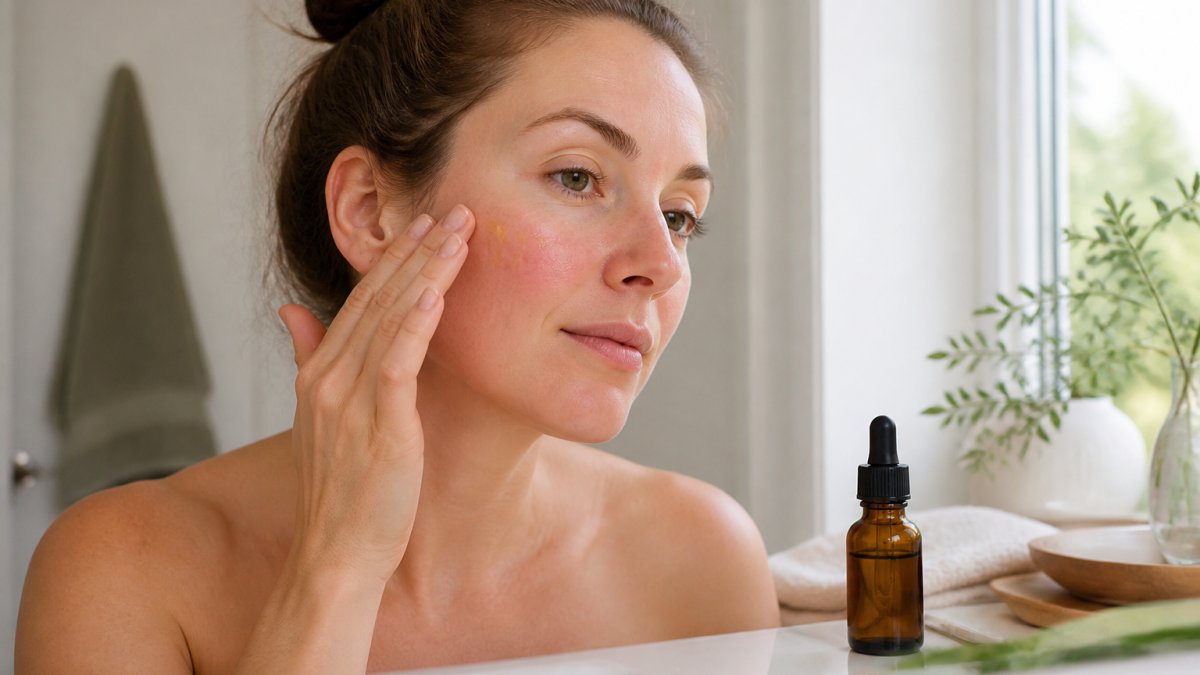
Days 1-3: Reset
- Wash with lukewarm water only, morning and night.
- Skip all actives: no acids, no retinoids, no vitamin C.
- Apply a plain, fragrance-free moisturizer while skin is still damp.
Days 4-7: Gentle cleanse
- Add a soap-free, fragrance-free cleanser at night only.
- Keep mornings water-only.
- Pat dry with a clean towel. Never rub.
Days 8-14: Support the barrier
- Apply a fragrance-free facial oil or balm at night after moisturizer.
- Add a mineral sunscreen in the morning.
- Reintroduce one product at a time, with three days between each.
For the nighttime barrier step, Epifany True's Calendula Overnight Face Balm with Sea Buckthorn is fragrance-free and essential-oil-free, made with calendula, plantain leaf, jojoba, and sea buckthorn. It suits skin that needs a protective layer rather than another active.

How to Repair a Damaged Skin Barrier Without Stinging Your Face
Barrier repair comes down to three things: stop the damage, replace what is missing, and give it time. The skin barrier is the outer layer that holds water in and keeps irritants out. When it breaks down, everything stings.
What actually helps:
- Lipids: ceramides, jojoba, squalane, and plant oils that mimic skin's own fats
- Humectants: glycerin and hyaluronic acid to pull water into the surface
- Occlusives: beeswax and balms that slow water loss overnight
- Niacinamide, if your skin tolerates it, to support barrier function
What usually backfires is layering multiple repair products at once. Each new bottle is another chance to react. One gentle cleanser, one moisturizer, and one oil or balm is enough for most people.
Epifany True's Organic Moroccan Prickly Pear & Camellia Face Oil Serum was formulated without harsh acids, retinols, or actives, for skin too tender for standard serums. Prickly pear seed oil and camellia oil deliver fatty acids and vitamin E without the sting.

Skincare Ingredients to Avoid for Sensitive Skin (and What to Pause)
Most reactive-skin advice stops at "avoid fragrance." That is correct but incomplete. The more useful question is which ingredients cause reactions, why they do, and whether each one is a permanent avoid or a temporary pause.
The mechanism matters. Reactive skin has a compromised barrier, so ingredients that would sit harmlessly on intact skin can penetrate further and provoke stinging, redness, or itching. Some ingredients are irritants (they damage the barrier directly). Others are sensitizers (they train the immune system to react over repeated exposure).
| Ingredient | Action | Why it matters |
|---|---|---|
| Added fragrance | Avoid | The most common cause of contact reactions; sensitizers build over time |
| Essential oils (lavender, citrus, peppermint, eucalyptus) | Avoid during flares | Natural but still contain volatile compounds that irritate compromised skin |
| Denatured alcohol | Avoid | Strips lipids and stings on contact |
| Sulfates (SLS, SLES) | Avoid | Over-cleans and leaves skin tight and reactive |
| Glycolic and salicylic acid | Pause | Useful later; too harsh on a broken barrier |
| Retinoids | Pause | Reintroduce slowly after 4+ calm weeks |
| Vitamin C (L-ascorbic acid) | Pause | Low pH can sting compromised skin |
| Physical scrubs and cleansing brushes | Avoid | Cause micro-tears on fragile skin |
| Benzoyl peroxide | Pause | Drying and irritating; often unnecessary on reactive skin |
| Urea at high percentages | Pause | Exfoliating at higher strengths; gentler at low percentages |
What may be tolerated. Not every "active" is off-limits. Niacinamide, panthenol, allantoin, glycerin, squalane, and ceramides are generally well tolerated and support the barrier.
Read labels closely. "Fragrance-free" and "unscented" are not the same claim. A product labeled unscented may contain a masking fragrance. "Natural" says nothing about irritation potential, essential oils are natural and are among the most common triggers.
Pausing an ingredient is not the same as banning it forever. Most actives can return once the barrier has been stable for a month, introduced at low strength, once or twice a week.
How Long Does Irritated Skin Take to Heal? Realistic Timelines
Mild irritation from a single product usually settles in 3 to 7 days once the trigger is removed. Barrier recovery from longer-term damage takes longer, often 2 to 4 weeks of consistent gentle care.
What to expect:
- Days 1-3: stinging and redness start to ease
- Week 1: tightness improves, flaking may increase briefly
- Weeks 2-4: tolerance returns, skin feels less reactive to water and weather
- Weeks 4-8: most people can reintroduce one gentle active
Healing is not linear. A good week followed by a bad day is normal, especially with weather changes or poor sleep. Judge progress by the trend, not by a single morning.
If the skin has not improved at all after two full weeks of a simplified routine, that is a signal to get professional input rather than keep experimenting.
Patch Testing, Reintroduction, and Red Flags That Need a Dermatologist
Patch testing is the only reliable way to reintroduce products without guessing, and it is the step most people skip. The goal is to expose a small area of skin to a product before committing your whole face to it.
A practical patch-test protocol:
- Apply a small amount behind the ear or on the inner forearm, twice daily, for three days.
- If there is no reaction, test on a small patch of jawline for another three days.
- Only then use it on the full face.
- Introduce one product at a time, with at least three days between additions.
- If a reaction appears, stop the new product and wait until skin is calm again before testing the next one.
This staged approach matters because a reaction on day one tells you little. Some sensitizers build over repeated exposure, which is why the three-day window is the minimum, not the target.
When self-care is not enough. A sudden reaction that calms within a few days of removing the trigger is usually a product reaction. A persistent problem that lasts more than two weeks, keeps returning, or spreads beyond the face may have another cause, rosacea, eczema, seborrheic dermatitis, or contact dermatitis. These conditions can look like ordinary reactivity but need different care, and some worsen with the wrong products.
See a dermatologist if you notice:
- Swelling around the eyes, lips, or throat
- Blistering, oozing, or crusting
- A rash that spreads beyond the face
- Pain that worsens rather than eases
- Symptoms that persist past two weeks of gentle care
- Any reaction after starting a new medication
A reaction with swelling or trouble breathing is a medical emergency. Seek urgent care immediately rather than waiting to see if it settles.
For very dry, rough patches on the body alongside facial sensitivity, a simple fragrance-free salve can help. Epifany True's Calendula Soothing Salve uses calendula-infused sunflower oil, beeswax, and vitamin E with no added fragrance.

Frequently Asked Questions
How long does it take for reactive skin to calm down?
Most mild flare-ups settle within 7 to 14 days once you remove the trigger and simplify your routine. Barrier repair is slower: expect 2 to 4 weeks of consistent gentle cleansing and moisturizing before skin feels reliably comfortable, and up to 6 to 8 weeks for stubborn redness. If nothing improves after four weeks of a genuinely simple routine, or symptoms worsen, see a dermatologist rather than adding more products.
What should I stop using when my face becomes irritated?
Pause anything with exfoliating acids, retinoids, vitamin C serums, physical scrubs, and cleansing brushes first. Then check labels for added fragrance, essential oils, drying alcohols, and preservatives like methylisothiazolinone, which are common triggers for sensitive skin. Hot water, washcloths, and long showers belong on the pause list too. Once skin is calm for two weeks, reintroduce one product at a time with a patch test behind the ear.
Can a damaged skin barrier make your face more reactive?
Yes. The outer layer of skin holds in water and keeps irritants out. When it thins or breaks down from over-cleansing, harsh actives, cold weather, or stress, moisture escapes and irritants get in more easily, so products that once felt fine suddenly sting. That is why barrier repair comes before any brightening or anti-aging step. Gentle cleansing, fragrance-free moisturizing, and sun protection do more for reactivity than adding stronger products.
When should you see a dermatologist about facial redness or irritation?
Book an appointment if redness is one-sided, spreads quickly, or comes with swelling, hives, blistering, or fever. Also seek care if you have persistent flushing across the cheeks and nose with bumps, eye irritation, or a burning sensation that does not settle, since those patterns can point to rosacea or another condition that needs proper diagnosis. A dermatologist can also review prescription options like topical steroids or calcineurin inhibitors, which should not be self-prescribed.
Reactive facial skin rarely resolves through one perfect product. It resolves through subtraction, patience, and a barrier that finally gets a chance to rebuild. Epifany True makes fragrance-free, plant-based care for exactly this situation: a soothing salve, a waterless overnight balm, and an active-free face oil serum built for skin that cannot tolerate much. Start with one product, test it properly, and give your skin the weeks it needs.
Previous article


