
Skincare for Chemo-Induced Skin Sensitivity

Last Updated: October 23, 2026
Quick Summary
Chemo-induced skin sensitivity occurs when chemotherapy damages your skin barrier, making skin more reactive and prone to dryness. Managing it requires a simplified routine with fragrance-free cleansers, barrier-supporting moisturizers, and consistent sun protection to prevent painful cracking and infection.
- Use lukewarm water and fragrance-free, pH-balanced cleansers to avoid stripping natural oils.
- Apply moisturizer while skin is still damp and use richer balms at night to lock in hydration.
- Avoid fragrance, essential oils, alcohol, retinoids, and strong actives that irritate compromised skin.
- Apply broad-spectrum SPF 30 or higher daily, as chemotherapy increases photosensitivity.
- Contact your oncology team if you develop spreading rashes, signs of infection, blistering, or intense itching that disrupts sleep.
Table of Contents
- Why Chemotherapy Affects Skin Barrier Function
- Understanding Dry, Itchy Skin During Chemotherapy
- Skincare for Chemo Patients: A Daily Routine
- Skincare Ingredients to Avoid During Chemo
- Sensitive Skin After Chemotherapy: Recovery Care
- Sun Protection and Photosensitivity During Treatment
- When to Contact Your Oncology Care Team
- Frequently Asked Questions
Why Chemotherapy Affects Skin Barrier Function
Chemotherapy damages healthy cells alongside cancer cells (Chemotherapy to Treat Cancer). This includes the cells that make up your skin barrier.
Different cancer treatments affect skin differently. Some drugs cause more dryness. Others trigger rashes or redness.
According to evidence-based skin care guidance from PubMed Central, proactive skin care using gentle cleansers and regular moisturizing helps reduce treatment-related skin problems.
Understanding Dry, Itchy Skin During Chemotherapy
Dry, itchy skin is one of the most common side effects. Chemotherapy reduces the oils your skin naturally produces.
Itching can be intense. It may feel like nothing helps. But scratching makes it worse by damaging the skin further and inviting infection.
Redness and rashes often follow dryness. Your skin may feel tight, flaky, or raw. Some people describe it as a constant burning sensation.
| Symptom | What It Feels Like | Why It Happens |
|---|---|---|
| Xerosis (dryness) | Tight, flaky, uncomfortable | Reduced natural oil production |
| Pruritus (itching) | Intense urge to scratch | Irritated nerve endings in dry skin |
| Erythema (redness) | Burning, inflamed patches | Inflammation from treatment damage |
| Skin cracks | Pain, bleeding risk | Severe dehydration of outer layers |
Skincare for Chemo Patients: A Daily Routine
Building a consistent routine prevents flare-ups. The goal is to cleanse gently, hydrate deeply, and protect from irritants. Most people need a simplified routine, your skin cannot handle the multi-step regimens that work for healthy skin.
Morning Routine
Start your day with a light cleanse and hydration.
-
Rinse with lukewarm water. Skip hot water entirely. Heat strips oils from skin and worsens dryness. Use water that feels cool to the touch.
-
Use a fragrance-free, pH-balanced cleanser. Look for products labeled "gentle" or "for sensitive skin." Avoid foaming cleansers, they strip too much. Pat skin dry gently; do not rub.
-
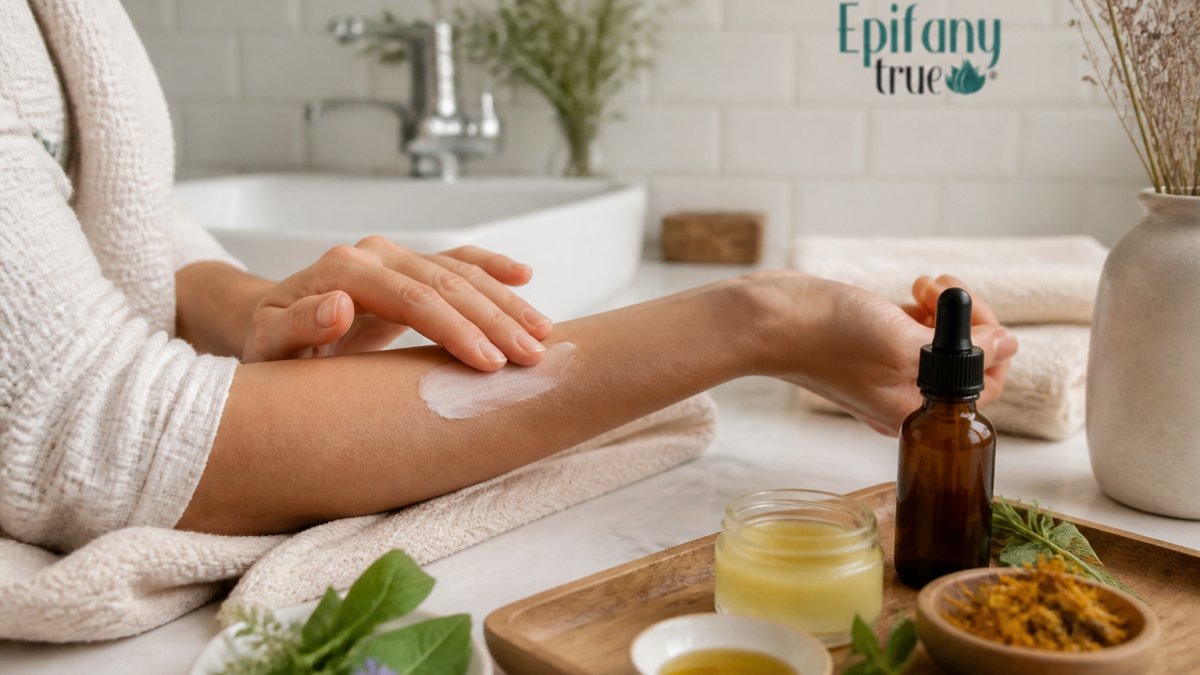
Apply moisturizer while skin is still damp. Damp skin absorbs hydration better than dry skin. Choose a fragrance-free moisturizer or oil-based product. Epifany True's Prickly Pear & Camellia Face Oil Serum provides lightweight hydration without fragrance or essential oils, making it suitable for reactive skin during treatment.
-
Apply sunscreen if you'll be outside. Use broad-spectrum SPF 30 or higher. Chemotherapy can increase photosensitivity (Skin and Nail Changes and Cancer Treatment - Side Effects).
Evening Routine
Evening is when your skin needs deeper support.
-
Cleanse gently again. Use the same fragrance-free cleanser. Lukewarm water only.
-
Pat skin dry completely. Any remaining moisture can trap irritants.
-
Apply a richer moisturizer or balm. At night, your skin can handle heavier formulations. Epifany True's Calendula Overnight Face Balm with Sea Buckthorn is designed for nights when facial skin feels exceptionally dry or depleted. The calendula and sea buckthorn support the skin's natural recovery process while you sleep.

-
Consider an occlusive layer. A fragrance-free salve seals in moisture. Epifany True's Calendula Soothing Salve contains no added fragrance or essential oils, making it safe for reactive skin. Apply a thin layer over your moisturizer on extra-dry areas.

Bathing and Cleansing
How you bathe matters as much as what you use.
- Bathe or shower no more than once daily. Frequent bathing removes natural oils faster.
- Use lukewarm water, never hot. Hot water damages the skin barrier further.
- Keep baths or showers short. Five to ten minutes is enough. Longer exposure increases dryness.
- Use a gentle, fragrance-free cleanser. Avoid body washes with fragrance, dyes, or sulfates.
If your scalp is sensitive from hair loss, use the same gentle approach. Epifany True's Scalp Soothing Oil is formulated to support tender scalp skin without fragrance or essential oils that could irritate further.
Skincare Ingredients to Avoid During Chemo
Your skin cannot tolerate what it could before. Certain ingredients trigger reactions in treatment-stressed skin. But the bigger issue is formulation: a product can list a "good" ingredient and still irritate compromised skin because of how it is preserved, scented, or emulsified. Use the lists below as a starting filter, then confirm with your oncology team before introducing anything new.
Avoid these:
- Fragrance and essential oils (even "natural" ones can irritate)
- Alcohol or acetone
- Retinoids or vitamin A derivatives
- Acids (glycolic, salicylic, lactic)
Choose instead:
- Ceramides (help repair the skin barrier)
- Glycerin (draws moisture into skin)
- Niacinamide (reduces inflammation)
- Hyaluronic acid (holds water in skin)
How to Read a Label Without Getting Fooled
Ingredient lists are ordered by concentration, but "fragrance" and "parfum" can appear near the end and still cause reactions. Scan the full list, not just the first five ingredients. Watch for these hidden irritants:
- "Fragrance," "parfum," "aroma", umbrella terms that can hide dozens of compounds.
- "Essential oil" or specific oils (lavender, citrus, peppermint, eucalyptus), natural does not mean non-irritating.
- "Alcohol denat," "SD alcohol," "isopropyl alcohol", drying and barrier-disrupting.
- "Parabens," "methylisothiazolinone," "phenoxyethanol", preservatives that some reactive skin cannot tolerate; patch-test first.
Formulation Matters as Much as the Ingredient
A ceramide cream in a fragranced base is not the same as a fragrance-free ceramide cream. Look for:
- Short ingredient lists, fewer ingredients means fewer chances for a reaction.
- Ointments and balms over lotions, they contain fewer preservatives and seal moisture better.
- Pump or tube packaging over jars, less exposure to air and bacteria.
- "Fragrance-free" over "unscented", unscented products may contain masking fragrance.
Epifany True formulations are built on this principle. Products like the Calendula Comfrey Herbal Salve combine calendula and comfrey infusions with beeswax and organic oils, no fragrance, no essential oils, no irritating actives. For lighter daily hydration, the Prickly Pear & Camellia Face Oil Serum uses plant oils without added fragrance, and the Apricot & Camellia Satin Body Oil is a lightweight option for after-bath moisturizing on the body, distinct from the face serum and better suited to larger areas of skin.

Sensitive Skin After Chemotherapy: Recovery Care
Skin sensitivity often continues after treatment ends. Recovery takes time. Your skin barrier rebuilds gradually over weeks or months. Managing chemo-induced skin sensitivity during recovery requires the same gentle approach, but area-specific care and a simple tracking plan make the biggest difference.
Care by Body Area
Different areas of skin are affected differently. Adjust your routine accordingly:
- Face: Use a fragrance-free, non-foaming cleanser and a lightweight oil serum in the morning, then a richer balm at night. The Prickly Pear & Camellia Face Oil Serum is light enough for daytime, while the Calendula Overnight Face Balm with Sea Buckthorn supports overnight recovery.
- Hands: Frequent washing strips oils. Apply a fragrance-free salve after every wash and before bed. The Calendula Soothing Salve is formulated for this kind of repeated use.
- Scalp: If hair loss or sensitivity makes the scalp tender, use a gentle, fragrance-free oil. The Scalp Soothing Oil is designed for tender scalp skin without fragrance or essential oils.
- Body: After bathing, apply a lightweight body oil while skin is still damp. The Apricot & Camellia Satin Body Oil is a good fit for after-bath moisturizing on larger areas, and it is distinct from the face serum.
A Simple Symptom and Product Log
A short written log helps you and your care team spot patterns. Track:
- Date and time of each product application
- Symptoms (dryness, itching, redness, cracking) and where they appear
- Treatment timing (days since last infusion or radiation session)
- Anything new you introduced that day
Bring the log to appointments. It can help your oncology team distinguish a product reaction from a treatment-related skin change and adjust care faster.
When Recovery Slows
If dryness persists, layer products. The Calendula Overnight Face Balm works well as a final layer during recovery because it contains no fragrance or essential oils that might trigger reactions.
Some people find that their skin remains more reactive long-term. If that's your experience, treat it as permanently sensitive skin and continue fragrance-free, gentle products indefinitely. Do not rush back to active ingredients or complex skincare.
Sun Protection and Photosensitivity During Treatment
Chemotherapy increases sun sensitivity. Your skin burns more easily and more severely.
Broad-spectrum photoprotection is part of evidence-based skin care during cancer treatment. Use sunscreen daily, even on cloudy days.
Sun protection steps:
- Apply sunscreen with SPF 30 or higher every morning
- Reapply every two hours if you're outside
- Wear protective clothing: long sleeves, hats, sunglasses
- Avoid direct sun during peak hours (10 AM to 4 PM)
Choose a fragrance-free, mineral sunscreen if your skin is reactive. Chemical sunscreens can irritate treatment-stressed skin.
After treatment ends, continue sun protection for at least a year. Your skin remains more photosensitive during recovery.
When to Contact Your Oncology Care Team
Some skin changes need medical attention. Do not wait to report them.
Contact your care team if you experience:
- Skin cracks that bleed or show signs of infection
- Severe rash that spreads or worsens despite gentle care
- Signs of infection: warmth, pus, swelling, or red streaking
- Blistering or peeling skin
Your oncology team can prescribe medicated creams or recommend additional support. Some reactions require treatment adjustments. Early reporting helps prevent complications.
Before introducing any new topical product, ask your healthcare team. Even gentle, fragrance-free products should be cleared if your skin is severely compromised.
Chemotherapy-induced skin sensitivity is temporary, but it demands immediate, gentle care.
Epifany True's plant-based formulations support this approach. Products like the Calendula Soothing Salve and Prickly Pear & Camellia Face Oil Serum contain calendula, comfrey, and botanical oils without fragrance or essential oils, exactly what treatment-stressed skin needs. Explore Epifany True's Skin Soothing Solutions collection to find products designed for your recovery.
Frequently Asked Questions
What is the best skincare for chemo patients?
The best skincare for chemo patients prioritizes gentle, fragrance-free products that support the skin barrier. Look for products without added fragrance, essential oils, or common irritants. Fragrance-free salves and balms with soothing botanicals like calendula can help address dryness and irritation without triggering sensitivity reactions. Always ask your oncology care team before introducing new topical products.
What skincare ingredients should I avoid during chemotherapy?
During chemotherapy, avoid products containing fragrance (synthetic or natural), essential oils, alcohol, retinoids, acids (AHAs, BHAs), vitamin C, benzoyl peroxide, and sulfates. These can irritate already-sensitive skin or increase photosensitivity. Skip scrubs, rough cloths, and friction-based exfoliation. Instead, choose unscented formulations with simple, skin-barrier-supporting ingredients like beeswax, jojoba oil, and botanical infusions. Check product labels carefully, even 'natural' products may contain irritating essential oils or fragrance compounds.
How can I help dry or itchy skin during cancer treatment?
Manage dry, itchy skin by bathing in warm (not hot) water, using gentle, low-pH cleansers, and moisturizing immediately while skin is still damp. Apply fragrance-free creams, oils, or balms to seal in hydration. Avoid scratching; instead, use soft fabrics and keep nails trimmed. If itching persists or worsens, contact your care team, they may recommend calamine lotion or other treatments to ease discomfort.
When should I contact my care team about a skin reaction?
Contact your oncology team immediately if you experience skin cracks, signs of infection (warmth, pus, increasing redness), severe blistering, or rashes that spread rapidly. Also reach out if itching or dryness becomes unbearable despite moisturizing, or if a new product causes burning, stinging, or swelling. Your care team can assess whether a reaction is treatment-related or requires medical attention, and can recommend prescription creams or other interventions to help manage symptoms safely alongside your cancer treatment.


