
Is Botanical Scalp Salve Worth It for Redness?

Last Updated: October 25, 2026
Quick Summary
A botanical scalp salve is worth it for redness only as surface comfort, not as a cure. It can soften dry, flaky patches and seal in moisture, but it cannot diagnose or treat the cause of redness, so see a dermatologist if redness persists beyond a couple of weeks.
- Patch test a new scalp product for about 48 hours on your inner forearm or behind your ear.
- Choose a fragrance-free, short-ingredient formula and apply it sparingly to clean, dry scalp.
- Salves suit dry, rough patches but can build up on fine or thin hair near the roots.
- Stop and reassess if you see no improvement after two to three weeks of consistent use.
- See a dermatologist if redness spreads, crusts, bleeds, or comes with pain or hair loss.
Table of Contents
- What a Botanical Scalp Salve Can and Cannot Do for Redness
- Salve vs. Serum vs. Oil vs. Medicated Treatment: A Side-by-Side Comparison
- What Can I Put on My Scalp for Redness?
- Scalp Salve Ingredients for Sensitive Skin
- How to Patch Test Scalp Products Before You Commit
- Residue, Hair Texture, and Who a Salve Actually Suits
- When to See a Dermatologist for Scalp Redness
- Choosing Your Scalp Soothing Routine
- Frequently Asked Questions
What a Botanical Scalp Salve Can and Cannot Do for Redness
A botanical scalp salve is a plant-based, oil-and-wax topical treatment designed to moisturize and comfort the scalp surface. It can soften dry, flaky patches, reduce the tight, itchy feeling that comes with a compromised skin barrier, and seal in hydration. Epifany True formulates salves and soothing oils for exactly this kind of sensitive, delicate skin care.
What a salve cannot do is diagnose or treat the cause of redness. That distinction matters more than most product pages admit. Scalp redness has many drivers, and a 2026 review in Scalp Rosacea: Current Evidence notes that scalp rosacea is underrecognized, can mimic other scalp conditions, and has no established diagnostic approach. In short: comfort is achievable, certainty is not.
What the Research Actually Shows
The evidence base is thinner than the marketing suggests. A 2024 review in Cosmetics on botanical scalp benefits reported that 71% of subjects with sensitive scalps saw reduced redness and that scalp moisturization rose 14.1% with a specific botanical product. Two caveats matter: the study was product-specific, and the summary does not establish that the product was a salve. It is not proof that salves as a category work.
A separate 2024 rosacea review in PubMed Central on natural compounds discusses reported botanical benefits while cautioning that limitations deserve weight. Translation: botanicals may help symptoms, but they are not a substitute for identifying the cause.
Salve vs. Serum vs. Oil vs. Medicated Treatment: A Side-by-Side Comparison
Each format suits a different job, and the right choice depends on your scalp location, hair texture, and whether the redness has a known cause. Salves seal moisture with wax; oils spread thin and absorb fast; serums deliver lighter hydration; medicated treatments target a diagnosed condition. Here is how they stack up for a red, sensitive scalp, with the trade-offs that matter.
| Format | Best For | Feel & Residue | Evidence Quality | Watch-Outs |
|---|---|---|---|---|
| Salve | Dry, rough patches, barrier sealing | Rich, waxy, stays on surface | Ingredient-level evidence for calendula, chamomile; limited salve-specific trials | Can build up on fine hair; occlusive |
| Oil | Tender, dry scalp, easy massage | Lightweight, absorbs well | Similar ingredient-level evidence; carrier oils well studied for barrier support | Some botanicals sting reactive skin |
| Serum | Light daily hydration | Thin, fast-absorbing | Formulation-specific; often lighter actives | Less occlusive than a salve |
| Medicated treatment | Diagnosed conditions | Varies by active ingredient | Clinical trials for specific conditions | Requires medical guidance; may irritate |
Salve vs. oil: A salve's wax base creates a semi-occlusive layer that slows water loss, which helps dry, cracked patches but can feel heavy near the roots. For a tender scalp that needs comfort rather than heavy occlusion, the 100% Pure & Natural Scalp Soothing Oil blends organic sunflower, jojoba, coconut, and chamomile oils to calm irritation without the waxy weight of a salve.

Salve vs. serum: Serums are water- or light-oil-based and deliver hydration without residue, but they lack the sealing power of a salve. If your redness comes with flaking and tightness, a salve may be more practical; if it is mild and you want a no-residue finish, a serum fits better.
Salve vs. medicated treatment: Medicated treatments address diagnosed conditions such as seborrheic dermatitis or psoriasis, often with active ingredients like ketoconazole or coal tar. A botanical salve can comfort the surface but does not replace a prescribed treatment. If you are using a medicated shampoo or topical, ask your clinician before layering a salve on top, since occlusion can increase absorption of some actives.
Evidence quality: Most support for botanical salves comes from ingredient-level studies (calendula, chamomile) rather than trials of finished salve products. That means the confidence you should place in redness-reduction claims is moderate at best. A 2024 review in Cosmetics on botanical scalp benefits reported reduced redness in 71% of subjects with sensitive scalps using a specific botanical product, but the study was product-specific and did not establish that salves as a category work.
What Can I Put on My Scalp for Redness?
The safest first step is a fragrance-free, short-ingredient botanical product, applied sparingly to clean, dry scalp. Fragrance and essential oils are common irritation triggers, so a simple formula lowers the risk of an adverse reaction before you learn how your skin responds.
For readers who want a concrete option, the Calendula Soothing Salve 2oz Fragrance-Free pairs calendula-infused organic sunflower oil with organic beeswax and vitamin E, with no added fragrance or essential oils. It seals moisture into dry, sensitive-feeling areas. If you would rather browse a small, curated range of gentle formulas, the Sensitive Scalp Care collection gathers scalp-focused options for reactive skin.

Watch out: a salve soothes the surface but will not resolve redness caused by an underlying condition. If redness spreads, crusts, or comes with pain, stop self-treating and get it assessed.
Scalp Salve Ingredients for Sensitive Skin
Look for a short list built around calming, barrier-supporting ingredients. Calendula, chamomile, sunflower oil, jojoba, and beeswax are the workhorses; each supports moisture balance and comfort rather than aggressive exfoliation.
Calendula earns its place through a long history in botanical skincare for delicate, stressed skin. Readers who want the deeper ingredient story can explore why calendula is good for skin, which covers its calming and moisturizing properties in detail.
Skip or patch test anything with added fragrance, drying alcohols, or a long essential-oil blend. Ingredient safety is personal: a botanical that calms one person can trigger an allergic reaction in another.
How to Patch Test Scalp Products Before You Commit
Patch testing takes about 48 hours and is the single best way to avoid an allergic reaction. Apply a small amount to the inner forearm or behind the ear, leave it uncovered, and watch for itching, stinging, or new redness over two days.
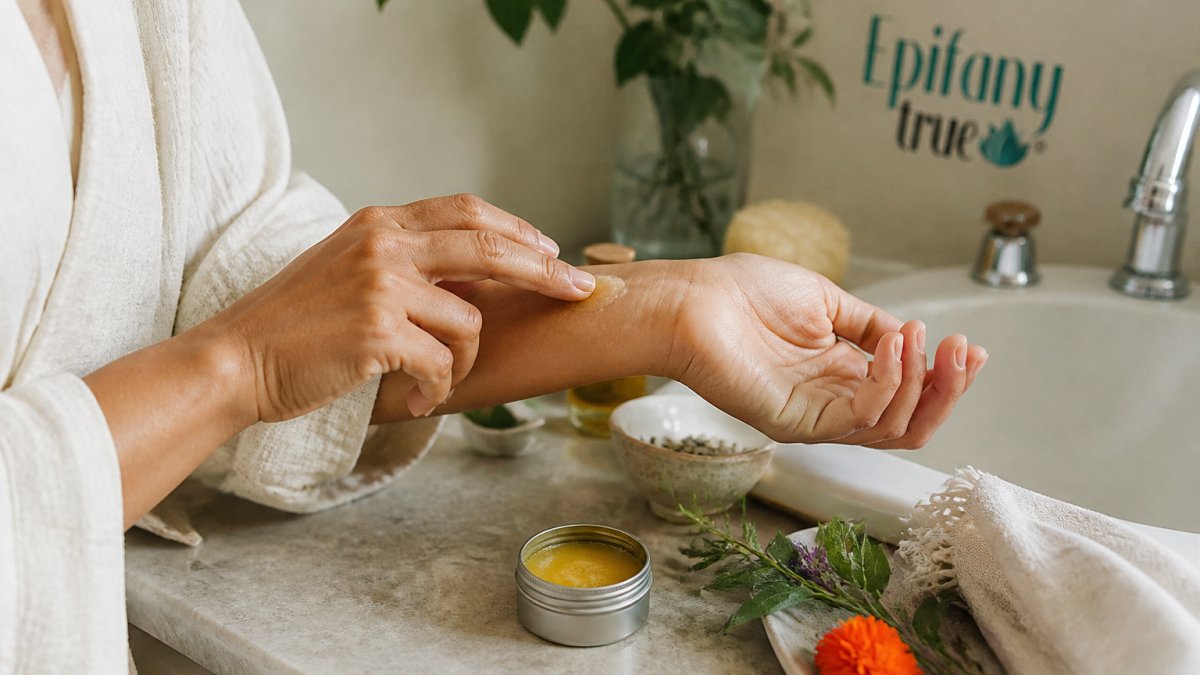
Before testing, it helps to understand why botanical oils sting sensitive skin, since a mild tingle and a true reaction are not the same thing. If a product burns rather than warms, wash it out and do not retry.
Residue, Hair Texture, and Who a Salve Actually Suits
Salves leave more residue than oils or serums, and that is the trade-off for their sealing power. On fine or thin hair, a heavy balm can weigh strands down and create product buildup near the roots. On coarse, dry, or closely cropped hair, the richness is usually welcome.
Best for: dry, rough, or flaky patches and anyone who wants maximum moisture sealing on a sensitive scalp. Skip if: you have fine hair and want a no-residue finish, in which case a lightweight oil is the better fit.
Readers weighing whether a balm suits their routine can read more on the best fragrance-free salve for irritation before deciding.
When to See a Dermatologist for Scalp Redness
See a dermatologist when redness persists beyond a couple of weeks, spreads, crusts, bleeds, or comes with significant pain, hair loss, or swelling. Those signs point to a condition a salve cannot address, and self-treating delays a proper diagnosis.
A clinician can distinguish between conditions that look alike. If medical treatment has made your scalp more sensitive, ask your healthcare team before introducing any new topical product.
Choosing Your Scalp Soothing Routine
Build the routine around comfort first, then evidence. Start with a patch test, choose a fragrance-free formula matched to your hair texture, apply sparingly, and give it a couple of weeks before judging results. Track what changes and what does not.
A practical sequence: cleanse gently, apply a small amount of soothing oil or salve to the affected area, and leave it be. If redness worsens or does not improve, escalate to a dermatologist rather than adding more products.
Practical value assessment: To decide whether a botanical scalp salve is worth it, consider cost per use, amount needed, and time to results. A 2 oz salve used sparingly (about a pea-sized amount per application) can last several weeks to a couple of months, depending on the area treated. Realistic timelines: mild irritation may calm within a week or two; persistent redness from a condition like seborrheic dermatitis is unlikely to resolve with a salve alone. Set a clear checkpoint: if you see no improvement after two to three weeks of consistent use, stop and reassess rather than continuing to buy more product.
Criteria for continuing: Continue if redness and itching are visibly reduced, if the product does not cause buildup or weigh down your hair, and if the cost fits your budget. Stop if redness spreads, crusts, or worsens, or if you develop new itching or stinging. A salve is worth it when it provides measurable comfort without masking a condition that needs medical care.
Frequently Asked Questions
Can a botanical scalp salve soothe redness?
A botanical scalp salve can help moisturize and soften dry, irritated skin, and some plant-based ingredients have calming properties. A 2024 review in Cosmetics reported that subjects with sensitive scalps saw reduced redness and scalp moisturization with a specific botanical product, but that result is product-specific and the sample size was not disclosed. A salve may ease discomfort, but it does not diagnose or treat the underlying cause of redness.
What ingredients should I look for in a scalp salve for sensitive skin?
Look for short ingredient lists built around calendula-infused oils, sunflower oil, jojoba oil, and beeswax, which moisturize and form a protective layer. Fragrance-free formulas reduce the chance of irritation. Avoid salves with added essential oils or fragrance if your scalp is reactive. Epifany True Calendula Soothing Salve 2oz Fragrance-Free ($13.99) uses calendula-infused organic sunflower seed oil, organic beeswax, and vitamin E with no added fragrance.
How do I patch test a new scalp salve?
Apply a small amount to the inner forearm or behind the ear and leave it for 24 to 48 hours. Watch for itching, burning, or new redness. If there is no reaction, apply a small amount to a quarter-sized area of the scalp and wait another 24 hours before full use. Stop and wash it out if you notice swelling, hives, or worsening irritation, and ask your healthcare team before using any new topical product during medical treatment.
When should I see a dermatologist about a red scalp?
See a dermatologist if redness spreads, persists for more than a few weeks, comes with scaling, pus, hair loss, or pain, or does not improve with gentle care. Because redness alone cannot identify the cause, a professional assessment is the reliable next step.
Is scalp oil or salve better for a dry, red scalp?
It depends on your hair type and how much residue you can tolerate. Oils spread easily and suit most hair types, while salves are thicker and seal in moisture but can feel heavy on fine or dense hair. Epifany True offers both: Scalp Soothing Oil 4oz ($19.99) with sunflower, jojoba, coconut, and chamomile oils, and Calendula Soothing Salve 2oz Fragrance-Free ($13.99) for concentrated moisture without added fragrance.
Redness on a sensitive scalp is frustrating, and finding a product that comforts without stinging can feel like guesswork. Epifany True makes gentle, plant-based care for delicate skin, including fragrance-free salves built on calendula and comfrey, lightweight soothing oils with jojoba and chamomile, and short-ingredient formulas designed for reactive skin. Get started with Epifany True and give your scalp comfort it can actually tolerate.

Previous article

Next article


