
7 Non Irritating Skincare Picks for Sensitive Skin

Last Updated: October 28, 2026
Quick Summary
Non irritating skincare is formulated to minimize redness, stinging, itching and contact reactions in reactive skin. Choose fragrance-free, essential-oil-free, lipid-rich formulas without exfoliating acids or retinoids, and patch test each new product for 24 to 48 hours before using it broadly.
- Roughly half the world's population considers its skin sensitive, rising to about 60% among women.
- Hypoallergenic is not a regulated term, and natural ingredients are not automatically gentle.
- Apply a thin layer to the inner forearm, cover it, and wait 24 to 48 hours.
- During a flare, strip your routine to cleanser, one moisturizer and sunscreen.
- The $19 Calendula Overnight Face Balm is fragrance-free and essential-oil-free.
Table of Contents
- What Non Irritating Skincare Actually Means
- The 7 Gentle Picks at a Glance
- Best Skincare for Redness and Sensitive Skin
- Skincare Ingredients to Avoid for Sensitive Skin
- Patch Testing Skincare Products the Right Way
- A Gentle Skincare Routine for Sensitive Skin
- Telling Irritation, Allergy, and a Flare Apart
- Building Your Sensitive Skin Starter Set
- Frequently Asked Questions
What Non Irritating Skincare Actually Means
Non irritating skincare is the category of products formulated to minimize the chance of provoking redness, stinging, itching or contact reactions in reactive skin. Roughly half the world's population considers its skin sensitive, according to Market.us skincare statistics, and that number climbs to about 60% among women. The sensitive skin care products market reflects that demand, projected by Grand View Research's sensitive skin care market report to grow from $57.4 billion in 2026 to $104.3 billion by 2033.
Here's the uncomfortable part most guides skip: "non-irritating" is a claim, not a regulated standard.
How to Read a Label Before You Trust It
Start with the ingredient list, not the front of the bottle. "Hypoallergenic" is not a regulated term, and natural ingredients are not automatically gentle, as Alexandra Kubas's analysis of hypoallergenic skincare notes. The FDA's guidance on allergens in cosmetics confirms cosmetic allergic reactions most often appear as itchy, red rashes.
The 7 Gentle Picks at a Glance
Seven Epifany True formulas cover the sensitive-skin basics: cleansing support, barrier repair, overnight moisture and targeted soothing. Each is fragrance-free or essential-oil-free where it matters most.
Price and Format Comparison
| Product | Format | Price | Best For |
|---|---|---|---|
| Calendula Overnight Face Balm | Waterless balm | $19.00 | Very dry, depleted skin |
| Prickly Pear & Camellia Serum | Face oil serum | $40.00 | Reactive, actives-intolerant skin |
| Calendula Soothing Salve | Fragrance-free salve | $13.99 | Hands, elbows, heels |
| Calendula Comfrey Herbal Salve | Herbal salve | $15.99 | Slow-to-settle irritation |
| Calendula Healing Salve | Essential-oil salve | $14.99 | Dry patches, chapped skin |
| Calendula Oil | Infused remedy oil | $14.99 | Body, scalp, lips |
| Comfrey & Calendula Skin Oil | Herbal body oil | $17.99 | Rough, weather-worn areas |
Best Skincare for Redness and Sensitive Skin
The best skincare for redness and sensitive skin skips exfoliating acids and retinoids entirely in favor of lipid-rich, active-free formulas. Two Epifany True products lead here for different reasons.
Calendula Overnight Face Balm with Sea Buckthorn
This $19 waterless balm pairs certified organic calendula and plantain leaf with jojoba, sea buckthorn fruit oil and beeswax. It is fragrance-free and essential-oil-free, and the beeswax helps reduce moisture loss overnight. Check the full ingredient list and purchase the Calendula Overnight Face Balm.

Prickly Pear & Camellia Face Oil Serum
Formulated with a "No Actives" philosophy, this $40 serum was created for sensitive skin. It carries prickly pear seed oil and camellia oil. View the Prickly Pear & Camellia Face Oil Serum details.

Skincare Ingredients to Avoid for Sensitive Skin
Most sensitive-skin guides hand you a short avoid list and move on. That list is a starting point, not a verdict. The more useful skill is knowing how to check a label yourself, because the same ingredient can be a problem in one formula and tolerable in another depending on concentration, how it is buffered, and how long it stays on your skin.
The Usual Suspects, and Why They Vary
- Fragrance and parfum. The most common cause of cosmetic contact reactions, and the hardest to evaluate because "fragrance" can hide dozens of undeclared compounds. Fragrance-free is a meaningful claim; "unscented" is not, since unscented products can still contain masking fragrance.
- Drying alcohols. Denatured alcohol, SD alcohol, and isopropyl alcohol appear high in ingredient lists on toners and quick-dry formulas. Not every alcohol is drying, fatty alcohols like cetyl and stearyl alcohol are emollients, so read the specific name, not the word "alcohol."
- Essential oils. Lavender, citrus, peppermint, and eucalyptus oils add scent and can provoke reactions in reactive skin, especially in leave-on products. A rinse-off cleanser with a trace of essential oil is a different risk than an overnight balm built around it.
- Exfoliating acids and retinoids. Glycolic acid, salicylic acid, and retinol are legitimate actives, but they are the wrong starting point for skin that is currently stinging or flushing. Pause them during a flare rather than layering more soothing product on top.
- Preservatives. The review of cosmetic ingredient sensitization notes cosmetics must be safe under foreseeable use and lists allergenic responses among the most frequent adverse reactions. Preservatives are necessary, an unpreserved water-based product is its own risk, so the goal is awareness, not avoidance of all preservatives.
How to Check a Label in Under a Minute
For a deeper look at which botanicals stay gentle, read this guide to gentle botanical oils for sensitive skin.
Patch Testing Skincare Products the Right Way
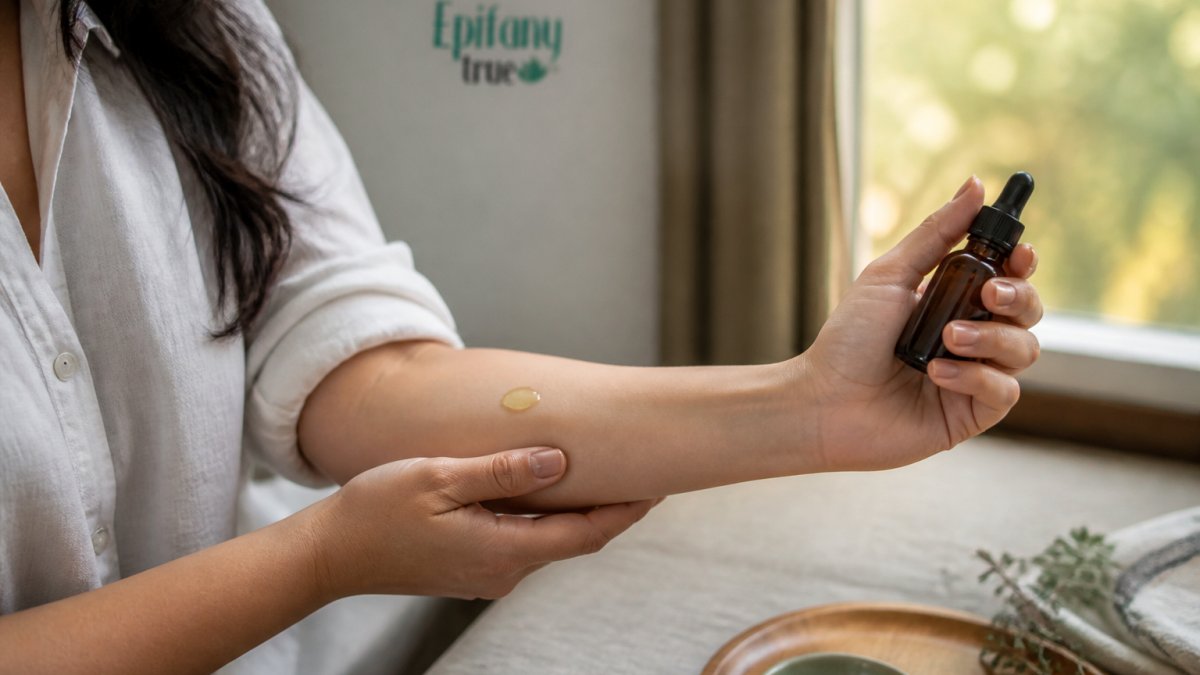
Patch testing skincare products means applying a small amount to a discreet area and waiting before using it broadly. Apply a thin layer to the inner forearm, cover it, and leave it undisturbed for 24 to 48 hours. No reaction means proceed cautiously; redness, itching or swelling means stop. Introduce one new product at a time so you can identify the culprit.
A Gentle Skincare Routine for Sensitive Skin
A gentle routine is not one sequence, it is a sequence matched to what your skin is doing right now. For step-by-step guidance on repairing and protecting a compromised skin barrier, follow the gentle steps for sensitive skin. Reactive, dry, redness-prone, and acne-prone skin need different starting points, and the most common mistake is layering more products to fix a flare instead of removing what is aggravating it.
The Baseline Sequence
- Cleanse with a fragrance-free milky cleanser and lukewarm water
- Pat dry, never rub
- Apply a soothing serum or oil to damp skin
- Seal with a balm at night
- Wear mineral sunscreen every morning
Routines by Sensitivity Level
Dry, depleted skin. The Calendula Overnight Face Balm with Sea Buckthorn is a waterless balm that pairs calendula and plantain leaf with jojoba, sea buckthorn fruit oil, and beeswax. The beeswax helps reduce moisture loss overnight.
What to Pause During a Flare
When skin is actively stinging, flushing, or peeling, strip the routine to cleanser, one moisturizer, and sunscreen. Pause exfoliating acids, retinoids, vitamin C, and any product with fragrance or essential oils. Do not add a new soothing product mid-flare, you will not be able to tell whether it helped or hurt. Wait until skin is calm for several days before reintroducing one product at a time.
Telling Irritation, Allergy, and a Flare Apart
Irritation, allergy and a skin-condition flare are three different problems that need different responses. Irritation is a direct reaction that typically stings or burns soon after application and settles when you stop the product. Allergy is immune-mediated, often delayed 24 to 72 hours, and can worsen with repeat exposure. A rosacea or eczema flare follows its own pattern and needs a clinician's input. If a reaction spreads or blisters, stop everything and seek medical advice.
Building Your Sensitive Skin Starter Set
Browse the sensitive face care collection.
Epifany True offers plant-based oils, salves and balms made with botanicals like calendula and comfrey for compromised and sensitive skin. Explore the Calendula Overnight Face Balm or the Prickly Pear & Camellia Face Oil Serum.
Frequently Asked Questions
Which skincare ingredients are least likely to irritate sensitive skin?
Epifany True's Calendula Soothing Salve is made with calendula-infused organic sunflower seed oil, organic beeswax, and vitamin E. It has no added fragrance or essential oils.
How do you patch test a new skincare product?
Apply a small amount to your inner forearm or behind your ear, then leave it alone for 24 to 48 hours without washing the area. Check for redness, itching, or burning at the site. If nothing happens, try it on a small area of your face for two or three nights before using it everywhere. Introduce one new product at a time so you can tell which one caused a reaction if one appears.
Can plant-based skincare still irritate sensitive skin?
Epifany True offers the Calendula Overnight Face Balm with Sea Buckthorn, which is fragrance-free and essential-oil-free and is made with calendula, plantain leaf, jojoba, and sea buckthorn fruit oil.
What is the best skincare for redness and sensitive skin?
The Prickly Pear & Camellia Face Oil Serum is described as having a "No Actives" philosophy and is made with prickly pear seed oil and camellia oil.

Next article


