
Why Calendula Is Good for Skin: Benefits & Uses

Table of Contents
- What Makes Calendula a Skin Care Powerhouse
- Calendula Oil for Irritated Skin: How It Calms Redness and Discomfort
- Calendula for Sensitive Skin Recovery: Supporting the Skin Barrier
- How to Use Calendula Oil: Application Tips for Best Results
- Calendula and Other Skincare Actives: What to Mix and What to Avoid
- Extraction Methods and Potency: Why Infusion Matters
- Sustainability and Sourcing: Choosing Ethical Calendula Products
- Frequently Asked Questions
Last Updated: September 23, 2026
What Makes Calendula a Skin Care Powerhouse
Calendula is a golden-flowered botanical, Calendula officinalis, whose petals have been infused into oils and salves for centuries to calm irritated skin. This guide from Epifany True breaks down why calendula is good for skin, from its compound profile to how it supports a compromised barrier, and where it fits in a sensitive-skin routine.
The short answer: calendula earns its place because it combines antioxidant protection with genuine soothing action, and it does so without the sting that many active-heavy products cause on reactive skin. For anyone whose face or body cannot tolerate a ten-step routine, that combination matters more than any single "miracle" ingredient.
Key Compounds: Flavonoids, Carotenoids, and Terpenoids
Three families of compounds do the heavy lifting. Flavonoids act as antioxidants, carotenoids support skin condition and elasticity, and terpenoids carry much of the plant's traditional anti-inflammatory reputation. Calendula also contains naturally occurring compounds studied for antifungal and antibacterial activity.
That profile explains why the flower shows up in wound-care and dermatitis research, not just in folk remedies. The National Center for Complementary and Integrative Health overview of calendula notes its long history of topical use for minor skin irritation. The practical takeaway: you are not buying a pretty flower, you are buying a concentrated source of free radical protection and calming compounds.
Calendula Oil for Irritated Skin: How It Calms Redness and Discomfort
Calendula oil for irritated skin works by delivering soothing compounds directly to the surface while the carrier oil slows transepidermal water loss. Less moisture escaping means less tightness, less flaking, and visibly less redness over time.

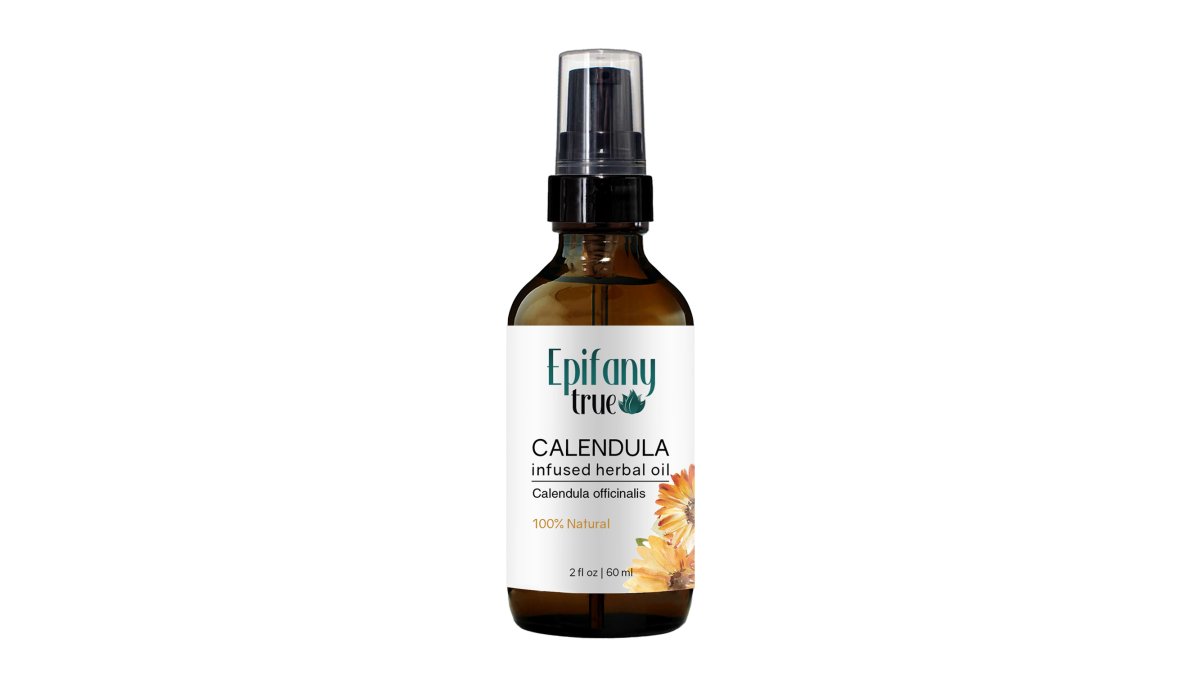
A common mistake is slathering oil onto broken or weeping skin.
Calendula for Sensitive Skin Recovery: Supporting the Skin Barrier
Calendula for sensitive skin recovery centers on the lipid barrier, the outer layer that keeps moisture in and irritants out. When that barrier is compromised, skin reacts to things it previously tolerated, and calendula's role is to calm and support rather than strip.
Wound Healing and Tissue Regeneration
Calendula is traditionally associated with wound healing and tissue regeneration, largely because its compounds appear to support the skin's own repair processes rather than forcing a reaction. It is also linked to collagen synthesis support, which matters for skin elasticity over time.
How to Use Calendula Oil: Application Tips for Best Results
Learning how to use calendula oil correctly takes about two minutes and prevents most bad reactions. The method matters as much as the product.
- Cleanse gently with lukewarm water and pat dry, leaving skin slightly damp.
- Warm 2-4 drops between clean palms.
- Press the oil into the area, working outward, without rubbing.
- Apply to the face before heavier creams; apply to the body after bathing.
- Use once or twice daily, and reduce frequency if skin feels congested.
Patch Testing and Safe Use
Patch testing is not optional for reactive skin. Apply a small amount inside the forearm, wait 24 hours, and check for redness, itching, or burning before using it more widely. If you are undergoing chemotherapy or radiation, ask your healthcare team before introducing any new topical product.
| Skin Situation | Suggested Approach | Frequency |
|---|---|---|
| Dry, intact skin | Calendula oil, pressed in after bathing | 1-2 times daily |
| Very dry or fragile areas | Oil followed by a fragrance-free salve | 2 times daily |
| Reactive facial skin | Patch test, then oil under moisturizer | Once daily to start |
| Tender scalp | Massage oil into scalp, leave 30 minutes | 1-2 times weekly |
Calendula and Other Skincare Actives: What to Mix and What to Avoid
Most guides treat calendula as a standalone ingredient. In a real routine, it sits alongside retinol, vitamin C, exfoliating acids, and benzoyl peroxide, and how you sequence those matters more than whether they are "compatible" on paper.
How Calendula Interacts With Common Actives
- Retinol and retinoids: Retinol accelerates cell turnover and often causes dryness, flaking, and a compromised barrier in the first weeks. Calendula oil applied on off-nights, not layered on top of retinol, can reduce the tightness that drives people to quit. Do not apply both in the same step; the occlusive carrier oil can increase retinol penetration and intensify irritation.
- Vitamin C (L-ascorbic acid): Vitamin C is acidic and can sting reactive skin. Calendula pairs well when used at a different time of day, vitamin C in the morning, calendula at night, because the two serve opposite functions: antioxidant defense versus barrier recovery.
- AHAs and BHAs (glycolic, lactic, salicylic): These exfoliants strip surface cells and temporarily thin the barrier. Layering calendula immediately after an acid does not prevent the exfoliation; it just adds oil on top of freshly exposed skin. A better pattern is to alternate days: acid one night, calendula the next.
- Benzoyl peroxide: This acne treatment is drying and can cause peeling. Calendula can help with the resulting dryness, but apply it to unaffected or recovering areas rather than directly over active breakouts being treated with benzoyl peroxide.
- Niacinamide, hyaluronic acid, glycerin, ceramides, squalane: These are barrier-supporting or hydrating ingredients that layer cleanly with calendula. A common sequence is hydrating serum, then calendula oil, then a fragrance-free moisturizer to seal.
A Practical Sequencing Rule
The simplest rule: separate calendula from strong actives by time, not by layering. If you use a prescription retinoid, exfoliating acid, or benzoyl peroxide, apply calendula on the nights you skip the active, or in the morning if the active is used at night. This gives the barrier a recovery window instead of stacking insult on insult.
Extraction Methods and Potency: Why Infusion Matters
"Calendula extract" on a label can mean four very different things, and the method determines which compounds actually reach your skin. The flower's beneficial flavonoids, carotenoids, and terpenoids are oil-soluble, so how they are captured matters as much as how much flower was used.
The Four Main Extraction Types
- Infused oil (maceration): Whole or dried calendula flowers are steeped in a carrier oil, commonly sunflower, olive, or jojoba, for days to weeks. This is the traditional method and the one most compatible with sensitive skin, because it produces a gentle, lipid-rich oil without solvent residue. Potency depends on flower-to-oil ratio and steep time; a well-made infusion is deep gold to amber, not pale yellow.
- CO2 extract: Supercritical carbon dioxide pulls a concentrated, resin-like extract from the flowers. It is more potent per gram than an infusion and captures a broader range of compounds, but it is typically sold as a thick concentrate that must be diluted into a carrier oil before use. It is not the same product as a ready-to-use infused oil.
- Tincture (alcohol or glycerin): Alcohol or glycerin extracts water-soluble and some alcohol-soluble compounds. Tinctures are usually taken internally or diluted into water-based formulas; they are not oil-phase ingredients and do not deliver the same lipid barrier support as an infused oil.
- Standardized extract: A concentrated extract adjusted to a set percentage of a marker compound. Useful in supplements, but for topical use the carrier and the full compound profile matter more than a single standardized number.
Why This Matters for Product Choice
If your goal is barrier support and soothing dry, reactive skin, an infused oil is the most direct fit, it is already in a skin-friendly lipid base. If you want a concentrated active to add to a custom formula, a CO2 extract gives more potency per drop but requires dilution. A tincture belongs in a water-based product, not an oil.
Sustainability and Sourcing: Choosing Ethical Calendula Products
Sourcing decides both potency and impact. Calendula grows readily in temperate climates, and organic cultivation avoids the pesticide residue that has no place in a product meant for compromised skin.
Frequently Asked Questions
Can I put calendula on my face?
Yes, calendula is gentle enough for facial skin, especially for those with dry, sensitive, or reactive skin. It helps soothe irritation and support the skin barrier without clogging pores. Look for fragrance-free calendula products if your face is easily irritated. Apply a small amount to clean skin and patch test first, particularly if you are undergoing medical treatment that increases sensitivity.
Is calendula oil safe for all skin types?
Calendula oil is generally well tolerated, including by those with sensitive skin. It is non-comedogenic and rich in fatty acids that moisturize without feeling heavy. However, anyone with known allergies to plants in the daisy family should avoid it. If you are experiencing skin reactions from chemotherapy or radiation, ask your healthcare team before introducing any new topical product.
How does calendula compare to chamomile for soothing skin?
Both calendula and chamomile calm irritation, but they work differently. Calendula is known for supporting wound healing and tissue regeneration, while chamomile is often used for its calming scent and gentle anti-inflammatory effect. Some products combine both for broader soothing support. If your skin is very reactive, a fragrance-free calendula salve may be the gentler starting point.
Does calendula help with eczema and dermatitis?
Calendula has traditional use for soothing eczema and dermatitis because of its anti-inflammatory and moisturizing properties. It helps reduce redness and itching while supporting the skin barrier. For best results, apply a calendula-infused oil or salve after bathing to lock in moisture. If your eczema is severe or infected, consult a dermatologist alongside using botanical care.
Previous article

Next article


