
How to Treat Dry Flaky Skin: A Step-by-Step Guide

Table of Contents
- Step 1: Identify Why Your Skin Is Dry and Flaky
- Step 2: Adjust Your Bathing and Showering Habits
- Step 3: Choose the Right Moisturizer for Dry Flaky Skin
- Dry Flaky Skin on Face Treatment: A Gentler Routine
- Dry Itchy Skin Home Remedies That Actually Help
- How to Stop Skin Peeling and How Long Dry Skin Takes to Heal
- Red Flags: When to See a Dermatologist
- Frequently Asked Questions
Last Updated: October 20, 2026
Step 1: Identify Why Your Skin Is Dry and Flaky
Learning how to treat dry flaky skin starts with understanding what is causing it. Dry flaky skin is a condition where the skin's outer barrier loses water faster than it can hold it, leaving rough, peeling patches behind. This guide from Epifany True walks through the causes, the fixes, and the red flags in order.
The skin barrier works like a brick wall. Skin cells are the bricks, and natural oils are the mortar. When the mortar thins out, moisture escapes and irritants get in. That is when flaking, tightness, and itching begin.
Common Causes and Triggers
Most cases trace back to a short list of culprits:
- Harsh soaps and body washes that strip natural oils
- Hot showers and long baths that wash away the barrier
- Cold, windy weather with low humidity
- Indoor heating and air conditioning that dry the air
- Aging, since oil production slows over time
- Medical treatments such as chemotherapy or radiation, which can leave skin fragile and reactive
- Skin conditions like eczema or psoriasis
A common mistake is treating the flakes with scrubs and loofahs. Scrubbing removes the top layer and makes the barrier weaker.
Symptoms to Watch For
Flaky skin shows up in predictable ways. Watch for white or gray scales, a rough texture, tightness after washing, and itching that gets worse at night. Redness and small cracks can follow if the dryness goes untreated.
Step 2: Adjust Your Bathing and Showering Habits
Bathing habits are the fastest lever to pull, because water exposure is where the barrier loses the most moisture. Hot water dissolves the lipid mortar between skin cells faster than warm water, and long exposure swells the outer layer so it sheds more readily once it dries. Cut both and most people notice less flaking within a week.
Warm Water, Short Showers, Gentle Cleansers
Follow these habits:
- Set the water to warm, not hot, roughly the temperature you would use to wash your hands comfortably.
- Keep showers under ten minutes; five to seven is better for very dry skin.
- Use a fragrance-free, gentle cleanser instead of bar soap. Traditional bar soaps are alkaline and strip lipids more aggressively.
- Skip harsh scrubs, loofahs, and washcloths on flaky areas.
- Pat skin dry with a towel instead of rubbing, and leave it slightly damp.
The Three-Minute Window
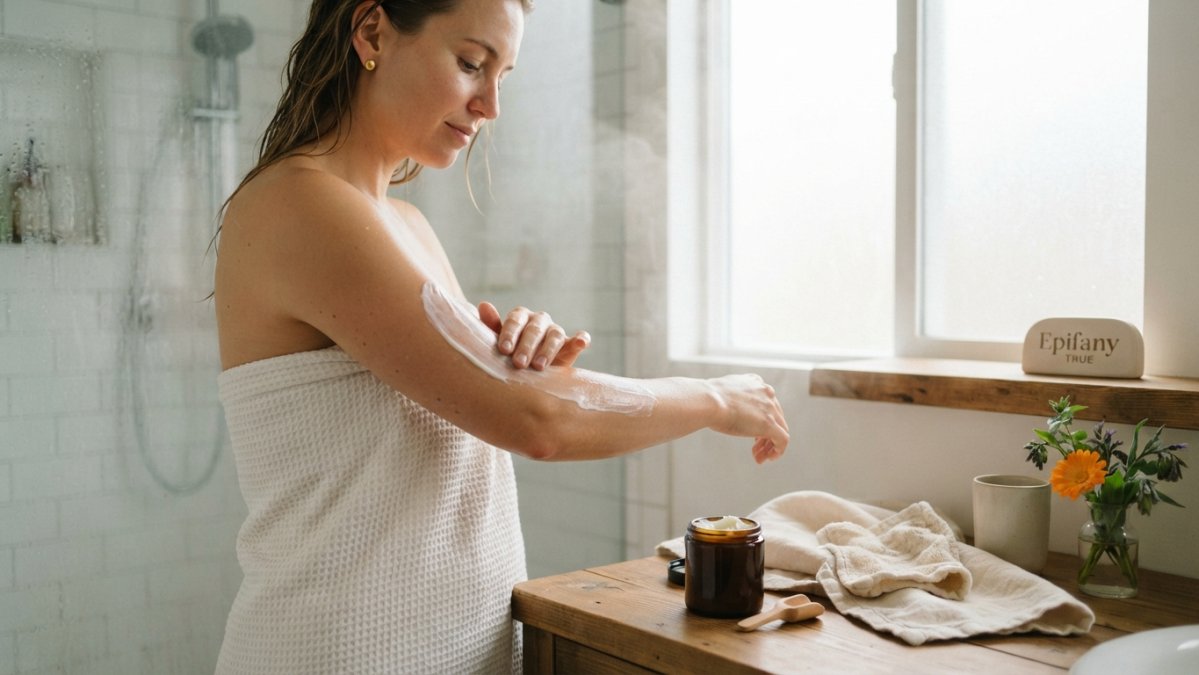
The step that matters most comes after you step out: apply moisturizer within about three minutes, while skin is still damp. Damp skin absorbs and holds product far better than dry skin, and the water underneath gets trapped rather than evaporating. This single habit does more for flaking than any single product choice.
For the body, a lightweight oil layered on damp skin works well for large areas. Epifany True's Apricot & Camellia Satin Body Oil pairs apricot kernel oil with camellia seed oil, both light, fast-absorbing lipids that spread easily over damp skin without a heavy residue. It is a body product, distinct from the face serum below, and suits after-bath use on arms, legs, and torso. Follow with a thicker salve only on stubborn spots like heels and elbows.
Bathing Adjustments by Situation
- Winter or forced-air heating: shorten showers further and apply body oil while skin is still damp from the shower, not after toweling fully dry.
- Eczema-prone skin: skip bubble baths and bath oils with fragrance; plain colloidal oatmeal baths are gentler.
- Older adults: oil production declines with age, so the after-bath window matters even more, keep a body oil or cream within arm's reach of the shower.
- Hands and feet: these areas lose moisture fastest and are washed most often; reapply a salve after every hand wash and before bed.
Step 3: Choose the Right Moisturizer for Dry Flaky Skin
The right moisturizer depends on how dry the skin is. Thicker is not always better, but for flaking skin it usually is. The goal is to seal water in, not just add water on top.
Creams and Ointments vs. Lotions
Lotions are mostly water and feel light. They suit mild dryness on large areas. Creams carry more oil and hold moisture longer. Ointments and balms are the heaviest option and work best on stubborn spots like heels, elbows, and hands.
For very dry, rough areas, Epifany True's Calendula Soothing Salve pairs calendula-infused sunflower oil with beeswax and vitamin E. It has no added fragrance, which matters for reactive skin.

Ingredient-Level Guidance
Look for these ingredients:
- Humectants like glycerin draw water into the skin
- Emollients like jojoba and sunflower oil soften rough texture
- Occlusives like beeswax and petroleum jelly seal moisture in
- Calming botanicals like calendula and plantain leaf soothe irritation
Avoid added fragrance, essential oils, and drying alcohols if skin is sensitive. Fragrance-free beats "unscented," since unscented products can still contain masking fragrances.
Dry Flaky Skin on Face Treatment: A Gentler Routine
Facial skin is thinner than body skin and has more active oil glands in some areas and fewer in others, so it needs a lighter touch than the body. Skip harsh cleansers, hot water, and active ingredients like retinol or strong acids while the barrier is healing, flaking plus actives is a recipe for stinging and more irritation.
Why Facial Flaking Is Different
Flaking on the face has a shorter list of common causes than the body, and the cause changes the treatment:
- Ordinary dryness, tightness and fine flakes, worse in winter and after washing. Responds to gentle cleansing and barrier repair.
- Over-exfoliation or retinol use, stinging, redness, and peeling after actives. Pause the active until the barrier recovers.
- Seborrheic dermatitis, flaking on the eyebrows, around the nose, and along the hairline, often with redness. This needs a treatment plan, not a richer moisturizer.
- Contact reaction, flaking with itching or redness after a new product. Stop the product and simplify the routine.
If flaking is concentrated in the eyebrows, nose, or hairline, treat it as a possible seborrheic dermatitis pattern and see a dermatologist rather than layering on more moisture.
A Simple Routine
- Cleanse with a mild, fragrance-free wash, once at night, and water alone in the morning is often enough for dry skin.
- Pat dry and leave skin slightly damp.
- Press a few drops of facial oil into the skin.
- Seal with a richer balm at night if needed.
For reactive or treatment-stressed skin, Epifany True's Prickly Pear & Camellia Face Oil Serum is a pure lipid blend with no harsh acids or retinols. It was formulated with chemotherapy and radiation patients in mind, where skin often turns paper-thin and painfully dry. It is a face product, distinct from the Apricot & Camellia Satin Body Oil used on the body.

At night, the Calendula Overnight Face Balm adds a waterless layer of calendula, jojoba, and sea buckthorn to reduce moisture loss while you sleep. Sea buckthorn is rich in fatty acids that support the barrier, and the balm's waterless format means no preservatives and no fragrance.

Adjustments by Age and Skin Type
- Older adults: oil production and barrier lipids decline with age, so a facial oil plus balm at night is often more effective than a light lotion.
- Eczema-prone skin: keep the routine to cleanser, oil, and balm; patch-test anything new on the jawline first.
- Darker skin tones: dryness and inflammation can look ashy or gray rather than red, and post-inflammatory darkening can follow irritation, so gentle, fragrance-free products matter even more.
- Oily but flaky skin: flaking can coexist with oiliness; use a light oil rather than a heavy balm, and avoid stripping cleansers that trigger more oil production.
Dry Itchy Skin Home Remedies That Actually Help
Home remedies help most when they support the barrier instead of attacking the flakes. A cool compress calms itching fast. Running a humidifier keeps indoor air from pulling moisture out of skin. Oatmeal baths soothe irritation, and loose cotton clothing reduces friction.
Drink water, but do not expect it to fix flaking on its own. Moisture has to be held in from the outside. Keep nails short to limit damage from scratching.
How to Stop Skin Peeling and How Long Dry Skin Takes to Heal
Peeling usually stops once the barrier rebuilds. Gently remove loose flakes with a soft cloth after a warm shower, never by picking. Picking tears healthy skin and restarts the cycle.
How Long Does Dry Skin Take to Heal?
Mild flaking often improves in one to two weeks with consistent care. More stubborn dryness can take a month or longer. Medical-treatment-related dryness may need ongoing gentle care throughout treatment.
| Situation | Typical Healing Time | Best First Move |
|---|---|---|
| Mild winter flaking | 1-2 weeks | Shorter warm showers, daily moisturizer |
| Stubborn body patches | 2-4 weeks | Thick cream or salve twice daily |
| Facial dryness | 1-2 weeks | Gentle cleanser, facial oil |
| Treatment-related dryness | Ongoing | Fragrance-free, no-active products |
Red Flags: When to See a Dermatologist
Some flaking needs medical care, not a better moisturizer. See a dermatologist if flaking spreads quickly, does not improve after a few weeks of consistent care, or comes with severe itching, pain, or cracking that bleeds.
Also seek care if you notice oozing, yellow crusting, or signs of infection. Persistent flaking on the scalp, eyebrows, or around the nose can point to a condition like seborrheic dermatitis that needs a treatment plan. According to the American Academy of Dermatology, a dermatologist can confirm the cause and rule out conditions that mimic simple dryness.
For anyone in cancer treatment, ask the care team before starting any new topical product. They know which ingredients are safe for your skin.
Dry, flaky skin rarely fixes itself overnight, and guessing at products can make it worse. A gentle routine built around short warm showers, fragrance-free cleansing, and barrier-supporting moisture does most of the work. Explore the Skin Soothing Solutions collection and give stressed skin the calm, simple care it needs to recover.
Frequently Asked Questions
What is the best way to moisturize dry, flaky skin?
Apply a thick, fragrance-free moisturizer within three minutes of stepping out of the bath or shower, while skin is still damp. This locks in moisture before it evaporates. For very dry or flaky areas, choose a cream or ointment over a lotion. Reapply two to three times a day, especially after washing hands. Products made with calming botanicals, like calendula-infused salves or face balms, can comfort tight, flaky skin without added fragrance.
Can a damaged skin barrier cause dry, flaky skin?
Yes. The skin barrier holds water in and keeps irritants out. When it is damaged by hot showers, harsh soaps, cold weather, or over-exfoliation, moisture loss increases and skin becomes dry, tight, and flaky. Repairing the barrier means using gentle cleansers, avoiding hot water, and applying a fragrance-free moisturizer regularly. Ingredients like jojoba, beeswax, and plant oils help seal in moisture while the barrier recovers.
When should I see a doctor about peeling skin?
See a dermatologist if peeling is severe, painful, or spreading, or if it comes with redness, swelling, oozing, or fever. Also seek care if dry flaky skin does not improve after two to three weeks of consistent gentle care, or if it interferes with sleep or daily life. A medical evaluation can rule out eczema, psoriasis, or other conditions that need a specific treatment plan.
How long does dry skin take to heal?
Mild dry skin often feels better within a few days of consistent moisturizing and gentler bathing. Flaky or peeling skin may take one to two weeks to fully resolve as the outer layer renews. If the skin barrier is damaged, expect two to four weeks of gentle care. If you see no improvement after three weeks, or if symptoms worsen, a dermatologist can help identify underlying causes.
Previous article

Next article


