
A Gentle Scalp Oil Routine for Dry Scalp Relief

Last Updated: November 9, 2026
Quick Summary
A scalp oil routine for dry scalp means applying a light plant oil to the scalp only, one or two times a week, then washing it out on schedule. Section the hair, place a few drops along each part line, massage gently, and leave it on for fifteen to thirty minutes or overnight.
- Dry scalp flakes are small and white, while dandruff flakes are larger and often yellowish.
- Fine or thin hair does best with jojoba oil once weekly at most, washed out within a few hours.
- Oil the scalp along the part lines with a dropper, keeping oil off the mid-lengths and ends.
- Shampoo twice on wash day to remove oil residue cleanly.
- Patch test every new oil behind the ear or inner wrist and wait 24 hours.
Table of Contents
- Why a Scalp Oil Routine Helps Dry, Flaky Skin
- The Best Oil for Dry Scalp and Dandruff
- How Often to Oil Scalp for Dry Scalp
- How to Oil Scalp Without Greasy Hair
- Building a Scalp Oil Routine for Dry Scalp Overnight
- How to Apply Scalp Oil: Sectioning, Massage, and Timing
- When to Stop Home Treatment and See a Doctor
- Choosing Gentle Scalp Care for Sensitive Skin
- Frequently Asked Questions
Why a Scalp Oil Routine Helps Dry, Flaky Skin
A scalp oil routine for dry scalp works by adding back the oils that dry skin is missing. Dry scalp happens when the skin produces too little natural oil to stay hydrated, according to Optima Dermatology's scalp health overview.
At Epifany True, scalp care starts with comfort, not growth claims. The goal is a calmer, softer scalp, not a faster hairline.
Here is what a good routine actually does:
- Replaces moisture the scalp is not making on its own
- Softens flakes so they lift away gently instead of shedding
- Eases the itch that leads to scratching
Oil is not a cure. It is support. That distinction matters, because the wrong oil, or too much of it, can make a flaky scalp worse.
Dry Scalp vs. Dandruff: How to Tell the Difference
Dry scalp flakes are small, white, and dry. Dandruff flakes are larger, often yellowish, and cling to the hair and shoulders.
That is the trap. Adding oil to an oily, buildup-prone scalp can feed the problem.
A quick way to tell them apart:
- Dry scalp: tight feeling, fine white flakes, itch that worsens in dry weather
- Dandruff: larger flakes, greasy feel, often a yellowish tint
- Something else: redness, swelling, open sores, or pain that does not settle
If the scalp is oily, red, or scaly in patches, oil is likely the wrong move. If it is tight and flaky, a gentle oil routine can help.
The Best Oil for Dry Scalp and Dandruff
There is no single best oil for every scalp.
A 2021 study in the International Journal of Trichology found that coconut oil changed the scalp microbiome in healthy scalps.
Here is how the common oils compare:
| Oil | Feel | Best For | Watch Out For |
|---|---|---|---|
| Jojoba | Light, absorbs fast | Fine hair, sensitive scalp | Needs reapplication |
| Coconut | Rich, solid in cool air | Very dry, coarse hair | Can feel heavy |
| Argan | Silky, mid-weight | Frizz and dry ends | Pricier per ounce |
| Almond | Soft, mild | Most hair types | Not for tree nut allergies |
| Castor | Thick, sticky | Spot treating | Hard to wash out |
| Tea tree | Thin, strong scent | Itchy scalp, diluted only | Irritates if undiluted |
For a ready-made option, the 100% Pure & Natural Scalp Soothing Oil blends organic sunflower, jojoba, and coconut oils with chamomile.

If a plain carrier oil suits the reader better, organic cold pressed jojoba oil is a simple, single-ingredient choice.

How Often to Oil Scalp for Dry Scalp
There is no universal schedule. The right frequency depends on how dry the scalp is, how much oil the hair can shed, and whether the hair is loose or in a protective style. A schedule that works for a loose bob can cause buildup under braids or a wig cap.
Start with this baseline, then adjust:
- Very dry, tight scalp with coarse or tightly coiled hair: twice weekly, or once weekly with a heavier oil
- Mild dryness with medium-textured hair: once weekly, the evening before wash day
- Fine or thin hair: once weekly at most, with a light oil like jojoba, and wash out within a few hours
Schedules by Hair Type and Style
A practical routine adapts to how the hair is worn, not just how dry the scalp feels.
- Loose, fine hair: oil once weekly in the evening, leave on for 30 to 60 minutes, then shampoo.
- Loose, coarse hair: oil once or twice weekly and leave on overnight before a morning wash. Coarse hair handles richer oils and longer contact time.
- Braids, twists, and locs: oil the scalp once weekly along the part lines, using a dropper to avoid soaking the style. Wash or co-wash every two to three weeks, and spot-treat the scalp between washes if it feels tight.
A common pattern is to oil the night before wash day so the oil has hours to soften flakes, then wash it out before it can turn rancid or attract lint.
Reading the Scalp's Feedback
The first two applications tell you most of what you need to know.
- If the scalp feels calmer the next morning and flakes lift away easily, the frequency and quantity are working.
- If the scalp feels itchy, coated, or warmer than usual, cut back to once weekly or switch to a lighter oil.
- If flakes return within a day or two of washing, the scalp may need a slightly richer oil rather than more frequent application.
Watch out: oiling more often than the scalp can shed it leads to buildup, itching, and a greasy look that defeats the purpose. More is not better.
How to Oil Scalp Without Greasy Hair
The trick to oiling without greasy hair is placement and quantity, not avoidance. Oil belongs on the scalp, not the strands. Most greasy-hair complaints come from oil spread through the lengths and ends, or from using more oil than the scalp can absorb.
Follow these rules:
- Apply to the scalp only, section by section
- Use a dropper or fingertips, never a full pour
- Massage in, then blot excess with a towel
Oil Quantity, Placement, and Residue Control
A little goes a long way. For most people, a small amount divided across four to six sections is enough. Start smaller than you think you need.
A workable starting point:
- Fine or thin hair: a few drops per section, no more than a small total amount across the head
- Medium hair: a slightly larger amount per section, still applied along the part lines
- Coarse or tightly coiled hair: a richer oil and a slightly larger amount, since the hair and scalp can carry more
Placement matters as much as quantity. Use a dropper to place oil directly on the scalp along each part line, then massage with fingertips. The oil should disappear into the scalp, not sit on the hair.
Residue control comes down to three habits:
- Quantity: use less than feels natural on the first try
- Placement: target the scalp line, not the hair
- Removal: shampoo twice on wash day if residue lingers
Washing Oil Out Without Leaving Hair Greasy
A clean wash-out is a sequence, not a single shampoo.
- Wet the hair thoroughly with warm, not hot, water.
- Apply shampoo to the scalp first and work it into the part lines where the oil sits.
- Let the first shampoo lift the bulk of the oil, then rinse.
- Shampoo a second time, this time working the lather through the lengths to catch any oil that migrated.
- Rinse until the water runs clear, then condition the lengths only, keeping conditioner off the scalp.
If hair still looks stringy after washing, the oil was too heavy or sat too long. Switch to a lighter oil like jojoba, or shorten the leave-in time.
Watch out: applying oil to damp hair can dilute it and encourage it to spread into the lengths, so apply to dry hair unless a specific product directs otherwise.
Building a Scalp Oil Routine for Dry Scalp Overnight
An overnight scalp oil routine for dry scalp gives the oil hours to soften flakes and calm the skin while you sleep. Apply in the evening, cover with a soft towel or bonnet, and wash out the next morning.
The steps:
- Brush hair gently to loosen flakes and shed skin
- Part hair into sections
- Apply a small amount of oil along each part line
- Massage for a few minutes with fingertips
- Cover with a towel or silk bonnet
- Sleep, then wash out in the morning
Overnight works well for very dry scalps and coarse hair. Fine hair may do better with a shorter window, since long contact time can leave it limp.
How to Apply Scalp Oil: Sectioning, Massage, and Timing
Applying scalp oil well takes about ten minutes. Section the hair, apply along the part lines, massage gently, and leave it on for fifteen to thirty minutes before washing, or overnight for a deeper treatment.
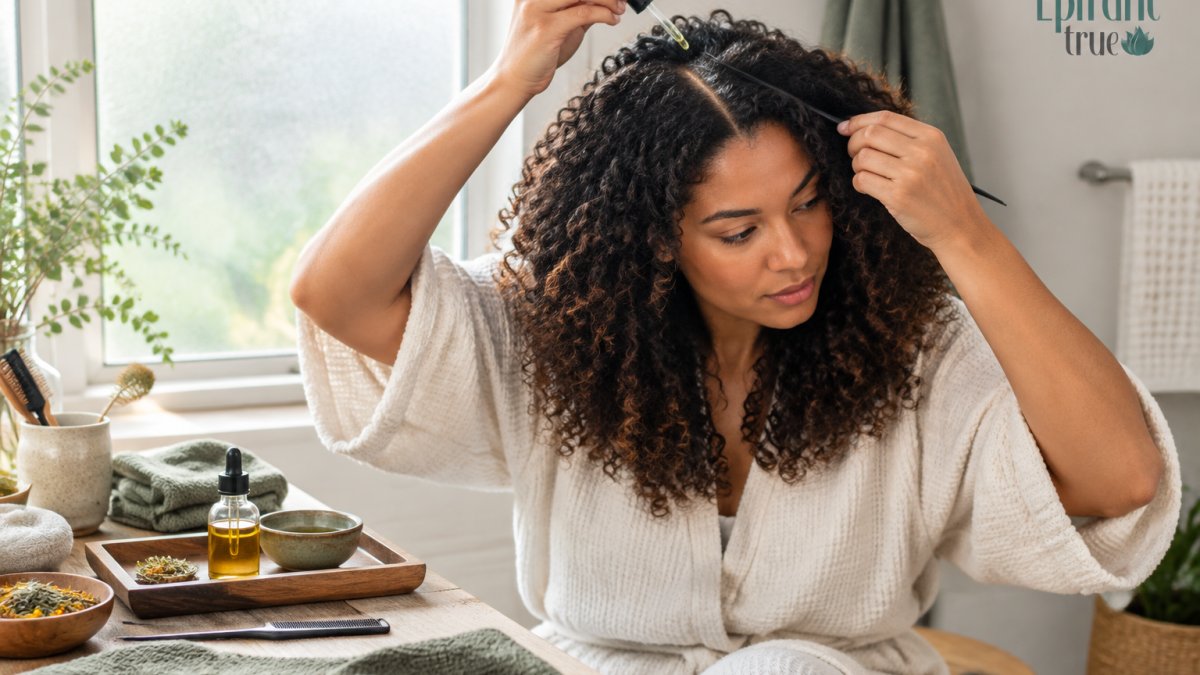
Step 1: Section the hair. Divide into four to six parts with clips or a comb. This keeps application even and stops you from dumping oil in one spot.
Step 2: Apply along the part lines. Use a dropper to place a small amount directly on the scalp, not the hair.
Step 3: Massage gently. Use fingertips, not nails, in small circles for about five minutes. A gentle massage helps the oil spread. Skip harsh scrubbing on a tender scalp.
Step 4: Time it. Leave the oil on for fifteen to thirty minutes for a quick treatment, or overnight for deep conditioning.
Step 5: Wash out. Shampoo as usual. Two rounds of shampoo removes most oils cleanly.
When to Stop Home Treatment and See a Doctor
Stop home treatment and see a doctor if the scalp is painful, bleeding, oozing, or not improving after a few weeks of gentle care. Persistent symptoms that do not respond to oiling are a sign to get a professional look.
Watch for these red flags:
- Severe itching that disrupts sleep
- Red, swollen, or warm patches
- Sores, crusts, or bleeding
- Hair loss in patches
For a scalp that feels tender rather than simply dry, natural remedies for tender scalp pain covers gentler options before deciding on medical care.
Choosing Gentle Scalp Care for Sensitive Skin
Sensitive scalps need fewer ingredients, not more.
Patch test every new oil:
- Apply a small amount behind the ear or on the inner wrist
- Wait 24 hours
- Check for redness, itching, or burning
- Only then apply to the scalp
Avoid essential oils at full strength, added fragrance, and anything that stings on contact. If a scalp has reacted badly to plant oils before, why botanical oils sting sensitive skin explains the common causes.
For a deeper look at which plant oils suit reactive skin, gentle botanical oils for sensitive skin walks through the options.
A dry, flaky scalp rarely needs a complicated routine.
Epifany True makes that step simple with plant-based formulas built for sensitive skin.
Get started with Epifany True and give a dry scalp the gentle care it has been missing.
Frequently Asked Questions
What oil should I put in my hair for a dry scalp?
Jojoba, sunflower, and coconut oils are common choices because they are gentle and moisturizing. Jojoba absorbs well without leaving heavy residue, while sunflower is rich in vitamin E. If your scalp is sensitive or tender, a pre-blended formula with chamomile can be easier to tolerate than a single strong oil. Always do a patch test on your inner arm first, and avoid essential oils if your skin is reactive.
Should I leave scalp oil on overnight?
A scalp oil routine for dry scalp overnight can work well if you protect your pillow and wash it out in the morning. Apply a small amount to the scalp only, cover with a shower cap or towel, and wash within 8 to 12 hours. If you have fine hair or an oily scalp, a 30-minute pre-wash treatment may suit you better than leaving oil on all night.
How do I oil my scalp without making my hair greasy?
Apply oil to the scalp in sections, not to the hair lengths, and use a dropper to control the amount. Massage gently for a few minutes, then wash thoroughly with a gentle shampoo. Concentrating on the roots and avoiding the ends keeps residue low. If your hair still looks greasy, reduce the amount next time or try a lighter oil like jojoba.
Can scalp oil help with dandruff or flaking?
Oil can soothe dryness-related flaking, but not all flakes mean dry scalp. Excess oil can contribute to skin-cell buildup on some scalps, so adding more oil is not always the answer. If flakes are yellow, greasy, or paired with redness, see a doctor before starting a scalp oil routine. For simple dryness, a gentle oil applied 1 to 2 times per week may help.

Next article


