
Natural Remedies for Tender Scalp Pain: A Practical Guide

Table of Contents
- Understanding Causes of Scalp Tenderness
- Gentle Scalp Care for Sensitive Skin
- Natural Remedies for an Itchy Scalp and Tender Scalp Pain
- A Step-by-Step Routine for Scalp Tenderness Relief
- Remedies to Avoid on Inflamed or Broken Scalp
- When to See a Doctor for Scalp Pain
- Frequently Asked Questions
Last Updated: October 5, 2026
Understanding Causes of Scalp Tenderness
Tender scalp pain is a symptom, not a diagnosis. The same burning, aching, or stinging sensation can come from very different sources, and the right remedy depends on which one you are dealing with. Most cases fall into five categories: mechanical tension, contact irritation, inflammatory skin conditions, nerve-related pain, and infection.
Mechanical tension and traction
This is the most common and most reversible cause.
Product buildup is a related pattern. Silicones, dry shampoos, and heavy pomades clog the follicle opening and create low-grade irritation that feels like tenderness rather than itching. If your scalp feels sore but looks normal, rule out buildup first.
Product and contact irritation
Irritant contact dermatitis is a direct chemical burn from a harsh ingredient, showing up within hours.
A useful clue: sharp, burning tenderness with redness and small bumps along the hairline and ears points to contact reaction. Dull, diffuse tenderness points to tension or dryness.
Inflammatory skin conditions
Several dermatologic conditions present with scalp tenderness as a leading symptom:
- Seborrheic dermatitis, greasy, yellowish scale with redness, often along the hairline and behind the ears; tenderness is usually mild but constant.
- Psoriasis, well-defined, silvery plaques that can crack and bleed; pain is often described as raw rather than tender.
- Folliculitis, small, red, pus-filled bumps at the follicle openings, tender to the touch and often itchy.
Nerve-related scalp pain
Sometimes the scalp itself is fine and the pain comes from the nerves that supply it. Two patterns matter:
- Occipital neuralgia, sharp, electric, or shooting pain starting at the base of the skull and radiating over the top of the head, often one-sided. Can be triggered by neck tension, poor posture, or a prior head injury.
- Trigeminal neuralgia, brief, severe, lancinating pain in the forehead, eye, or cheek area. Less common but distinctive.
Sudden electric shocks rather than a steady ache, with normal-looking skin, suggest nerve involvement over a skin problem.
Infection and other causes that need prompt care
A small number of causes are not appropriate for home treatment:
- Cellulitis, spreading redness, warmth, swelling, and fever. A medical emergency.
- Herpes zoster (shingles), burning or stinging pain on one side of the scalp, followed by a blistering rash in a band pattern. Antivirals work best within 72 hours of rash onset.
- Tinea capitis, fungal infection more common in children, with scaling, broken hairs, and sometimes boggy, tender patches.
How to tell them apart quickly
A short self-check narrows the field before you try any remedy:
- Did it start after a new product? Contact dermatitis is the leading suspect. Stop the product and patch test.
- Does it ease when you take your hair down? Traction or tension is likely.
- Is there visible redness, scale, or bumps? Inflammatory or infectious causes move up the list.
- Is the skin normal but the pain sharp or electric? Think nerve-related.
- Is there fever, spreading redness, blistering, or vision change? Seek same-day medical evaluation.
Patterns 1 and 2 usually improve with the gentle routine below. Patterns 3, 4, and 5 need a clinician to confirm the diagnosis.
Gentle Scalp Care for Sensitive Skin
The foundation of scalp tenderness relief is switching to truly gentle products and practices. Most mainstream shampoos are too harsh for inflamed or sensitive scalps. The Sensitive Scalp Care collection offers fragrance-free formulations designed specifically for tender, reactive scalps.
Choosing fragrance-free, minimal formulations
Fragrance is one of the most common scalp irritants. Even natural fragrances and essential oils can trigger burning, itching, or increased pain. Fragrance-free doesn't mean unscented, it means no added scents at all.
Look for products with:
- No synthetic or natural fragrances listed
- Fewer than 10 ingredients total
- No sulfates or harsh cleansers
The importance of patch testing
Before applying any new product to your entire scalp, patch test on a small area to prevent widespread irritation:
- Apply a small amount behind your ear or on your inner arm
- Wait 24 hours and check for redness, burning, or itching
- If no reaction occurs, apply to your scalp in small amounts before full use
This matters especially if you have a history of product sensitivity or treatment-related skin changes.
Natural Remedies for an Itchy Scalp and Tender Scalp Pain
Several natural remedies soothe scalp discomfort by reducing inflammation, moisturizing dry skin, and calming irritated nerves.
1. Coconut oil for scalp soothing
Coconut oil moisturizes deeply, reduces inflammation, and creates a protective barrier on sensitive skin.
Apply directly to your scalp, focusing on tender areas. Leave on at least 20 minutes, or overnight for deeper treatment. Warm the oil slightly in your hands first to improve absorption.
2. Apple cider vinegar rinses
Apple cider vinegar balances scalp pH and removes buildup that irritates sensitive skin.
To make a rinse:
- Mix one part apple cider vinegar with three parts water
- After shampooing, pour over your scalp
- Let it sit 2-3 minutes
Use once or twice weekly. Never apply undiluted vinegar directly to your scalp.
3. Aloe vera for inflammation relief
Aloe vera soothes inflamed skin and reduces pain, especially if your scalp is red, swollen, or burning.
Apply pure aloe vera gel directly to tender areas, or leave it on overnight under a shower cap. Fresh gel from a plant works better than commercial versions.
4. Chamomile and herbal infusions
Chamomile calms irritated skin and reduces inflammation. A rinse or compress soothes tender scalp pain.
To make a chamomile infusion:
- Brew 3-4 chamomile tea bags in boiling water
- Let cool to a comfortable temperature
- Pour over your scalp or soak a cloth and apply as a compress
Other soothing herbs include peppermint (cooling) and ginger (anti-inflammatory).
5. Gentle scalp massage techniques
Massage increases blood flow and releases tension, supporting healing.
Proper technique:
- Use your fingertips, not your nails
- Apply gentle pressure in small circular motions
- Start at the base of your skull and work upward
Massage works best with a soothing oil. The 100% Pure & Natural Scalp Soothing Oil from Epifany True contains organic chamomile, jojoba, and coconut oil, chosen to calm tender scalps while you massage.

A Step-by-Step Routine for Scalp Tenderness Relief
A consistent routine supports healing. This four-step approach addresses tenderness from multiple angles.
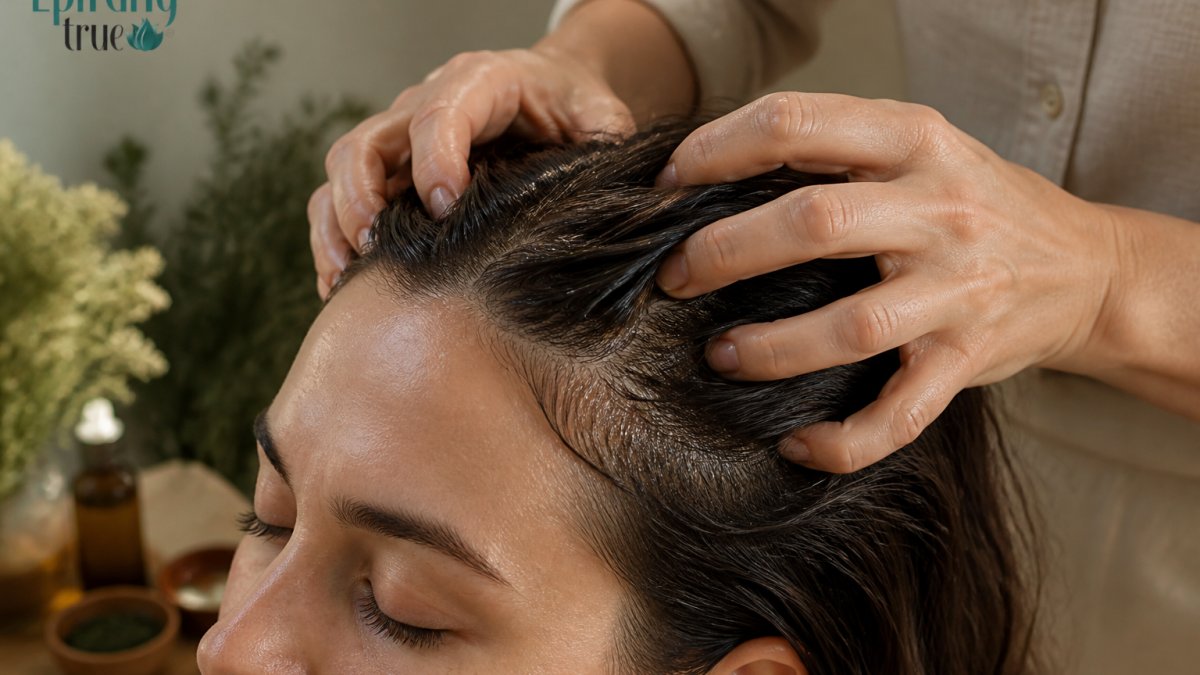
Step 1: Assess your scalp condition
Before starting any routine, understand what you're dealing with: dry, inflamed, or both? Active hair loss? A new product trigger?
This determines which remedies help most:
- Dry, flaky scalp responds to coconut and jojoba oil
- Red, swollen scalp benefits from aloe vera and chamomile
- Tender scalp from hair loss needs consistent, gentle care
Step 2: Cleanse gently without irritation
Use a fragrance-free, sulfate-free shampoo for sensitive scalps, and avoid hot water, which strips oils and irritates inflamed skin.

Cleansing steps:
- Use lukewarm water
- Apply shampoo to your scalp, not just your hair
- Massage gently with fingertips for 60 seconds
- Rinse until water runs clear
Limit shampooing to 2-3 times weekly if very tender; rinse with water only on other days.
Step 3: Apply soothing oil or treatment
Apply your chosen remedy while your scalp is still slightly damp, since damp skin absorbs oils more effectively.
Application method:
- Divide hair into four sections
- Apply oil directly to your scalp, not just your hair
- Work it in gently with fingertips
- Focus on the most tender areas
For intensive care, apply before bed and sleep with a towel on your pillow.
Step 4: Massage mindfully
Gentle massage activates healing and feels deeply soothing. Combine it with your chosen oil.
Massage routine:
- Use fingertips in slow, circular motions
- Start at your hairline and work backward
- Spend extra time on tender spots
- Apply light to medium pressure, never press hard
Remedies to Avoid on Inflamed or Broken Scalp
Popular natural remedies can make an inflamed scalp worse. The problem is rarely the ingredient itself but the concentration, vehicle, or state of the skin. Broken, cracked, or weeping skin absorbs everything more aggressively, so a dilution that feels fine on healthy skin can burn on a compromised one.
Skip these until the skin barrier is intact
Essential oils applied neat. Tea tree, peppermint, eucalyptus, lavender, and rosemary are the most common culprits.
Vigorous or prolonged massage. Deep pressure and sessions over 10 minutes can aggravate inflamed follicles and worsen traction-related tension.
Tight hairstyles and high-tension styling. Braids, tight ponytails, extensions, and slicked-back styles keep pulling on follicles even while you treat them.
What is safe to use instead
While the barrier heals, stick to short, simple routines:
- Plain lukewarm water rinses on non-wash days
- Fragrance-free, sulfate-free cleanser with a short ingredient list
- A single carrier oil such as jojoba, squalane, or fractionated coconut oil, patch-tested first
- Cool compresses for 5 to 10 minutes to reduce heat and swelling
How to patch test correctly
A proper patch test is not a dab on the wrist. For scalp products:
- Apply a small amount behind one ear or on the inner forearm.
- Leave uncovered and do not wash for 24 hours.
- Check at 24 and 48 hours, since allergic reactions can be delayed.
- If there is any redness, itching, burning, or bumping, do not use the product on your scalp.
When to stop home care entirely
Stop all remedies and seek medical evaluation for spreading redness, warmth, pus, blistering, fever, or pain worsening after 48 hours of gentle care. These signs point to infection or another condition home treatment cannot address.
When to See a Doctor for Scalp Pain
See a doctor if you experience:
- Scalp pain that doesn't improve after two weeks of gentle care
- Signs of infection (pus, warmth, spreading redness, or swelling)
- Pain with fever or general illness
- Blistering, open sores, or bleeding on the scalp
A dermatologist can rule out folliculitis, psoriasis, or other skin disorders requiring medical treatment.
Scalp tenderness doesn't require expensive treatments or harsh chemicals. An effective approach combines understanding your scalp's needs with consistent, gentle care.
When your scalp is compromised or inflamed, every product matters.
Frequently Asked Questions
What causes tender scalp pain?
Tender scalp pain can result from several factors: hair loss or thinning that exposes sensitive skin, tight hairstyles that create tension, product sensitivity or irritation, dry scalp conditions, inflammation, or scalp tension from stress. Medical treatments like chemotherapy or radiation can also cause scalp tenderness. Identifying the underlying cause helps you choose the most effective natural remedy for your specific situation.
Can natural remedies for an itchy scalp also help with tender scalp pain?
Yes, many natural remedies address both itching and tenderness because they calm inflammation and soothe irritation. Coconut oil, aloe vera, and gentle scalp massage may help reduce discomfort and itching simultaneously. However, the best remedy depends on your scalp's condition. If your scalp is broken or severely inflamed, avoid vinegar rinses or heavy oils until the skin heals. Start with the gentlest options and patch-test first.
When should I see a doctor for scalp pain?
Seek medical attention if scalp pain is severe, persistent beyond two weeks, accompanied by signs of infection (pus, warmth, red streaking), or if you notice unusual hair loss, open sores, or blistering. If pain follows a specific injury or is linked to a medical condition, consult your healthcare provider. Scalp tenderness during or after chemotherapy or radiation should also be discussed with your treatment team to rule out complications.
Is a gentle scalp care routine safe for very sensitive skin?
Yes, a gentle routine is essential for sensitive skin. Use fragrance-free, minimal formulations with calming botanicals like chamomile and jojoba oil. Avoid hot water, harsh shampoos, and heavy products. Always patch-test new treatments on a small area first. If your scalp is compromised from medical treatment or severe irritation, introduce one product at a time and wait several days before adding another to monitor for reactions.
Previous article


