
How to Get Relief for Itchy Tight Skin: 7 Steps

Table of Contents
- Why Your Skin Feels Itchy and Tight at the Same Time
- A Step-by-Step Routine to Get Relief for Itchy Tight Skin
- Dry Itchy Skin Remedies That Actually Help
- How to Choose the Best Moisturizer for Itchy Skin
- Over-the-Counter Treatments: Using Them Safely
- When to See a Doctor for Itchy Skin
- Preventing Itchy, Tight Skin Before It Starts
- Conclusion: Comfort Starts With Consistency
- Frequently Asked Questions
Last Updated: October 7, 2026
Why Your Skin Feels Itchy and Tight at the Same Time
Itchy tight skin is dryness so deep that your skin seems to pull when you move. That combo usually means your skin barrier, the outer layer that holds water in, has lost some of its ability to do its job.
Dry skin happens when the barrier lets moisture escape faster than your body can replace it. Itch and that stiff, shrink-wrapped feeling follow, because both share one root cause.
Common Causes of Dry, Itchy Skin
Everyday habits and weather do most of the damage. Hot showers strip oil, low indoor humidity pulls water out, and harsh soaps and fragrances wear down the barrier over time. Winter makes all of it worse.
Other common causes include:
- Aging, which slows oil production
- Frequent hand washing or swimming
- Certain medications and medical treatments
When Tightness Points to a Damaged Skin Barrier
Tightness is the symptom most people ignore, and it matters most. A healthy barrier holds water in and keeps irritants out; when it breaks down, water escapes and irritants get in, so skin feels dry, tight, and irritated at once.
A damaged barrier often shows up as:
- Skin that stings when you apply products
- Redness or rough, flaky patches
- A tight feeling right after washing
The fix is not more scrubbing. It is rebuilding the barrier with moisture and time.
A Step-by-Step Routine to Get Relief for Itchy Tight Skin
Relief comes from a routine, not a single product. Follow these three steps daily, and most mild cases calm down within a week or two.
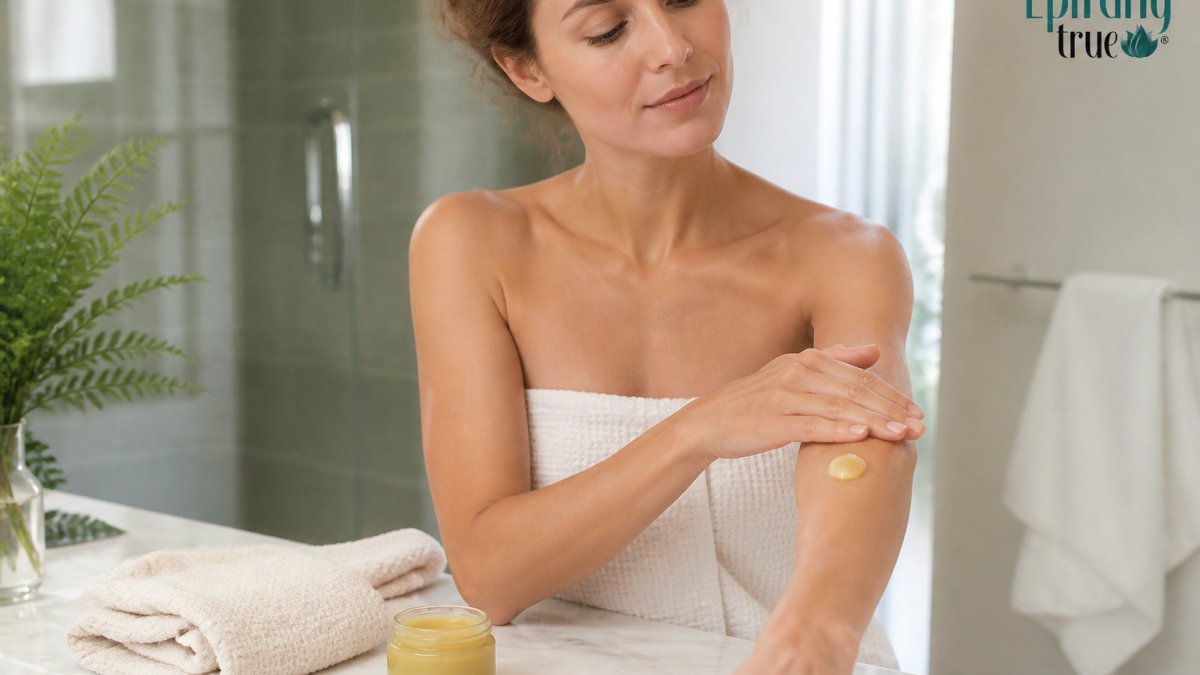
Step 1: Cool Down the Itch
Stop the itch before you moisturize, or you will scratch away the product. Apply a cool, damp cloth for five to ten minutes; cool temperatures calm irritated nerve endings and break the itch-scratch cycle.
A lukewarm or cool bath works too, kept under ten minutes. Skip hot water entirely, since heat pulls more oil from your skin.
Step 2: Apply Moisture Within Three Minutes of Bathing
Timing matters more than the product. Pat skin dry, leaving it slightly damp, and apply moisturizer within three minutes to lock water in instead of letting it evaporate.
Use a thick layer, not a thin one. For very dry or fragile skin, a plant-based oil like Epifany True's Organic Cold Pressed Jojoba Oil absorbs without a greasy feel and works well as a first layer.

Step 3: Seal It In and Protect the Barrier
Ointments and balms seal moisture in place. They are the heaviest option and the best for very dry, cracked, or tight skin.
Epifany True's Calendula Soothing Salve is a fragrance-free balm made with calendula-infused sunflower oil, beeswax, and vitamin E. It creates a moisture-sealing layer that helps soften rough, tight areas.

Dry Itchy Skin Remedies That Actually Help
Some home remedies calm itchy skin; some make it worse. The ones below have the best track record and lowest risk.
Oatmeal Baths, Baking Soda, and Cool Compresses
Colloidal oatmeal is one of the few home remedies with real backing. The FDA's guidance on colloidal oatmeal as a skin protectant recognizes it as a protectant that soothes irritation.
Baking soda works the same way for some people. Add a quarter cup to a full tub. Cool compresses remain the fastest option for a sudden itch.
Coconut Oil, Aloe Vera, and Calendula
Coconut oil moisturizes and has mild anti-inflammatory properties, but can clog facial pores. Aloe vera cools irritated skin and feels light, though it is not heavy enough to seal in moisture alone.
Calendula is a gentler botanical option. Epifany True's Calendula Overnight Face Balm with Sea Buckthorn combines calendula and plantain leaf with jojoba and sea buckthorn oil for overnight moisture.

How to Choose the Best Moisturizer for Itchy Skin
The best moisturizer for itchy skin is the thickest one you will actually use daily. Formulation matters more than brand or price, because thicker products hold more water and seal the barrier better.
- Humectants pull water into the skin. Look for glycerin, hyaluronic acid, panthenol, and colloidal oatmeal. They help with tightness fast but can sting on cracked skin if used alone.
- Emollients soften and smooth rough flakes. Look for ceramides, shea butter, squalane, fatty alcohols, and plant oils. They improve the feel of tight skin within minutes.
- Occlusives slow water loss by forming a seal. Look for petrolatum, beeswax, dimethicone, and lanolin. They are the most important layer for very dry, tight, or cracked skin.
A cream usually combines a humectant and an emollient; an ointment or balm leans heavily on occlusives, which is why it feels heavier and lasts longer overnight.
How to Read a Moisturizer Label
Look for a short ingredient list. Fragrance-free beats "unscented," which can still contain masking fragrances. "Hypoallergenic" is a marketing term, not a regulated one, so treat it as a hint rather than a guarantee.
Helpful ingredients for itchy, tight skin include:
- Ceramides, which replace lipids the barrier is missing
- Glycerin, a workhorse humectant
- Colloidal oatmeal, recognized as a skin protectant
Skip products with added fragrance, essential oils, denatured alcohol high on the list, or botanical extracts you have not tolerated before.
Lotions vs. Creams vs. Ointments: Which Formulation to Pick
| Formulation | Water Content | Best For | Feel |
|---|---|---|---|
| Lotion | High | Mild dryness, daytime use | Light, easy to spread |
| Cream | Medium | Moderate dryness, daily care | Richer, absorbs well |
| Ointment or balm | Low or none | Very dry, tight, cracked skin | Heavy, seals moisture in |
| Body oil | None | After-bath moisture, sensitive skin | Slippery, absorbs fast |
Start with a cream for daily use, then move to an ointment or balm for the tightest, driest areas, especially at night. Oils work best layered under a cream or balm, since they add emollience but do not hold much water.
Matching the Product to the Body Part
Skin thickness varies, and so should your product. The face and hands are thinner and tolerate lighter creams; the shins, elbows, and heels are thicker and often need an ointment or balm. For eczema-prone skin, a ceramide cream is a reasonable default, with balm on the driest patches.
Over-the-Counter Treatments: Using Them Safely
Over-the-counter creams can stop the itch when moisturizer alone is not enough. Hydrocortisone cream is the most common option; it calms inflammation and itching but is not meant for long-term daily use.
Follow these safety rules:
- Use the lowest strength that works
- Limit use to the directions on the label
- Avoid the face and skin folds unless a doctor says otherwise
Oral antihistamines help when itching keeps you awake at night. Calamine lotion soothes mild irritation but dries out skin, so pair it with a moisturizer.
When to See a Doctor for Itchy Skin
Most itchy, tight skin is ordinary dryness that responds to barrier care within a week or two. The tricky part is knowing when tightness points to something else, it is the symptom people dismiss, and often the one that signals a barrier problem rather than simple dryness.
Tightness vs. Dryness: What the Difference Means
Dryness is a lack of water and oil in the outer layer. Tightness is the sensation that skin is pulling, shrinking, or stiff when you move, and usually means the barrier is damaged enough that water escapes and irritants get in.
If tightness shows up right after washing, spreads beyond your usual dry spots, or comes with redness, cracking, or oozing, it is worth a closer look.
Red Flags That Need Medical Assessment
See a doctor when itchy skin lasts more than two weeks, disrupts sleep, or comes with a rash, swelling, or oozing, signs of something beyond simple dryness.
Book an appointment if you notice:
- Itching that spreads or gets worse over time
- Skin that cracks, bleeds, or shows signs of infection
- Yellow or green discharge, or a foul smell
Causes Beyond Dry Skin
Persistent itching can signal eczema, psoriasis, an allergy, or a thyroid issue, and can also be a medication side effect, including some blood pressure drugs, pain relievers, and antibiotics.
Other causes worth ruling out include iron deficiency, kidney or liver conditions, and nerve-related itching. These are less common, but they matter when itching is widespread, does not come with a visible rash, or keeps returning after treatment.
What a Clinician Will Likely Do
Expect questions about when the itch started, what makes it worse, and what products and medications you use. A clinician may examine the skin, ask about allergies and family history, and sometimes order blood work. Treatment often starts with a stronger moisturizing routine plus a short course of topical steroid if inflammation is present; if the itch is widespread or unresponsive, further evaluation may follow.
Preventing Itchy, Tight Skin Before It Starts
Prevention comes down to protecting the barrier daily. Small habits add up faster than any single product.
- Shower in lukewarm water, not hot
- Keep showers short, under ten minutes
- Use a gentle, fragrance-free cleanser
A humidifier helps most in winter, when indoor humidity drops and skin loses moisture fast. Aim for indoor humidity around 40 to 50 percent.
Conclusion: Comfort Starts With Consistency
Itchy tight skin rarely clears up overnight.
At Epifany True, gentle botanical care is the whole point. The Skin Soothing Solutions collection offers fragrance-free salves and oils made for dry, sensitive, and compromised skin.
Get started with Epifany True and give your skin the steady, gentle care it needs to feel comfortable again.
Frequently Asked Questions
How can I quickly relieve itchy, tight skin?
Start with a cool compress or a short, lukewarm shower to calm irritation. Within three minutes of patting dry, apply a fragrance-free moisturizer or a concentrated salve like Epifany True's Calendula Soothing Salve to seal in moisture while skin is still damp. Avoid hot water, harsh soaps, and scratching, which can worsen the itch-scratch cycle. If tightness and itching persist despite consistent moisturizing, it may be time to talk to a doctor about underlying causes.
Is itchy, tight skin a sign of dry skin or a damaged skin barrier?
It can be either, and the two often overlap. Dry skin lacks moisture and oil, while a damaged skin barrier lets moisture escape and irritants in, causing both tightness and itching. If your skin stings when you apply products that used to feel fine, or feels tight even after moisturizing, a compromised barrier is likely involved. Gentle, fragrance-free moisturizers and occlusives that support the skin barrier are the first step in either case.
What moisturizer is best for itchy, tight skin?
The best moisturizer for itchy skin depends on how dry you are. Lotions work for mild dryness, creams for moderate dryness, and ointments or balms for very dry, cracked, or barrier-damaged skin. Look for fragrance-free formulas with ingredients like colloidal oatmeal, ceramides, shea butter, or botanical oils such as jojoba and calendula. Epifany True's Calendula Overnight Face Balm is a fragrance-free option for facial skin that feels parched and reactive.
When should I see a doctor for itchy skin?
See a doctor if itching lasts more than two weeks, is severe enough to disrupt sleep, or comes with redness, swelling, oozing, or weight loss. Itchy skin can sometimes signal conditions beyond dryness, including thyroid issues, liver problems, or allergic reactions. If over-the-counter moisturizers and remedies do not help, or if you are undergoing medical treatment that affects your skin, check with your healthcare team before trying new products.
Previous article


