
Soothing Skincare for Chemo Patients: A Gentle Routine

Table of Contents
- Why Chemo Changes Your Skin (and What Helps)
- Dry Skin from Chemotherapy: A Step-by-Step Daily Routine
- Skincare Ingredients to Avoid During Chemotherapy
- Sun Protection During Chemotherapy: What You Need to Know
- Skin Rash During Chemotherapy: When to Call Your Oncology Team
- Choosing Soothing Skincare Products: What to Look For
- Patch Testing and Introducing New Products Safely
- Frequently Asked Questions
Last Updated: October 9, 2026
Why Chemo Changes Your Skin (and What Helps)
Chemotherapy and radiation therapy can strip the skin of moisture, weaken its barrier, and leave it dry, itchy, or raw. Soothing skincare for chemo patients starts with one goal: replace what treatment takes away without adding irritants.
Cancer treatment targets fast-dividing cells. Skin cells divide quickly too, so they often get caught in the crossfire. The result is a skin barrier that cannot hold water or block irritants the way it used to.
This guide from Epifany True walks through a gentle routine built for treatment days. Below, you'll find step-by-step care, ingredients to avoid, and clear signs of when to call your oncology team.
Common skin changes during treatment include:
- Dryness, tightness, and flaking
- Redness, itching, or burning
- Rashes or tender patches
- Sensitivity to products that once felt fine
The fix is not more products. It is fewer, gentler ones, applied more often.
Dry Skin from Chemotherapy: A Step-by-Step Daily Routine
Dry skin from chemotherapy needs moisture applied before it feels dry, not after. But a single routine does not fit every day of treatment. Skin behaves differently on infusion day, in the days that follow, and during a flare. Below are three versions of the same simple framework, so you can match care to how your skin actually feels.
Across all three, lukewarm water and short showers help most. Hot water strips oil fast.
Infusion Day Routine
On the day you receive treatment, your skin is often still calm. The goal is prevention, not repair.
- Rinse with lukewarm water only, or use a gentle cleanser.
- Pat skin dry with a soft towel. Do not rub.
- Apply a fragrance-free moisturizer within three minutes of bathing.
- Add mineral sunscreen to exposed skin before going outside.
- Keep a small tube of moisturizer in your treatment bag for hands and lips.
Keep it short. Three or four products are enough. Avoid trying anything new on infusion day.
Recovery Days (24-72 Hours After Treatment)
This is when dryness, redness, and itching often peak. Shift from prevention to barrier repair.
- Cleanse with a cream or lotion cleanser instead of a foaming one.
- Skip exfoliants, retinoids, and any product with fragrance.
- Apply a richer moisturizer or a body oil while skin is still damp.
- Seal extra-dry spots with a salve on hands, elbows, heels, and cuticles.
- Reapply moisturizer two to three times during the day, not just morning and night.
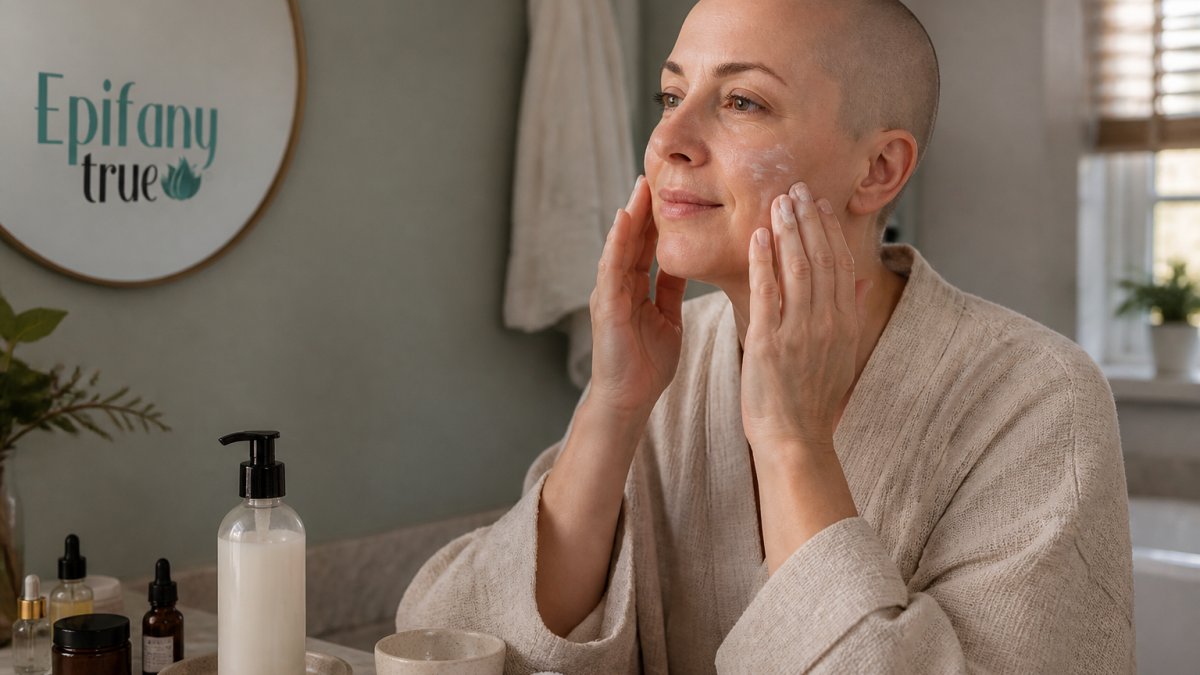
A thick balm like Epifany True's Calendula Soothing Salve works well as that final sealing step. It uses calendula-infused sunflower oil and beeswax with no added fragrance.

Flare Day Routine (Redness, Itching, or Burning)
When skin is actively irritated, strip the routine down to the bare minimum.
- Rinse with cool water only. Skip cleanser if skin stings.
- Pat dry and apply a plain, fragrance-free moisturizer or a thin layer of salve.
- Use a cool compress on hot, itchy areas for 5-10 minutes.
- Avoid hot showers, tight clothing, and anything that rubs.
- Call your oncology team if the flare spreads, blisters, or comes with fever.
Adjusting for Fatigue and Limited Mobility
Treatment fatigue is real, and a multi-step routine can feel impossible on hard days. A few adaptations help:
- Keep a pump bottle of moisturizer at the sink and one by the bed.
- Use a shower stool and a long-handled sponge to avoid bending.
- Ask a caregiver to apply salve to your back, feet, or scalp.
- Choose a single all-over balm instead of separate face, hand, and body products.
If a caregiver is helping, have them warm the product between their hands first. Cold balm on sensitive skin can sting.
Skincare Ingredients to Avoid During Chemotherapy
Skincare ingredients to avoid during chemotherapy include alcohol, fragrance, and strong exfoliants. These strip moisture and trigger stinging on skin that is already fragile. Understanding why each one causes trouble makes it easier to read a label and decide for yourself.
What to Avoid and Why
- Alcohol and alcohol denat. These evaporate quickly and take skin's natural oils with them, leaving the barrier drier and more reactive.
- Synthetic fragrance and essential oils. Fragrance is a common trigger for contact irritation. Even "natural" essential oils like citrus, peppermint, and eucalyptus can sting or sensitize skin.
- Retinoids and alpha-hydroxy acids (AHAs). These speed cell turnover, which is helpful for some skin concerns but damaging to a barrier that is already compromised.
- Salicylic acid in high amounts. A beta-hydroxy acid that exfoliates; in high concentrations it can irritate fragile skin.
- Physical scrubs with beads, salt, or sugar. The friction causes micro-tears and redness on skin that cannot repair itself quickly.
- Formaldehyde-releasing preservatives. Some people in treatment develop sensitivity to these; check for names like DMDM hydantoin and quaternium-15.
How to Read a Label
What most guides miss is how many "gentle" products still hide fragrance under words like "parfum," "fragrance," or "aroma." The front label is marketing; the ingredient list is the truth.
A few habits help:
- Look for the words "fragrance-free" rather than "unscented." Unscented products may still contain masking fragrance.
- Scan the full ingredient list, not just the first few items.
- Shorter lists are generally easier to evaluate. Fewer ingredients means fewer chances for a reaction.
- Patch test anything new, even products labeled for sensitive skin.
Ingredients That Tend to Calm
When the barrier is compromised, simple emollients and occlusives do the heavy lifting:
- Calendula, a traditional botanical used to calm irritated skin.
- Comfrey, often included in salves for dry, cracked areas.
- Colloidal oatmeal, a well-known soothing ingredient in drugstore creams.
- Petrolatum, beeswax, and plant oils, seal in moisture and block irritants.
- Glycerin and hyaluronic acid, humectants that pull water into the skin.
Look for short ingredient lists built on botanicals like calendula. Epifany True's Skin Soothing Solutions line is made for exactly this kind of reactive skin.
Sun Protection During Chemotherapy: What You Need to Know
Sun protection during chemotherapy matters more than usual. Some treatments make skin burn faster, and certain drugs cause photosensitivity that lasts for weeks.
The American Cancer Society guidance on skin and sun safety notes that people in treatment should limit sun exposure and cover up. A few habits help:
- Use a mineral sunscreen with zinc or titanium dioxide
- Reapply every two hours outdoors
- Wear a hat and long sleeves
- Stay in shade between late morning and mid-afternoon
Sunscreen belongs in every daytime routine, even on cloudy days. Pair it with a moisturizer, not instead of one.
Skin Rash During Chemotherapy: When to Call Your Oncology Team
A skin rash during chemotherapy is common, but some rashes need urgent care. Knowing the difference protects you from a serious reaction.
Call your oncology team right away if you notice:
- Blisters, peeling, or open sores
- A rash that spreads fast
- Swelling of the face, lips, or throat
- Fever with a new rash
- Pain that gets worse, not better
Milder redness and itching often respond to fragrance-free moisturizers and cool compresses. Still, report any new rash. Your doctor or nurse can tell you whether it is a side effect or something else.
Choosing Soothing Skincare Products: What to Look For
Soothing skincare is any product formulated to calm, hydrate, and protect fragile skin without irritants. For chemo patients, the best picks are fragrance-free, alcohol-free, and hypoallergenic.
A good label reads like this:
- Few ingredients, all recognizable
- No added fragrance or essential oils
- Calming botanicals like calendula or comfrey
- A base of oils or beeswax, not alcohol
| What to Look For | Why It Helps | What to Skip |
|---|---|---|
| Fragrance-free | Avoids stinging and redness | "Parfum" or essential oils |
| Alcohol-free | Keeps moisture in | Alcohol denat |
| Calendula or comfrey | Calms irritated skin | Retinoids, strong acids |
| Beeswax or oils | Seals in hydration | Physical scrubs |
For facial skin that cannot handle active-heavy products, a simple balm works better than a ten-step routine. Epifany True's Calendula Overnight Face Balm is fragrance-free and built for dry, reactive skin.

Patch Testing and Introducing New Products Safely
Patch testing is the safest way to try any new product during treatment. It catches a reaction on a small area before it spreads.
Here is the method:
- Apply a small amount to the inner forearm.
- Wait 24 hours without washing the spot.
- Check for redness, itching, or burning.
- If skin stays calm, test again on a small area of the face or scalp.
- Wait another 24 hours before full use.
Introduce one product at a time. If a reaction appears, you will know exactly what caused it.
The National Cancer Institute information on managing treatment side effects advises patients to tell their care team about any new product, even natural ones. A FDA resource on cosmetic ingredients and safety can help you read labels with confidence.
For a tender scalp after hair loss, a lightweight oil beats a heavy cream. Epifany True's Scalp Soothing Oil uses jojoba and chamomile to comfort sensitive skin without residue.

Frequently Asked Questions
Can I use moisturizer while undergoing chemotherapy?
Yes, moisturizing is one of the most important things you can do for your skin during treatment. Chemotherapy often strips the skin's barrier, leading to dryness, tightness, and irritation. A gentle, fragrance-free moisturizer helps seal in hydration and supports the skin's natural recovery. Apply it twice a day and after every bath or shower while skin is still damp. If your skin is very dry or reactive, ask your oncology nurse which formulas they recommend for your specific treatment.
What skincare ingredients should I avoid during chemo?
Skip products with added fragrance, essential oils, alcohol, retinoids, and exfoliating acids like glycolic or salicylic acid. These can sting, dry out, or irritate skin that is already sensitive from treatment. Also avoid scrubs, loofahs, and anything labeled 'anti-aging' or 'brightening,' since those often contain active ingredients your skin cannot tolerate right now. Stick to short ingredient lists with gentle botanicals like calendula and comfrey, and always check with your healthcare team before trying something new.
Can chemotherapy make skin more sensitive to the sun?
Yes. Many chemotherapy drugs increase photosensitivity, meaning your skin burns more easily and may develop rashes or discoloration after sun exposure. Use a broad-spectrum sunscreen with SPF 30 or higher every day, even on cloudy days, and reapply every two hours if you are outside. Wear long sleeves, a wide-brimmed hat, and sunglasses for extra protection. If you notice a new rash or unusual sun reaction, contact your oncology team before spending more time outdoors.
When should I contact my oncology team about a skin reaction?
Call your oncology team if you develop a rash that spreads quickly, blisters, open sores, swelling, or skin that feels hot to the touch. Also reach out if itching or burning keeps you awake, if you notice pus or drainage, or if a rash appears alongside fever or chills. These can signal an infection or a serious drug reaction that needs prompt attention. Mild dryness and sensitivity are common, but any sudden or severe change deserves a call.
Treatment can leave skin feeling raw and unpredictable, and finding products that do not sting can feel impossible. Epifany True makes gentle, plant-based care for compromised skin, with calming botanicals like calendula and comfrey. The Calendula Soothing Salve, the Overnight Face Balm, and the Scalp Soothing Oil are all fragrance-free and built for reactive skin. Get started with Epifany True and give stressed skin the calm, simple care it needs.
Next article


