Add the tinted Calendula Rose Lip Balm to your cart with a qualifying $35+ purchase. The discount applies automatically; the gift is not added automatically.


7 Botanical Scalp Oil Rules for Dry Scalp Relief

Last Updated: November 7, 2026
Quick Summary
A botanical scalp oil for dry scalp works by slowing water loss on the skin surface, so apply it to damp, freshly washed hair rather than dry skin. Use a few drops per section, massage gently, leave it on for 20 minutes or overnight, then shampoo it out. Start with one or two sessions per week.
- Oil sits on the surface and slows water loss but does not add water to the skin.
- Apply a few drops per section, roughly a quarter-size pool in the palm for the whole head.
- Leave light treatments on for 20 minutes, or overnight for very dry skin.
- Wash out with a mild shampoo, shampooing twice if the scalp still feels coated.
- Skip oiling entirely if the scalp is oily with flaking, since oil can worsen it.
Scalp dry and tender? Start here.Gentle botanical oils for dry, sensitive scalps and compromised skin.
Shop Scalp Soothing Oil
Table of Contents
- Why Botanical Scalp Oil Helps a Dry Scalp (and When It Won't)
- How to Use Scalp Oil for Dry Scalp: A Step-by-Step Routine
- Carrier Oils, Texture, and Spreadability: What to Look For
- What Botanical Scalp Oil Costs and What You Get
- Pick Your Scalp Oil and Start a Gentle Routine
- Frequently Asked Questions
Why Botanical Scalp Oil Helps a Dry Scalp (and When It Won't)
A 2022 review in Hair Oils: Indigenous Knowledge Revisited notes that hair oils have been used worldwide since ancient times, yet their exact effects on hair and scalp remain poorly understood. That honesty matters here. A botanical scalp oil for dry scalp can soften tight, flaky skin and reduce the rough feel of a parched scalp, but it is a comfort product, not a cure.
What Plant Oils Actually Do for Dry, Tight Skin
Plant oils sit on the surface and slow water loss. They do not add water to the skin. That distinction explains why oiling works best on damp skin, right after washing, when there is moisture to hold in. A 2025 study indexed by PubMed reports that botanicals with potential antioxidant activity can improve scalp condition, though the published result gives no effect size.
Dry Scalp or Dandruff? How to Tell the Difference
Dry scalp feels tight and flakes in small, white pieces. Dandruff tends to produce larger, yellowish flakes with greasy patches and itching. Oil helps the first and can worsen the second by feeding the yeast involved in dandruff. If flaking comes with redness, crusting, bleeding, or patches that spread, stop oiling and see a clinician. The same applies to sudden hair shedding or scalp pain that does not settle.
How to Use Scalp Oil for Dry Scalp: A Step-by-Step Routine
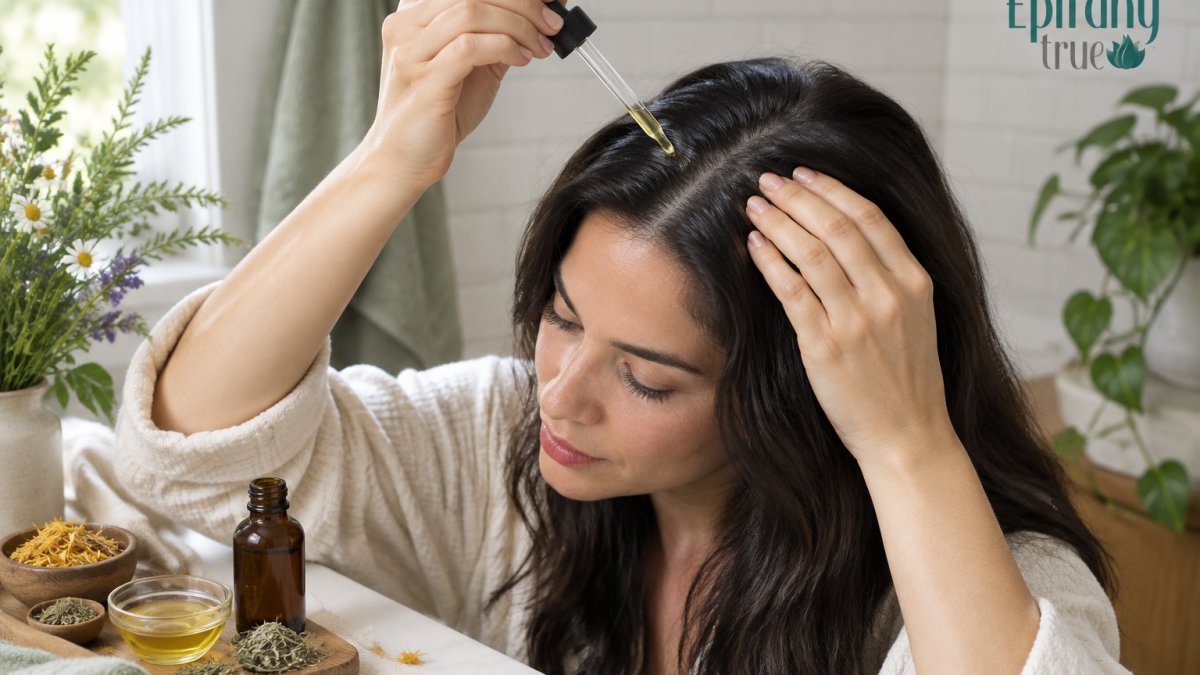
Applying scalp oil takes about ten minutes and works best on damp, freshly washed hair. The routine below is the core answer to how to use scalp oil for dry scalp without overloading the skin.
Patch Testing and Diluting Essential Oils Safely
Essential oils are concentrated and should never go on the scalp neat. Dilute them in a carrier oil first, and patch test on the inner forearm for 24 to 48 hours before applying anything to the head. Skip essential oils entirely if the scalp is broken, freshly treated, or reacting to products. Epifany True's Scalp Soothing Oil uses organic chamomile essential oil in a sunflower, jojoba, and coconut base, and it is not a hair growth oil.
Carrier Oils, Texture, and Spreadability: What to Look For
Texture decides whether a scalp oil gets used. A blend that feels greasy after washing is either too heavy for the hair type or was left on too long. Choosing a carrier is a matching exercise, not a search for the "best" oil.
Matching the Carrier to the Scalp and Hair
| Carrier Oil | Texture | Best For | Watch Out For |
|---|---|---|---|
| Jojoba | Thin, liquid at room temperature | Fine hair, oily-but-flaky scalp, dilution base | Feels light; may need a second application on very dry patches |
| Sunflower | Light, rich in vitamin E | Most hair types, sensitive scalp | Rancid smell if stored warm too long |
| Coconut | Heavy, solidifies below about 76°F | Very dry, coarse, or tightly coiled hair | Buildup and greasy look on fine hair; can worsen dandruff-prone scalps |
| Argan | Medium, silky | Dry lengths alongside scalp care | Price per ounce is higher than jojoba or sunflower |
| Castor | Thick, sticky | Spot-treating stubborn dry patches | Hard to rinse out; never use neat on a sensitive scalp |
Jojoba is a plain carrier oil that is commonly used to dilute essential oils, and organic cold pressed jojoba oil is available as a single-ingredient option. Sunflower is a light oil that is rich in vitamin E. Coconut is heavier and solidifies in cool rooms, so it suits very dry skin better than fine hair.

How to Read an Ingredient List
Order matters. Ingredients are listed by weight, so the first three or four names tell you what the product mostly is. A short list of two to five plant oils is easier to patch test and easier to tolerate than a long formula with several essential oils. If a label leads with a heavy oil and lists several essential oils after it, expect a richer feel and a stronger scent, fine for coarse hair, risky for a reactive scalp.
When to Buy a Single Oil vs. a Formulated Blend
Buy the plain oil if the goal is dilution or a single-ingredient test. Buy a formulated blend if the goal is comfort with no mixing. Epifany True's Scalp Soothing Oil combines organic sunflower, jojoba, and coconut oils with chamomile essential oil. For readers who also want a lightweight option for the body, apricot kernel and camellia seed are the classic pairing, the Apricot & Camellia Satin Body Oil is a separate product from the Prickly Pear & Camellia Face Oil Serum and is not intended for the scalp.
What Botanical Scalp Oil Costs and What You Get
A single carrier oil generally costs less than a formulated blend. Epifany True's 100% Pure & Natural Scalp Soothing Oil is $19.99 for 4 oz, while the Organic Cold Pressed Jojoba Oil 4oz is $12.99.

| Option | Price | Best For |
|---|---|---|
| Scalp Soothing Oil | $19.99 | Dry, tender, sensitive scalp |
| Scalp Soothing Oil for Men | $15.99 | Smaller size, same comfort focus |
| Organic Jojoba Oil | $12.99 | Diluting or single-oil use |
| Amla Hair Treatment Oil | $19.99 | Dry scalp plus dry lengths |
Price
Scalp Soothing Oil $19.99
Scalp Soothing Oil for Men $15.99
Organic Jojoba Oil $12.99
Amla Hair Treatment Oil $19.99
The amla blend adds argan and castor oils and a jasmine scent alongside its scalp care. Buy the plain oil if the goal is dilution; buy a formulated blend if the goal is comfort with no mixing.
Pick Your Scalp Oil and Start a Gentle Routine
Dry, tight scalp skin responds to consistency more than to quantity. If the scalp is tender rather than simply dry, natural remedies for tender scalp pain explains when oiling helps and when it is time to look further.
A dry scalp that stings, flakes heavily, or sheds without explanation deserves more than a product swap. Epifany True formulates gentle, plant-based oils for sensitive and compromised skin, including a Scalp Soothing Oil built around organic sunflower, jojoba, and coconut oils with calming chamomile.
Frequently Asked Questions
What is the best botanical scalp oil for a dry scalp?
There is no single best oil, but the most comfortable choices for a dry scalp are lightweight, low-scent blends built on jojoba, sunflower, or coconut oil. Jojoba is a lightweight oil that is commonly used on dry skin. Epifany True's Scalp Soothing Oil ($19.99 for 4 oz) combines organic sunflower, jojoba, extra virgin coconut, and chamomile essential oil, and the brand states plainly that it is not a hair growth oil. It is made to comfort a tender, dry scalp rather than promise regrowth.
How often should you oil a dry scalp?
Start with once or twice a week and adjust from there. A dry scalp that feels tight within a day of washing may tolerate two applications weekly, while an oily or buildup-prone scalp may only need one. Apply a small amount, leave it on for 30 minutes to a few hours, then wash it out with a gentle shampoo. If your scalp feels greasy, itchy, or congested between treatments, space them further apart rather than adding more oil.
Can scalp oil irritate a sensitive scalp?
Yes, which is why patch testing matters. Hair oils have been used for centuries, but their exact effects on hair and scalp remain unclear, so no oil is risk-free for every person. Test a small amount behind the ear or on the inner wrist for 24 hours first. Choose fragrance-light blends, avoid undiluted essential oils, and stop using any product that causes burning, stinging, or a rash.
What is the difference between a dry scalp and dandruff?
A dry scalp sheds small, fine flakes and usually feels tight or itchy, often worsening in cold, low-humidity weather. Dandruff produces larger, oilier flakes, often yellowish, and tends to come with greasiness rather than dryness. Moisturizing oils can help a dry scalp, but dandruff is driven by a yeast overgrowth and typically needs an antifungal shampoo. If flakes are thick, greasy, or come with redness and swelling, see a dermatologist before oiling.

Previous article

How to Moisturize a Dry Sensitive Scalp Without Irritation
Next article

Is Sea Buckthorn Good for Your Skin?


