
Gentle Botanical Salve for Cracked Skin: 2026 Guide

Table of Contents
- What to Look for in a Gentle Botanical Salve for Cracked Skin
- Quick Comparison: Gentle Botanical Salves for Cracked Skin
- Herbal Salve for Dry, Cracked Hands: Top Picks
- Calendula Salve for Dry Skin: Soothing Options
- How to Make Calendula Salve at Home
- How to Apply Salve to Cracked Skin for Best Results
- Ingredient Sensitivities and When to Seek Care
- Frequently Asked Questions
Last Updated: October 12, 2026
What to Look for in a Gentle Botanical Salve for Cracked Skin
A salve helps cracked skin by slowing water loss.
Four things on the label separate a good salve from a mediocre one.
1. The lead ingredient. In a botanical salve, the first ingredient should be an infused oil, for example, calendula-infused sunflower oil, not petrolatum or mineral oil.
2. The carrier oil. Olive, coconut, jojoba, and sweet almond oils are common bases, and each behaves differently:
- Jojoba is a liquid wax: light, fast-absorbing, good for hands you wash often.
- Sunflower and sweet almond spread easily, suiting large areas and skin that reacts to heavier products.
- Olive is richer and slower to absorb, good on heels, heavy on palms.
- Coconut is occlusive and solid at cool room temperature; it seals well but can clog pores.
3. The wax and the ratio. Beeswax creates the barrier that locks water in and keeps the salve solid at room temperature.
4. What the formula leaves out. Fragrance, essential-oil load, and preservatives matter for reactive skin. Fragrance-free means no fragrance ingredients were added, so the scent comes only from the herbs.
Calendula, Comfrey, and Other Soothing Herbs
Calendula is the workhorse of botanical skin care: rich in flavonoids and carotenoids, with a long history of use on dry, delicate, irritated skin. Comfrey brings allantoin, traditionally associated with skin recovery support. Plantain leaf and English lavender round out many traditional blends.
The form matters as much as the herb. Whole flowers infused slowly into a carrier oil preserve more of the plant's compounds than a powder stirred in at the end. A slow infusion, a few hours over low heat, or several weeks in a sealed jar in a dark cupboard, keeps the finished salve closer to the plant.
Choosing for the Situation, Not Just the Skin Type
The same salve does not suit every pair of hands. The biggest variables are climate, work, and how often you wash.
- Hands washed many times a day (health care, food service, childcare): a lighter, faster-absorbing salve, reapplied after every wash rather than twice a day.
- Heels and thick-skinned areas: a richer formula with more wax or shea butter, applied after a shower while skin is still damp.
- Cold, dry winters: a heavier, more occlusive salve holds up against low humidity and wind.
- Humid summers: a lighter oil-forward formula feels less suffocating.
- Fragrance-sensitive or reactive skin: fragrance-free, short ingredient list, no essential oils.
Patch Testing and Sensitivities
Even gentle botanicals can trigger reactions. Essential oils, including chamomile and lavender, are among the most common culprits, which is why fragrance-free formulas exist. Allergies to daisy-family plants (calendula, chamomile) are also possible.
Patch test any new salve on the inner forearm for 24 hours before using it on cracked or broken skin. Stop use if redness, burning, or swelling appears. Use extra caution with children and anyone with a history of eczema or contact dermatitis.
When a Salve Is Not Enough
A salve is a cosmetic moisturizer, not a treatment. It can soften and protect, but cannot close an infected crack or heal skin that needs medical care. Seek medical advice if a crack is deep, bleeds, oozes, or shows signs of infection (spreading redness, warmth, pus, increasing pain), or if cracks do not improve after a week or two of consistent care. If you have diabetes or poor circulation, hand and foot cracks deserve a clinician's eyes rather than a longer salve routine.
If medical treatment has made skin more sensitive, ask a healthcare team before introducing any new topical product.
Quick Comparison: Gentle Botanical Salves for Cracked Skin
The table below compares Epifany True's salve range across the features that matter most for cracked, sensitive skin.
| Product | Key Botanicals | Added Fragrance | Best For |
|---|---|---|---|
| 100% Natural Healing Calendula Salve 2oz | Calendula, chamomile, rose otto | Yes (essential oils) | Everyday dry, chapped hands and feet |
| Calendula Soothing Salve 2oz Fragrance-Free | Calendula, vitamin E | No | Fragrance-sensitive skin |
| Calendula Comfrey Herbal Salve 2oz | Calendula, comfrey, plantain, lavender | No | Stressed or slow-to-recover skin |
| Comfrey & Calendula Soothing Herbal Skin Oil 2oz | Comfrey, calendula, plantain, lavender | No | Rough, weather-worn patches |
Herbal Salve for Dry, Cracked Hands: Top Picks
An herbal salve for dry, cracked hands should be rich enough to survive a hand wash or two, and simple enough to use several times a day without irritation.

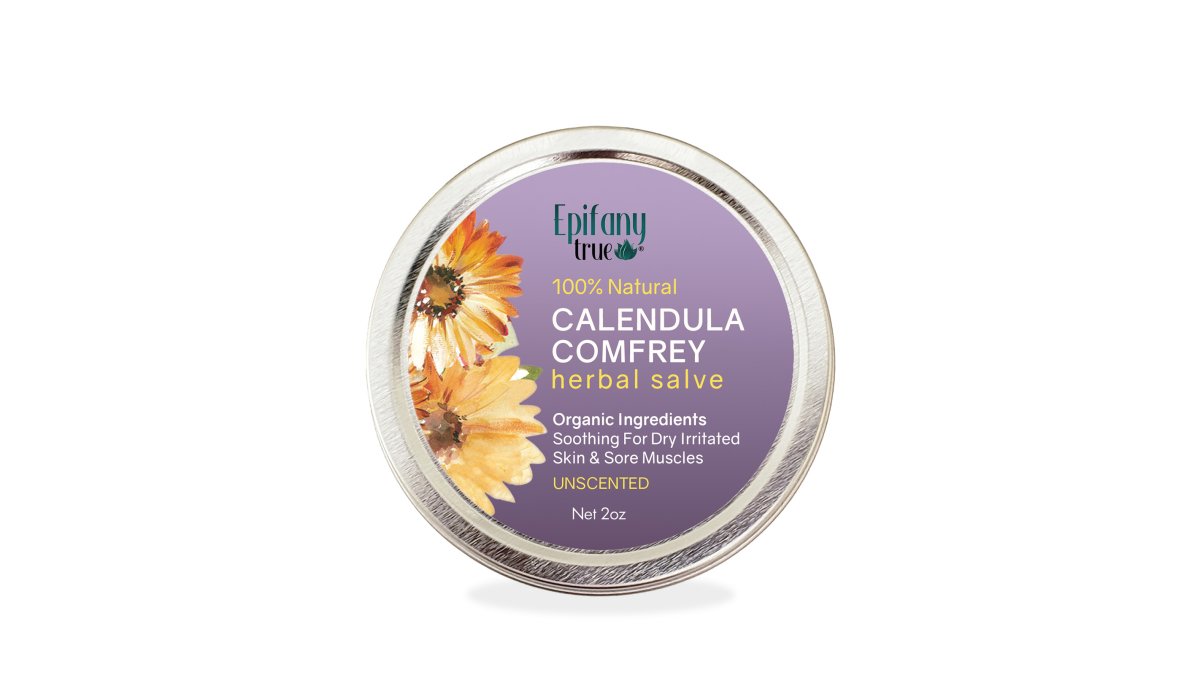
Epifany True Calendula Comfrey Herbal Salve 2oz Fragrance-Free ($15.99) is the strongest choice for hands that crack at the knuckles and fingertips.
Epifany True 100% Natural Healing Calendula Salve 2oz ($14.99) suits hands that are dry and chapped but not yet reactive. Calendula-infused sunflower oil, beeswax, chamomile, and rose otto give it a soft, calming finish for nightly use.
Epifany True Calendula Soothing Salve 2oz Fragrance-Free ($13.99) is the minimalist option: three ingredients, no essential oils, and a moisture-sealing layer that softens rough areas on hands, elbows, and heels.

Calendula Salve for Dry Skin: Soothing Options
Calendula salve for dry skin earns its place because calendula has both a long traditional record and a mild enough profile for reactive skin.
The 100% Natural Healing Calendula Salve 2oz 2-Pack ($28.00) makes sense for households that go through salve quickly, or as a gift set for someone starting gentle botanical care.
For skin that needs more than a balm, the Comfrey & Calendula Soothing Herbal Skin Oil 2oz ($17.99) delivers the same botanicals in a penetrating oil rather than a wax-sealed salve.

How to Make Calendula Salve at Home
A basic calendula salve requires three components: an infused oil, a wax, and optionally a soothing essential oil.
What You'll Need:
- 1 cup dried organic calendula flowers
- 1 cup carrier oil (sunflower, olive, or sweet almond)
- 1 ounce beeswax, grated
- Optional: 10-15 drops chamomile essential oil
- Double boiler, cheesecloth, and clean jars
Step 1: Infuse the oil. Combine the flowers and carrier oil in a double boiler and warm on low for 2-3 hours.
Step 2: Strain. Pour the warm oil through cheesecloth into a clean jar.
Step 3: Melt the wax. Return the infused oil to the double boiler and add the grated beeswax. Stir until fully melted.
Step 4: Test the texture. Drop a spoonful onto a cold plate. If it sets firm, add a little more oil.
Step 5: Pour and cool. Add essential oil if using, stir, and pour into clean jars. Let them cool undisturbed.
How to Apply Salve to Cracked Skin for Best Results
Salve works best on damp skin, immediately after washing. A salve is an occlusive: it slows water loss by forming a film, but does not add water on its own. Applied to bone-dry skin, you seal in dryness; applied to slightly damp skin, you trap that water where it can be absorbed.
That is why the sequence matters: water first, salve second.
The Basic Routine
- Wash with lukewarm water, not hot. Hot water strips lipids and makes the next crack more likely.
- Pat skin dry rather than rubbing, leaving it slightly damp.
- Warm a pea-sized amount between your palms. Body heat softens the wax so it spreads instead of dragging.
- Massage into cracks in small circles rather than dragging across them, which pulls at the edges and slows closure.
- Reapply after every hand wash, not just morning and night. Frequency matters more than thickness.
Adjusting for Crack Severity
Not every crack needs the same approach.
- Dry, rough, no break in the skin: a light layer once or twice a day is enough.
- Shallow cracks that sting: apply after every wash, and add an overnight layer.
- Deep cracks that catch on fabric: apply a heavier occlusive layer at night and cover hands with cotton gloves. For heels, apply after a shower, then cover with socks.
- Cracks that bleed, ooze, or show signs of infection: stop self-treating and seek medical advice. A salve is not the right tool at this stage.
Layering: Oil Under Salve
For very dry skin, layer an herbal oil underneath a salve. The oil delivers the botanicals and adds emollient slip; the salve traps them against the skin. This pairing outperforms either product alone, and is the routine most practitioners recommend for stubborn patches on hands, elbows, and heels.
Habits That Undo a Good Salve
A few everyday behaviors work against any salve, no matter how well it is formulated:
- Washing hands in hot water
- Using alcohol-based hand sanitizer repeatedly without reapplying salve afterward
- Scrubbing with harsh soaps or exfoliants on already-cracked skin
- Letting hands air-dry instead of patting them damp and sealing
- Applying salve only when skin already feels tight and painful, rather than as prevention
Storage and Shelf Life
Keep salves in a cool, dark place with the lid sealed. Heat softens the wax and can cause separation; sunlight degrades botanical compounds. A preservative-free salve lasts several months to a year depending on the oils used. Discard any salve that smells off, changes color, or develops mold. Never introduce water into the jar; scoop with clean, dry fingers or a small spatula.
Ingredient Sensitivities and When to Seek Care
Even gentle botanicals can trigger reactions in highly sensitive skin. Essential oils, including chamomile and lavender, are the most common culprits, which is why fragrance-free formulas exist.
Patch test any new salve on the inner forearm for 24 hours before using it on cracked or broken skin. Stop use if redness, burning, or swelling appears, and check with a healthcare professional if a reaction spreads or worsens.
Cracked skin that bleeds, oozes, or shows signs of infection needs medical attention, not a stronger salve. A salve supports the skin's own recovery process; it doesn't replace a diagnosis.
If medical treatment has made skin more sensitive, ask a healthcare team before introducing any new topical product. If the reaction is centered on your face or scalp rather than your hands, Epifany True's Sensitive Face Care and Sensitive Scalp Care collections are built around the same short, fragrance-free approach.
Cracked skin that stings at every hand wash deserves more than a drugstore lotion that evaporates in minutes.
Frequently Asked Questions
What is a botanical salve used for?
A botanical salve is used to moisturize, soften, and protect dry or cracked skin. It forms a barrier that helps lock in moisture while soothing herbs like calendula and comfrey comfort irritation. People apply it to hands, feet, elbows, and other rough areas, especially after washing or before bed.
What kind of ointment is good for dry, cracked skin?
Look for an ointment or salve with gentle botanicals like calendula, comfrey, and plantain, plus moisturizing bases such as sunflower oil, beeswax, and shea butter. Fragrance-free options are best for sensitive skin. Avoid products with synthetic fragrances or harsh preservatives if your skin is easily irritated.
Can botanical salves irritate sensitive skin?
Yes, some botanical ingredients can cause reactions. Essential oils, including lavender and chamomile, may irritate very sensitive skin. If you have reactive skin, choose a fragrance-free salve with a short ingredient list. Always patch-test on a small area first, especially if you are undergoing medical treatment or have known allergies.
How should I apply salve to cracked skin?
Clean the area gently and pat dry. Warm a small amount of salve between your fingers, then massage it into the cracked skin using upward strokes. Apply after bathing or before bed to seal in moisture. Reapply as needed throughout the day, especially after washing hands or exposure to cold, dry air.
When should I seek medical advice for cracked skin?
See a healthcare provider if cracked skin is deep, bleeding, or shows signs of infection like redness, swelling, warmth, or pus. Also seek care if the cracking is severe, persistent, or accompanied by severe pain. If you have diabetes or a compromised immune system, check with your doctor before treating cracks at home.
Next article


