
How to Calm Raw Skin Quickly: 7 Gentle Steps That Work

Table of Contents
- How to Calm Raw Skin Quickly: Start With These First Steps
- What to Put on Irritated Skin (and What to Avoid)
- How to Heal Raw Skin on Face Without Making It Worse
- Chafing Relief and Treatment: Thighs, Underarms, and More
- How Long Does Raw Skin Take to Heal?
- When to See a Doctor About Raw Skin
- Frequently Asked Questions
Last Updated: October 13, 2026
How to Calm Raw Skin Quickly: Start With These First Steps
Raw skin feels like a scrape that never stops stinging. The fastest way to calm raw skin is to stop whatever is irritating it, cool the area with plain water, and seal it with a simple, fragrance-free barrier. This guide from Epifany True walks through seven gentle steps, from the first five minutes of care to the point where a doctor should take over.
Raw skin is skin whose outer barrier has broken down, leaving nerve endings exposed to air, sweat, and fabric. That breakdown is why even water can sting. The good news: most mild cases settle within a few days when the skin is left alone and kept moist.
Below, the steps are ordered by urgency, so start at the top and work down.
Stop the Irritation at Its Source
Nothing else works until the trigger is gone. Rubbing, heat, sweat, and harsh cleansers keep the barrier open, so the first move is removal, not treatment.
Common triggers to check:
- Rough seams, tags, or tight waistbands
- Scented detergent, fabric softener, or dryer sheets
- Hot showers, long soaks, or chlorine
- New skincare with acids, retinol, or fragrance
- Repeated friction from exercise or sitting
Switch to a fragrance-free detergent and loose cotton clothing while the skin heals. A common mistake is treating the rash while still wearing the thing that caused it.
Cool, Pat, and Protect
Cooling the skin lowers the sting within minutes. Rinse with lukewarm water, then pat dry with a soft cloth. Never rub.
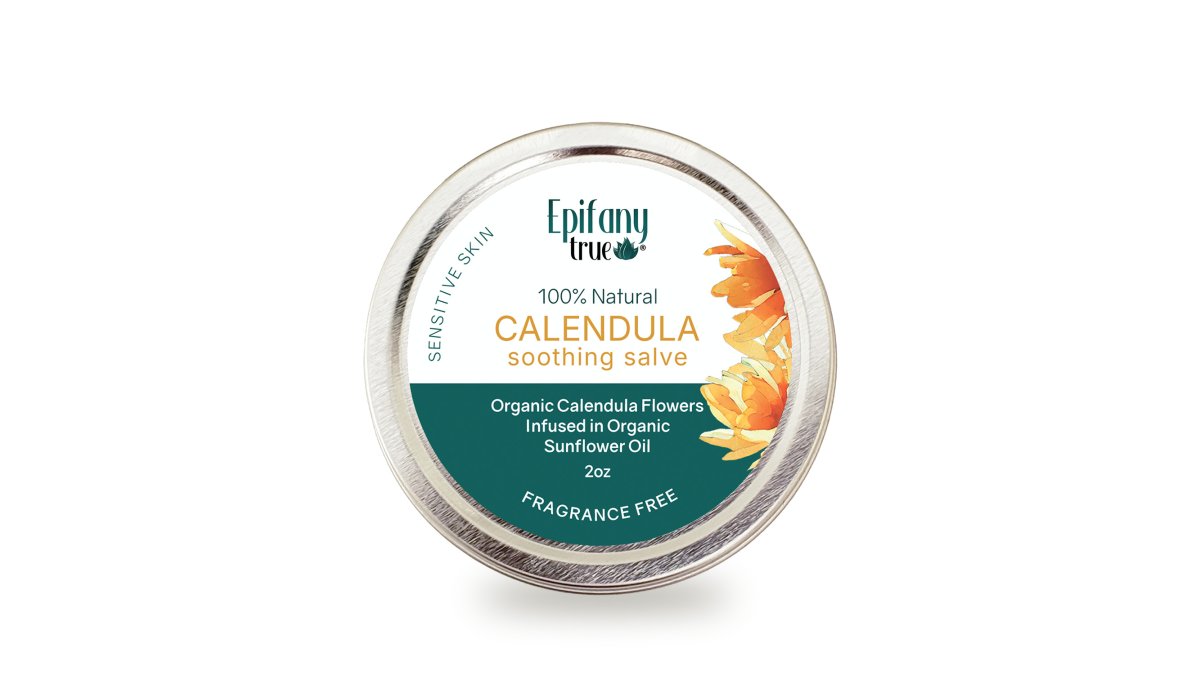
Follow with a thin layer of a plain, occlusive balm while the skin is still slightly damp. That traps water where the barrier needs it. A fragrance-free salve made with calendula-infused sunflower oil and beeswax, like the Calendula Soothing Salve from Epifany True, gives that protective layer without added scent or essential oils.

What to Put on Irritated Skin (and What to Avoid)
The best thing to put on irritated skin is a short, fragrance-free moisturizer or balm. The worst are products with alcohol, fragrance, or essential oils, which add a second irritant on top of the first.
Keep the routine to two products at most: a gentle cleanser and a barrier balm. More steps mean more chances to react.
Ingredients That Soothe
Look for a short list of calming, plant-based ingredients. These support the barrier instead of stripping it.
- Calendula infused in sunflower oil, used in botanical skincare for dry, delicate-feeling skin
- Colloidal oatmeal, a common drugstore soother for itchy, irritated patches
- Petrolatum or beeswax, which seal in moisture and block outside irritants
- Vitamin E, an antioxidant that supports skin conditioning
- Panthenol, which helps skin hold water
According to the American Academy of Dermatology's guidance on eczema care, fragrance-free ointments and creams are preferred over lotions because they trap moisture more effectively.
Ingredients That Sting
Skip these until the skin is fully closed and calm.
- Fragrance and "natural" perfumes, including many essential oils
- Alcohol, witch hazel, and astringent toners
- Exfoliating acids: glycolic, salicylic, and lactic
- Retinol and vitamin C serums
- Antibiotic ointments on intact skin, unless a doctor advises them
How to Heal Raw Skin on Face Without Making It Worse
Facial skin is thinner than body skin, so it reacts faster and heals slower. The rule for the face is subtraction: cut the routine to a gentle cleanser, a plain moisturizer, and sunscreen.
Stop all actives the moment redness appears. That means acids, retinols, and vitamin C, even if they were working well before. Rinse with lukewarm water in the morning and skip the cleanser if skin feels tight.
For overnight moisture, a rich, fragrance-free balm helps. The Calendula Overnight Face Balm with Sea Buckthorn from Epifany True is made with calendula, plantain leaf, jojoba, and sea buckthorn fruit oil, and it is free of added fragrance and essential oils, which suits skin that is easily reactive. If your face needs a gentler daily routine overall, Epifany True's Sensitive Face Care collection gathers products made for exactly this kind of reactive skin.

What most guides miss: sunscreen still matters on raw skin. Use a mineral formula with zinc oxide, which tends to sting less than chemical filters.
Chafing Relief and Treatment: Thighs, Underarms, and More
Chafing is friction damage, so relief comes from removing the rub, not just adding cream. Clean the area, let it air-dry, then apply a barrier balm before skin touches skin again.
For thighs and underarms:
- Wear smooth, moisture-wicking shorts or a fitted base layer
- Avoid cotton underwear for workouts; it holds sweat against skin
- Apply balm before activity, not after the sting starts
- Change out of damp clothing right away
Underarms need extra care because deodorant sits on the area all day. Switch to a fragrance-free option while healing. If chafing keeps returning in the same spot, the fix is the clothing fit, not a stronger cream.
How Long Does Raw Skin Take to Heal?
Most mild raw skin heals in three to seven days with gentle care. Deeper chafing or a broken, weeping patch can take up to two weeks. The timeline depends on how much friction the area keeps taking.
Signs it is healing:
- Stinging fades within a day or two
- Redness shrinks from the edges inward
- New skin looks pink and slightly shiny
If the area is still raw after two weeks, or if it keeps reopening, that points to a trigger that has not been removed. A doctor can check for an infection or an underlying skin condition.
| Stage | What You'll See | What to Do |
|---|---|---|
| Days 1-2 | Stinging, bright red | Cool, pat dry, seal with balm |
| Days 3-5 | Redness fading, less pain | Keep moist, avoid friction |
| Days 6-10 | New pink skin forming | Gentle cleansing, sunscreen |
| Beyond 2 weeks | Still raw or reopening | See a doctor |
When to See a Doctor About Raw Skin
See a doctor if raw skin shows signs of infection, spreads quickly, or does not improve after two weeks of gentle care. Some reactions need medical treatment, not another balm.
Warning signs to watch:
- Pus, yellow crusting, or a foul smell
- Spreading warmth, swelling, or red streaks
- Fever or chills
- Severe pain that gets worse, not better
- Blisters, open sores, or bleeding
People undergoing chemotherapy or radiation should contact their care team before trying any new topical product, since treatment can make skin far more reactive. The National Cancer Institute's information on skin and nail changes during treatment notes that skin reactions are common during treatment and should be reported to the care team.
For very dry, fragile skin, a simple calendula oil can help. The 100% Natural Calendula Oil from Epifany True is made by infusing whole organic calendula flowers in cold-pressed sunflower seed oil, and it can be massaged into dry areas or used on the scalp.

Raw skin rarely needs a complicated routine. It needs the irritant gone, moisture sealed in, and time. That is the whole method, and most people skip straight to step three.
Epifany True makes gentle, plant-based care for skin that is dry, delicate, or easily irritated. The line includes soothing salves, oils, and balms built around calendula and other calming botanicals, all made for simple routines and reactive skin. Get started with Epifany True and give stressed skin the quiet, fragrance-free care it needs to recover.
Frequently Asked Questions
How can I calm raw skin quickly?
Start by removing whatever triggered the irritation, then rinse with cool water and pat dry. Apply a fragrance-free, botanical salve or oil that contains calendula to seal in moisture and soothe the area. Avoid hot water, scrubbing, and products with alcohol or fragrance. A cool compress for five to ten minutes can reduce heat and stinging before you moisturize. Most mild raw patches start feeling calmer within a few hours of this routine.
What should I avoid putting on irritated skin?
Skip anything with added fragrance, essential oils, alcohol, or exfoliating acids. These ingredients can sting or delay healing when your skin barrier is already compromised. Stick to short ingredient lists with recognizable botanicals like calendula, sunflower oil, and beeswax. If a product burns when you apply it, rinse it off and try something simpler.
How long does raw skin take to heal?
Surface redness and stinging often improve within 24 to 48 hours if you stop the irritation and keep the area moisturized. Chafing or minor friction burns typically heal in three to seven days. Deeper raw patches from medical treatment or severe eczema can take one to two weeks or longer. If the area is not improving after a week of gentle care, or if it starts weeping or swelling, see a doctor instead of waiting it out.
Can I use the same products on my face and body for raw skin?
Fragrance-free balms and oils made with calendula, jojoba, or sea buckthorn are generally gentle enough for both face and body. For facial raw skin, choose a lighter oil or a waterless balm you can warm between your fingertips so you do not tug the skin. For body chafing, a richer salve with beeswax gives better staying power. Patch-test any new product on your inner wrist for 24 hours before applying it to a larger area.
Previous article

Next article


