
7 Ways to Protect Thin Skin from Daily Friction

Last Updated: November 2, 2026
Quick Summary
To protect thin skin from daily friction, wear smooth, well-fitting sleeves or pads that take the drag instead of your skin, and moisturize twice daily to keep the barrier strong. Lift rather than slide during transfers, choose soft seams and loose layers, and cleanse gently without rubbing.
- Test sleeve fit by sliding two fingers under the cuff; if you cannot, it is too tight.
- Wash protective sleeves and pads every two to three wears on a gentle cycle.
- Apply moisturizer within minutes of bathing, while skin is still damp, using a patting motion.
- Turn garments inside out and feel inner seams; a ridge will rub your skin.
- Seek medical assessment when a skin tear will not close or keeps reopening.
Table of Contents
- Why Thin Skin Tears So Easily (and What Makes It Worse)
- How to Protect Arms with Thin Skin: Sleeves, Pads, and Barriers
- Skin Tear Prevention for Fragile Skin: A Daily Routine
- Clothing for Fragile Skin: Fabrics That Reduce Friction
- The Best Moisturizer for Thin Skin (and How to Apply It)
- Gentle Cleansing and Drying Without Rubbing
- When Fragile Skin Needs Medical Assessment
- Build Your Friction-Protection Kit with Epifany True
- Frequently Asked Questions
Why Thin Skin Tears So Easily (and What Makes It Worse)
Thin skin is skin that has lost some of its cushioning and elastic support, so it dents, stretches and breaks under forces that thicker skin shrugs off.
Here is the uncomfortable truth. A sheet change, a car seatbelt, or a tight sleeve can do more damage to fragile skin than a fall.
According to Wounds International guidance on skin tears in aged skin, moisturizing twice daily has been shown to reduce skin-tear incidence in aged or fragile skin.
The role of friction, rubbing, and moisture
Friction is the drag created when skin meets a surface and one of them moves. Rubbing is the same force applied repeatedly.
Moisture complicates all three. The Spinal Research Network of America's guidance on skin breakdown notes that too much moisture can over-hydrate skin, while friction injuries occur when skin rubs.
Three forces drive most damage:
- Friction from clothing, bedding, and seating
- Shear from sliding rather than lifting during transfers
- Pressure from resting on the same spot too long
Add fragile skin to that mix and small forces start causing bruises and skin tears.
A damaged skin barrier makes everything worse. Readers who want the deeper repair guide should read how to repair a damaged skin barrier, which covers the barrier in more detail than this article can.
How to Protect Arms with Thin Skin: Sleeves, Pads, and Barriers
The fastest way to protect arms with thin skin is a physical barrier: a sleeve, pad, or film that takes the friction instead of the skin.
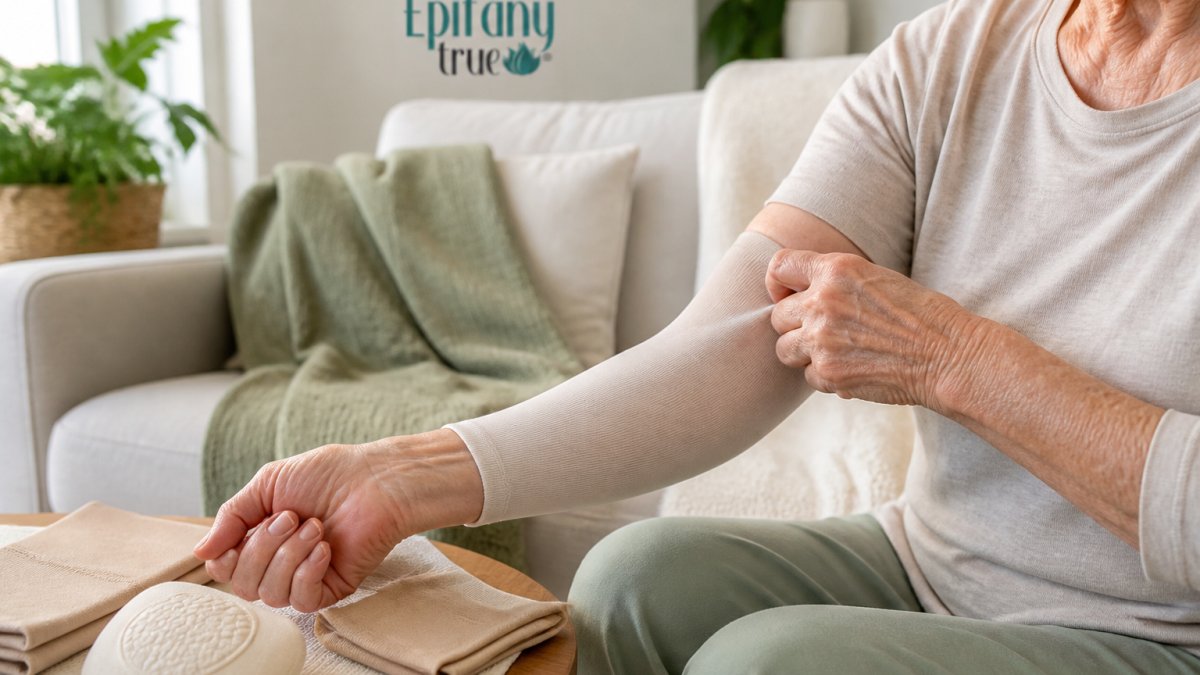
A review of skin-fragility care by Dyer and colleagues on chronic skin fragility of aging describes a prevention protocol built around nurse training, skin sleeves, padded side rails, gentle cleansers, and daily moisturizer.
Choosing protective sleeves by fit, fabric, and coverage
Fit comes first. A sleeve that bunches creates new rubbing points. A sleeve that grips too tightly leaves marks.
Fabric comes second. Soft, smooth knits glide. Rough seams and scratchy tags do not.
| Feature | What to Look For | Why It Matters |
|---|---|---|
| Fit | Snug but not tight; two fingers under cuff | Prevents bunching and pressure marks |
| Fabric | Soft knit, smooth seams, breathable | Reduces drag and heat buildup |
| Coverage | Forearm to wrist, or full arm | Shields the most exposed areas |
| Closure | Minimal or none; no hook-and-loop at skin | Fewer edges to catch and rub |
| Care | Machine washable, gentle cycle | Easy to keep clean and soft |
Coverage depends on activity. Forearm sleeves suit desk work and driving. Full arm protectors suit gardening and lifting.
Barrier films and creams add a slick layer that reduces drag.
Caring for protective garments
Wash sleeves and pads after every two to three wears on a gentle cycle with a mild, fragrance-free detergent. Skip fabric softener, which leaves a residue that can irritate fragile skin and reduce the fabric's glide. Air-dry or tumble on low; high heat shrinks elastic and roughens seams.
Check garments weekly for worn seams, pilling, stretched cuffs, and embedded grit. A sleeve that has lost its smooth surface is no longer protecting the skin, even if it still looks intact. Replace it when the fabric feels rough against the inside of your wrist.
A common mistake is wearing the same sleeve for days without washing. Sweat and body oils stiffen the fabric, and stiff fabric rubs harder than clean fabric. The protection is only as good as the garment's condition.
Skin Tear Prevention for Fragile Skin: A Daily Routine
Skin tear prevention for fragile skin works best as a fixed daily routine, not a reaction to injury. The steps below take minutes and cover the whole day.
- Morning: apply moisturizer to arms, hands, and legs, then let it absorb fully.
- Dress: choose soft clothing and add sleeves or pads before activity starts.
- During the day: lift rather than slide during transfers, and check skin at pressure points.
- After activity: look for new redness, bruising, or small breaks.
- Evening: cleanse gently, pat dry, and moisturize again.
- Weekly: inspect sleeves and pads for worn seams, and wash them.
That is the routine in full. The rest of this article explains each piece.
People managing treatment-related sensitivity may want a routine built for compromised skin, such as this guide to soothing skincare for chemo patients.
Clothing for Fragile Skin: Fabrics That Reduce Friction
Clothing for fragile skin should be soft, smooth, and loose enough to slide rather than grip. Fabric choice matters more than style, but construction and fit matter just as much as fiber content.
Good options:
- Cotton knits that breathe and feel smooth
- Bamboo blends with a soft, cool hand
- Smooth-seam athletic wear for active days
Avoid rough wool against bare skin, stiff seams, tight cuffs, and heavy zippers at friction points. Also skip harsh detergents and fabric softener overload, which can leave residue that irritates delicate skin.
What to check before you buy
Turn the garment inside out and run your fingertips along the inner seams. If you can feel a ridge, your skin will feel it too.
Check the label for fiber content and care. A garment that needs high heat to dry will shrink and roughen over time.
Fit should allow a full range of motion without the fabric pulling across the skin.
Dressing for activity, not just for style
| Activity | Better Choice | Why |
|---|---|---|
| Desk work | Smooth cotton or bamboo long sleeves | Reduces drag from chair arms and desk edges |
| Driving | Soft long sleeves with smooth cuffs | Seatbelt and armrest friction |
| Gardening | Loose layers plus arm sleeves | Soil, tools, and repeated reaching |
| Sleeping | Smooth knit pajamas, no rough tags | Bedding friction during turns |
| Exercise | Seamless athletic wear | Sweat and repeated motion |
Layering helps. A smooth base layer next to the skin lets outer garments slide over it instead of dragging on the skin. In cold weather, choose a soft base layer and a looser outer layer rather than one heavy garment that grips.
Laundering to keep fabric gentle
Wash new garments before wearing them. Softness improves with a few gentle washes, and pre-washing removes manufacturing residue that can irritate skin.
Use a mild, fragrance-free detergent and skip fabric softener and dryer sheets. Both leave a coating that can trap irritants and reduce the fabric's natural glide.
Inspect clothing the same way you inspect protective sleeves: check cuffs, collars, and underarm seams for wear. A garment that has served you well for years may have become rougher than you realize. Replace it when the inside feels scratchy against the back of your hand.
For after-bath comfort, a lightweight body oil such as the Apricot & Camellia Satin Body Oil can be applied to damp skin before dressing, giving fabric a smoother surface to glide over.
The Best Moisturizer for Thin Skin (and How to Apply It)
The best moisturizer for thin skin is a simple, fragrance-free formula that seals in water and cushions the surface. Thick balms and salves outperform thin lotions for fragile skin because they stay put.
Application matters as much as the product:
- Apply within minutes of bathing, while skin is still damp
- Use a gentle patting motion, never a rub
- Cover forearms, hands, elbows, and shins
Botanical options for sensitive, compromised skin
Calendula is a common choice in botanical skincare for delicate skin. Epifany True infuses whole organic calendula flowers into organic sunflower seed oil, then blends that oil with beeswax and vitamin E.
The Calendula Soothing Salve is fragrance-free and made without added fragrance or essential oils. It creates a moisture-sealing layer on extra-dry areas such as hands, elbows and heels.

One honest limitation: balms feel rich. People who dislike a heavy finish should apply a thin layer and build up.
Gentle Cleansing and Drying Without Rubbing
Gentle cleansing means using lukewarm water, a mild cleanser, and your hands instead of a washcloth. Drying means patting, not rubbing.
The International Guideline on preventive skin care notes that daily whole-body washing may not be necessary and that frequent cleansing may cause skin problems.
A practical sequence:
- Use lukewarm, not hot, water
- Choose a pH-balanced, fragrance-free cleanser
- Skip abrasive towels, loofahs, and scrubs
For a mild, non-rubbing option on dry or irritated areas, 100% Natural Calendula Oil can be applied gently.

When Fragile Skin Needs Medical Assessment
Fragile skin needs medical assessment when a break does not begin healing within a few days, when bruising appears without a known cause, or when redness spreads and feels warm.
Seek prompt care for:
- A skin tear that will not close or keeps reopening
- Spreading redness, swelling, or warmth
- Fluid, pus, or a bad smell
- Bruises that appear without injury
If skin has already become raw, this guide to calming raw skin quickly covers gentle first steps while you arrange care.
A common mistake is waiting for a small tear to heal on its own when it keeps catching on clothing. That cycle is worth a professional look.
Build Your Friction-Protection Kit with Epifany True
Protecting thin skin comes down to three habits: reduce the drag, cushion the surface, and keep the barrier strong. Sleeves and soft fabrics handle the first. Balms and salves handle the second and third.
Epifany True makes plant-based formulas for delicate, compromised skin, including calming botanicals like calendula. The Calendula Soothing Salve is fragrance-free and built for dry, sensitive-feeling skin. The Calendula Overnight Face Balm brings rich overnight moisture to dry, parched or depleted-feeling facial skin. For body care, the Apricot & Camellia Satin Body Oil can be applied after bathing.

Start with one protective habit this week, then add the next. Get started with Epifany True and give fragile skin the gentle, consistent care it needs.
Frequently Asked Questions
How can I protect thin skin from rubbing against clothing?
Choose smooth, soft fabrics like cotton or silk next to your skin, and avoid rough seams or tags. Wear protective arm sleeves or soft elbow pads in areas that rub. Apply a fragrance-free moisturizer twice daily to keep the skin barrier flexible. Also check clothing fit: loose layers reduce friction better than tight garments.
What clothing helps prevent friction on delicate skin?
Look for clothing for fragile skin made from soft, breathable fabrics such as cotton, bamboo, or silk. Avoid wool, coarse synthetics, and heavy seams. Loose-fitting garments reduce rubbing, and seamless designs or tagless labels help prevent irritation. For arms, lightweight protective sleeves can add a smooth barrier. Wash new clothes before wearing to soften them, and use a gentle, fragrance-free detergent.
Can moisturizer help protect thin skin from friction?
Yes. A good moisturizer for thin skin supports the skin barrier, making it more flexible and less likely to tear. Apply a fragrance-free moisturizer after bathing and before bed. For very dry areas, a concentrated salve like Epifany True Calendula Soothing Salve can seal in moisture and reduce friction.
When should I ask a doctor about fragile or thinning skin?
Ask a doctor if you notice frequent bruising, skin tears that are slow to heal, or new areas of thinning skin. Also seek advice if friction causes open wounds or signs of infection (redness, warmth, swelling, or drainage). A clinician can assess underlying causes such as medication effects or nutritional gaps and recommend a prevention plan. The review by Dyer and colleagues (2018) describes a skin-fragility protocol that includes gentle cleansers, daily moisturizer, and protective sleeves.

Previous article


