
How to Use Comfrey Oil on Scalp Safely and Effectively

Last Updated: November 1, 2026
Quick Summary
Yes, you can use comfrey oil scalp treatments, but only on intact skin and only with real caution. Comfrey contains pyrrolizidine alkaloids that can harm the liver if ingested in large amounts, so topical use on unbroken skin keeps exposure low. Patch test first, dilute the oil, and limit contact time to 30 minutes to a few hours.
- Comfrey's allantoin supports cell turnover and helps the skin barrier hold moisture better.
- Apply a single drop behind the ear for two 24-hour windows before touching your scalp.
- Leave comfrey oil on for 30 minutes to a few hours, then wash with mild shampoo.
- Two or three sessions a week is plenty for most people.
- Skip comfrey entirely on scratched, scabbed, raw, or weeping skin until it has closed.
Table of Contents
- Can You Use Comfrey Oil on Scalp? The Short Answer
- Benefits of Comfrey Oil for Hair and Scalp Comfort
- How to Calm Scalp Inflammation Naturally with Comfrey
- Best Natural Oils for Sensitive Scalp (and How Comfrey Fits)
- Comfrey Oil Safety: Broken Skin, PAs, and Who Should Avoid It
- Storing Comfrey Oil and Mixing It with Other Hair Products
- Choosing a Comfrey-Friendly Scalp Oil for Your Routine
- Frequently Asked Questions
Can You Use Comfrey Oil on Scalp? The Short Answer
Yes, you can use comfrey oil scalp treatments, but only on intact skin and only with real caution. Comfrey is a botanical extract long used in topical formulas, and it is often applied to dry, itchy skin when used correctly.
The catch matters more than the yes. Comfrey contains pyrrolizidine alkaloids, compounds that can harm the liver if they enter the body in large amounts (METABOLISM, GENOTOXICITY, AND CARCINOGENICITY OF COMFREY).
This guide from Epifany True walks through what comfrey oil can and cannot do for your scalp, how to apply it in three safe steps, and who should skip it entirely. Below, you'll find a patch test protocol most guides leave out, plus storage and layering advice that keeps the oil stable and your scalp calm.
Benefits of Comfrey Oil for Hair and Scalp Comfort
Comfrey's main value for the scalp is comfort, not hair growth.
Clinical research backs the soothing claim. A clinical overview of comfrey published in PMC found that a comfrey root extract reduced pain on pressure by 80.6% in the treatment group, compared with 74.7% for diclofenac, a common pain gel.
What comfrey will not do is regrow hair or fix a medical scalp condition. Anyone promising follicle stimulation from comfrey alone is overselling it.
How to Calm Scalp Inflammation Naturally with Comfrey
The safest way to calm scalp inflammation with comfrey is a short, deliberate routine: patch test, dilute, apply to clean dry skin, then limit contact time. Skip any step and you raise the odds of irritation or a wasted bottle. What most guides leave out is why each step matters, and that is where comfrey separates itself from a generic carrier oil.
Why comfrey calms the scalp: the allantoin mechanism
Comfrey's leaf and root contain allantoin, a small molecule that supports cell proliferation and tissue repair. On the scalp, allantoin does two things that matter for irritation: it helps keratinocytes (the main cells of the outer skin layer) migrate and turn over more efficiently, and it softens the keratin layer so the skin barrier holds moisture better. That is the mechanism behind the soothing reputation, not follicle stimulation, and not hair growth.
Step 1: Patch test with a real protocol
A patch test is a small trial application that shows how your skin reacts before you commit to your whole scalp. Most guides say "patch test" and stop. Here is the protocol that actually catches reactions:
- Apply a single drop to the inner forearm or behind the ear, not the scalp, where a reaction is harder to see and harder to wash out.
- Leave it uncovered for 24 hours, then check under good light for redness, itching, burning, or small bumps.
- If clear, repeat on the same spot for a second 24-hour window. Some reactions are delayed.
Step 2: Dilute before you apply
If you are using a finished blend, it is already diluted, check the label and do not add more comfrey on top. Part your hair in sections and use a dropper to place a small amount directly on the skin, not on the hair. A few drops per section is enough for a full head.
Step 3: Massage gently and cap the contact time
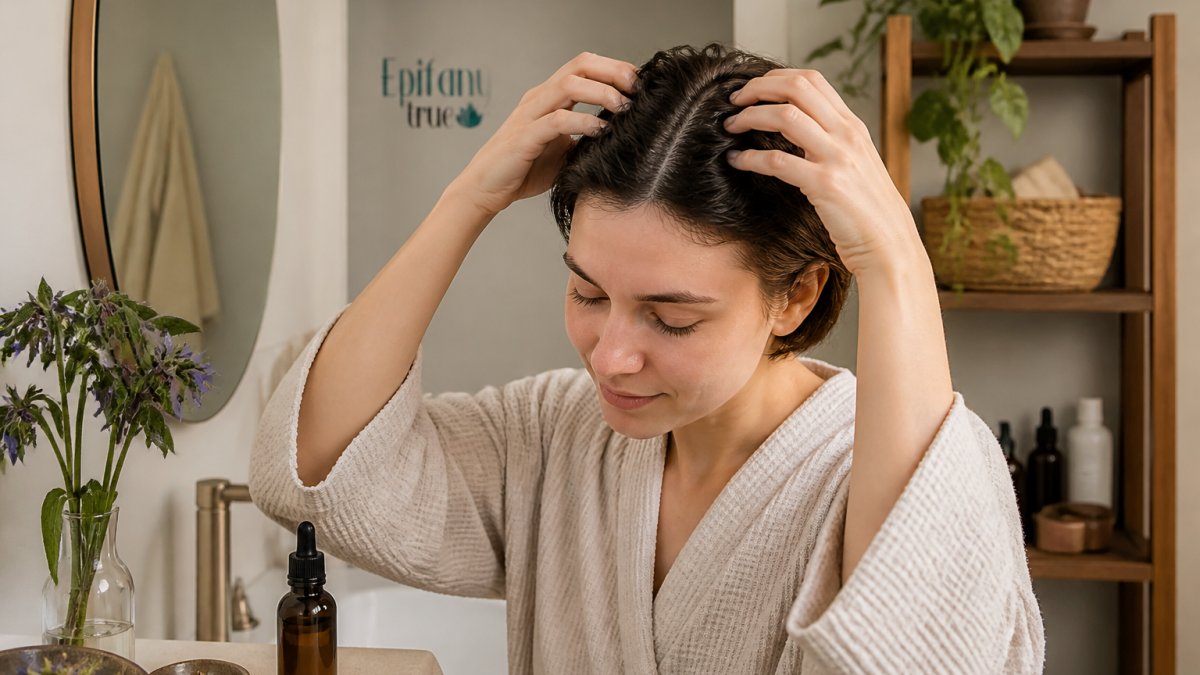
Use your fingertips, not your nails, and work in slow circles for two to three minutes. Leave the oil on for 30 minutes to a few hours, then wash it out with a mild shampoo. Two or three sessions a week is plenty for most people.
If your scalp reacts: a response ladder
- Mild itch within an hour: wash out with mild shampoo, skip comfrey for a week, then re-patch-test.
- Redness or bumps that persist past 24 hours: stop use and treat it as a sensitivity until proven otherwise.
- Burning, weeping, or spreading rash: stop and see a clinician. Do not layer more oil on top.
If tenderness or pain goes beyond simple dryness, a broader look at natural remedies for a tender scalp can help you sort out what is actually going on.
Best Natural Oils for Sensitive Scalp (and How Comfrey Fits)
Jojoba, sunflower, and coconut oils are the safest base for a sensitive scalp, and comfrey works best when it is blended into one of them rather than used alone. Pure comfrey extract is potent, and a carrier oil dilutes it while adding its own moisture and barrier support.
Here is how the common options compare:
| Oil | Main Strength | Best For | Watch Out |
|---|---|---|---|
| Jojoba | Balances sebum, feels light | Daily scalp massage | Can feel thin on very dry scalps |
| Sunflower | Vitamin E, softens skin | Sensitive, reactive skin | Goes rancid if stored warm |
| Coconut | Protective barrier | Very dry, flaky scalp | Can clog pores for some |
| Comfrey-infused oil | Soothing botanical extract | Calming irritation | Intact skin only, patch test first |
If your skin reacts to plant oils in general, it helps to understand why botanical oils sting sensitive skin before you try a new blend.
Comfrey Oil Safety: Broken Skin, PAs, and Who Should Avoid It
Comfrey oil is not safe for everyone, and the line is clear: intact skin only. Comfrey contains pyrrolizidine alkaloids (PAs), compounds that can harm the liver when ingested in sufficient amounts (METABOLISM, GENOTOXICITY, AND CARCINOGENICITY OF COMFREY). Topical use on unbroken skin keeps systemic exposure low, which is why the plant appears in salves and infused oils rather than supplements.
The broken-skin test: a simple decision framework
Before any application, run this check:
- Intact skin (no cuts, no scratching, no weeping): topical comfrey is considered acceptable at diluted strength.
- Compromised skin (scratches, scabs, raw patches from scratching, oozing or weeping conditions): skip comfrey entirely until the skin has closed.
- Unknown status (flaking that might be broken skin underneath): treat it as compromised and wait.
Why the hard line? Broken skin absorbs more of what you put on it, and PAs are the compound you are trying to keep out of the body. A scratch the size of a pencil eraser is enough to change the risk profile. Wait until the skin has closed.
Who should skip comfrey oil entirely
- Open wounds, cuts, or scratches on the scalp
- Weeping or oozing skin conditions
- A known allergy to comfrey or related plants (Boraginaceae family, which includes borage)
The liver concern is real but tied mostly to ingestion. Dermal absorption through healthy skin is low, which is why topical use on intact skin is considered acceptable while oral comfrey is not. That does not make topical use risk-free, it makes it a calculated, low-exposure choice that depends on skin integrity.
How comfrey interacts with other scalp products
Most guides ignore this, and it is where reactions actually happen. Comfrey does not chemically cancel out sulfates or silicones, but layering matters:
- Sulfates and clarifying shampoos strip the oil and the barrier at the same time. If you use a clarifying wash, apply comfrey oil on a different day.
- Silicones and heavy leave-ins can trap comfrey against the skin and increase contact time. Apply comfrey first, let it absorb, then layer.
- Exfoliating acids (salicylic, glycolic) and retinoids thin the outer layer and make skin more permeable. Do not pair them with comfrey on the same day.
One more caution: do not use comfrey on a scalp that is actively bleeding or raw from scratching. Wait until the skin has closed.
Storing Comfrey Oil and Mixing It with Other Hair Products
Store comfrey oil in a cool, dark place, tightly capped, and it will hold its quality far longer than a bottle left on a sunny shelf.
For a homemade infused oil, aim to use it within a few months. Commercial blends usually carry a best-by date on the label, so follow that.
Mixing rules that keep comfrey working:
- Layer, don't combine. Apply comfrey oil first, then let it absorb before adding leave-in products
- Space out actives. Avoid pairing comfrey with strong exfoliating acids or retinoids on the same day
- Keep it off prescription topicals unless a doctor says otherwise
A simple test for rancidity: smell the bottle. A sharp, crayon-like or sour note means it is time to replace it.
Choosing a Comfrey-Friendly Scalp Oil for Your Routine
The easiest way to get comfrey's soothing benefit without guessing at dilution is to buy a finished blend made for sensitive scalps. Epifany True's Scalp Soothing Oil combines organic sunflower, jojoba, and coconut oils with organic chamomile essential oil.

For men who want a smaller bottle of the same kind of care, there is a scalp soothing oil made for men. Both are plant-based.

Best for: dry, tender, or sensitive scalps that need gentle daily comfort. Skip if: your scalp has open wounds or you have not patch tested yet.
If you want to compare more gentle options first, this guide to botanical oils for sensitive skin lays out the full picture.
Frequently Asked Questions
Is it safe to apply comfrey oil directly to the scalp?
Topical comfrey oil is generally used only on intact skin. It should never go on broken skin, open wounds, or weeping areas because of pyrrolizidine alkaloid (PA) absorption risk. Do a patch test on your inner arm first, then apply a small amount to a clean, dry scalp and massage gently. Stop if you notice burning, redness, or swelling.
What does comfrey do for your hair?
Comfrey is used for scalp comfort more than for hair growth. Its allantoin content supports cell proliferation and soothing properties that can ease dry scalp irritation, flaking, and tenderness, which creates a better foundation for hair follicles. A 2012 clinical overview in PMC found comfrey extract reduced pain on pressure by 80.6%, versus 74.7% for diclofenac. It is not a hair growth oil, so expect comfort and hydration rather than new growth.
Who should not use comfrey oil?
Skip comfrey oil if you have broken skin, open wounds, or weeping scalp conditions, or if you are pregnant, breastfeeding, or have a history of liver disease. Comfrey contains pyrrolizidine alkaloids that can cause liver toxicity if ingested, and topical use is restricted to unbroken skin to limit dermal absorption. Anyone with a known allergy to Boraginaceae plants should avoid it. Ask your doctor before using it during medical treatment.
How often should you use comfrey oil on your scalp?
Start with one application per week and see how your scalp responds. If there is no irritation, you can move to two or three times weekly as a pre-wash scalp massage or overnight treatment. For sensitive scalps, a short 20 to 30 minute scalp massage before washing is gentler than leaving oil on overnight. Pair it with a carrier oil like jojoba or sunflower, and stop if tenderness increases.
A tender scalp is hard to ignore, and finding a product that calms it without stinging is harder still. Epifany True formulates plant-based oils for exactly this situation, using calming botanicals and skin-friendly carrier oils that support a stressed scalp's natural recovery. Start with a patch test, apply a few drops to a clean scalp, and give it a few weeks. Get started with Epifany True and give your scalp the gentle care it has been asking for.

Previous article

Next article


